

Key Takeaways
- Not all fats behave the same way in the body; the type matters more than fat intake as a whole.
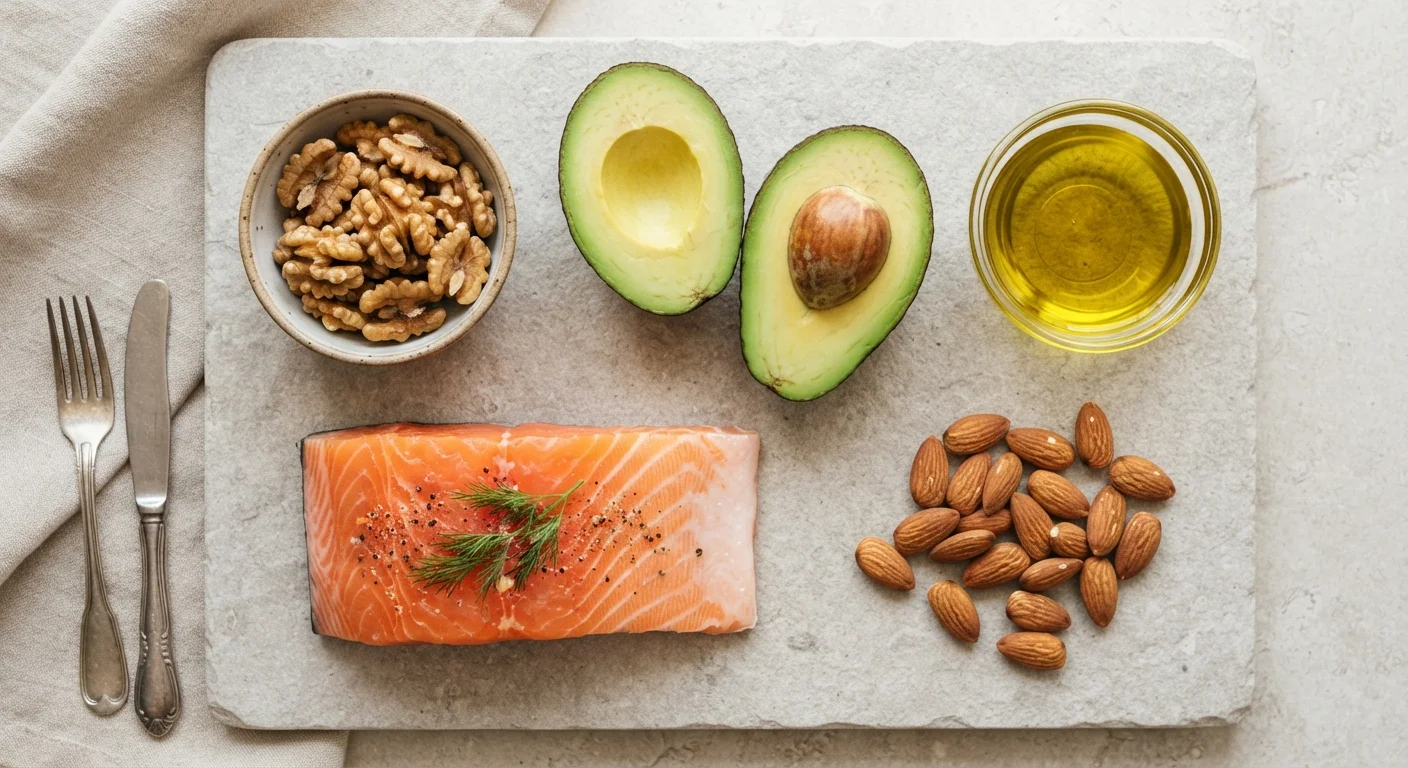
- Unsaturated fats, found in nuts, seeds, fish, and olive oil, are associated with better cardiovascular outcomes in large studies.
- Saturated fat, common in red meat and full-fat dairy, raises LDL cholesterol; most guidelines recommend limiting but not eliminating it.
- Artificial trans fats are the most harmful type and have been largely removed from the US food supply.
- Fat phobia from the 1990s led many people to replace fat with refined carbs and added sugar, which worsened diet quality overall.
- This article is general nutrition education, not medical or dietary advice. Consult a registered dietitian or physician for personal guidance.
Dietary fat
Dietary fat is a macronutrient found in both animal and plant foods. It supplies energy, helps the body absorb fat-soluble vitamins (A, D, E, and K), and supports cell membrane structure. The word 'fat' covers several chemically distinct types, and their effects on health differ considerably.
Fats are triglycerides composed of glycerol and three fatty acid chains. The degree of saturation in those chains (how many double bonds exist between carbon atoms) determines whether a fat is classified as saturated, monounsaturated, or polyunsaturated.
Why dietary fat got a bad reputation
In the 1980s and 1990s, public health messaging pushed a simple message: fat makes you fat and clogs your arteries. Food manufacturers responded with low-fat and fat-free products that swapped fat for refined carbohydrates and added sugar. Decades later, the evidence paints a more complex picture. Just as carbohydrates have a reputation problem, fat suffers from oversimplified framing that obscures real differences between its subtypes.
Fat is a necessary macronutrient. It provides 9 calories per gram, supplies essential fatty acids the body cannot make on its own, and carries fat-soluble vitamins through the digestive system. Removing it wholesale from the diet does not automatically improve health.
Saturated fat: what the evidence says
Saturated fatty acids have no double bonds in their carbon chains, which makes them solid at room temperature. Common sources include butter, full-fat dairy, red meat, coconut oil, and palm oil.
The American Heart Association and most national dietary guidelines recommend limiting saturated fat because it raises LDL (low-density lipoprotein) cholesterol, a recognized cardiovascular risk factor. A 2020 analysis in the Journal of the American College of Cardiology found that replacing saturated fat with unsaturated fat, especially polyunsaturated fat, was associated with lower rates of cardiovascular events. The effect was smaller when saturated fat was replaced with refined carbohydrates, which has fed ongoing debate about priorities.
This does not mean every saturated fat source is equally problematic. Whole-food sources like full-fat yogurt carry nutrients alongside the fat. Context and overall diet pattern matter, which is why eating patterns studied in research tend to focus on whole diets rather than single nutrients.
~35%
Share of US daily calories from fat
According to NHANES dietary data analyzed by the CDC, total fat intake as a percentage of calories has remained relatively stable in recent decades, though the type of fat consumed has shifted.
~7%
Recommended ceiling for saturated fat (of total calories)
The American Heart Association recommends limiting saturated fat to 5 to 6 percent of daily calories for those managing cardiovascular risk; most dietary guidelines set a general ceiling around 10 percent.
2018
Year FDA phased out artificial trans fats
The FDA's removal of partially hydrogenated oils from the GRAS list took full effect in 2018, effectively eliminating the primary source of artificial trans fats from the US food supply.
Unsaturated fats: monounsaturated and polyunsaturated
Unsaturated fats contain one or more double bonds and are liquid at room temperature. They divide into two groups.
Monounsaturated fats have one double bond. Olive oil, avocado, and almonds are well-known sources. Large observational studies, including those underpinning the Mediterranean dietary pattern, consistently associate higher monounsaturated fat intake with lower cardiovascular risk.
Polyunsaturated fats have two or more double bonds. The two main families are omega-3 and omega-6 fatty acids. Both are considered essential: the body cannot synthesize them, so they must come from food. Omega-3s, concentrated in fatty fish such as salmon and sardines, walnuts, and flaxseed, are associated in clinical research with reductions in triglycerides and inflammation markers. Omega-6s, found in most vegetable oils, are also necessary, though the typical American diet contains substantially more omega-6 than omega-3.
Replacing saturated fat with unsaturated fat is one of the more consistent dietary recommendations across major health organizations. This does not require eliminating any single food; it reflects an overall dietary shift.
Trans fats: the clearest case
Trans fats are the one type where the evidence is most definitive. Artificial trans fats, produced through partial hydrogenation of vegetable oils, raise LDL cholesterol and lower HDL (high-density lipoprotein) cholesterol simultaneously, a combination associated with substantially higher cardiovascular risk. The FDA effectively removed partially hydrogenated oils from the GRAS (Generally Recognized As Safe) list in 2018, and they are now largely absent from US packaged foods.
Small amounts of naturally occurring trans fats exist in dairy and some meats. These are chemically distinct from artificial trans fats and are not currently flagged as a health concern at typical intake levels.
Checking ingredient labels for 'partially hydrogenated oil' remains a useful habit, as products with less than 0.5 grams of trans fat per serving can still legally claim '0g trans fat' on the label.
Reading fat in the context of your whole diet
Fat does not operate in isolation. A diet high in saturated fat alongside high intake of added sugar and low in fiber carries a different risk profile than one where saturated fat comes primarily from whole dairy in an otherwise varied, plant-forward pattern. The fiber gap most Americans carry also affects how dietary fat interacts with cholesterol metabolism.
Current evidence supports prioritizing unsaturated fats from whole food sources, moderating saturated fat, and avoiding artificial trans fats. What it does not support is treating all fat as harmful or assuming that low-fat products are healthier by default.
This article is for general informational and educational purposes only and is not medical or dietary advice. Consult a registered dietitian, physician, or qualified healthcare professional before making changes to your diet, especially if you have a health condition.