

Key Takeaways
- Sleep hygiene refers to a set of behaviors and environmental conditions that support consistent, quality sleep.
- The body's internal clock responds strongly to light exposure, so timing and lighting cues have an outsized effect.
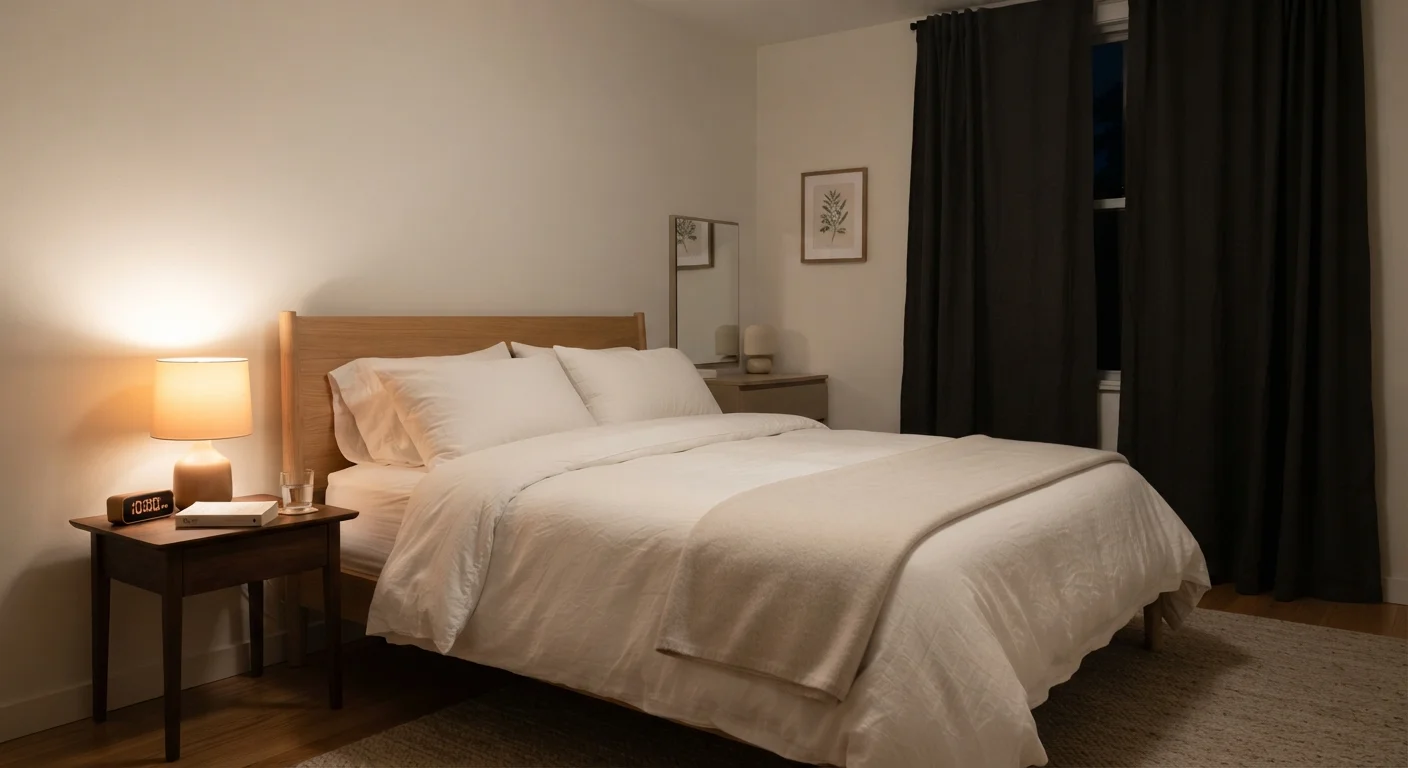
- A cool, dark, and quiet room improves sleep onset and reduces nighttime waking.
- Caffeine, alcohol, and irregular schedules are among the most common behavioral obstacles to good sleep.
- Sleep hygiene works best as a set of consistent habits, not one-time adjustments.
Start here
What sleep hygiene actually means
Next
The circadian rhythm and why timing matters
Then
Environment: light, temperature, and noise
When you're ready
What the evidence actually supports
What sleep hygiene actually means
Sleep hygiene is a clinical term that has moved into everyday conversation, often stripped of its original meaning. In sleep medicine, it refers to a defined set of behaviors and environmental conditions that support consistent, restorative sleep. It is not a single habit or product, and it is not a treatment for sleep disorders on its own.
The concept gained traction in the 1970s through sleep research and was formalized as part of behavioral sleep medicine. Today, it appears as one component of Cognitive Behavioral Therapy for Insomnia (CBT-I), the treatment approach with the strongest clinical evidence for chronic insomnia.
Understanding what sleep hygiene actually covers makes it easier to apply. The core areas are: sleep-wake scheduling, light exposure, the bedroom environment, and stimulant use. Each of these has a mechanism behind it, not just a common-sense rationale.
Sleep hygiene
A set of behavioral and environmental practices designed to support consistent, good-quality sleep. The term originated in clinical sleep medicine.
Circadian rhythm
The body's roughly 24-hour internal clock that regulates sleep-wake cycles, hormone release, and other biological processes. It responds primarily to light and darkness.
Melatonin
A hormone produced by the brain's pineal gland in response to darkness. It signals the body that it is time to prepare for sleep.
Sleep onset
The transition from wakefulness to sleep. Faster sleep onset means falling asleep more quickly after going to bed.
CBT-I
Cognitive Behavioral Therapy for Insomnia. A structured, evidence-based treatment that addresses the thoughts and behaviors that interfere with sleep.
This article is general health information, not medical advice. Consult a qualified healthcare provider about your own sleep concerns.
The circadian rhythm and why timing matters
The circadian rhythm is the body's internal timekeeping system, running on a roughly 24-hour cycle. It governs when the brain releases melatonin, when core body temperature drops, and when cortisol rises to prepare you for waking. Light is its primary input.
Morning bright light exposure suppresses melatonin and signals the clock to anchor wake time. Evening light, especially in the blue-wavelength range produced by LED screens, delays melatonin release and shifts the clock later. This is the mechanism behind the recommendation to reduce screen use before bed.
Irregular sleep and wake times create a mismatch between the internal clock and actual sleep behavior. Going to bed two hours later on weekends, for example, can shift circadian timing enough to produce symptoms resembling mild jet lag on Monday mornings. Consistent wake times are the most reliable behavioral anchor for the circadian system.
Consistency matters more than perfection
A regular wake time, even on weekends, does more to stabilize the circadian rhythm than any single evening routine. Sleeping in significantly on weekends can shift your internal clock in a pattern similar to mild jet lag. Aim for the same wake time seven days a week as a starting point.
Sleep timing interacts with cognitive performance in ways that go beyond feeling tired. See how sleep affects mental clarity for a closer look at the downstream effects on attention and decision-making.
Environment: light, temperature, and noise
The sleep environment directly affects both sleep onset and the number of nighttime awakenings. Three variables have the clearest research support.
Light
Darkness prompts melatonin release. Even low levels of ambient light during sleep can suppress melatonin and reduce sleep quality. Blackout curtains or a sleep mask are practical ways to address this, particularly for people who sleep during daylight hours or live in areas with artificial outdoor lighting.
Temperature
Core body temperature naturally falls at sleep onset. A bedroom that is too warm works against this process. Research generally identifies a cooler room, roughly in the 65 to 68 degree Fahrenheit range, as favorable, though individual comfort varies.
Noise
Noise disrupts sleep continuity even when it does not fully wake a sleeper. Intermittent sounds, like traffic or a partner's phone, are more disruptive than steady background noise. Earplugs or white noise can reduce the impact of an unpredictable sound environment.
Behaviors that work against sleep
Several common behaviors reliably interfere with sleep quality, and each has a physiological explanation.
Caffeine timing
Caffeine blocks adenosine receptors. Adenosine is a compound that accumulates during waking hours and produces sleep pressure. Caffeine's half-life in the body is roughly five to six hours, meaning a cup of coffee consumed at 3 p.m. still has a measurable effect at 9 p.m. Cutting off caffeine intake in the early afternoon is a practical adjustment for people who have trouble falling asleep.
Alcohol
Alcohol speeds sleep onset for many people, which creates a false impression that it helps sleep. It fragments sleep in the second half of the night as the body metabolizes it, reducing REM sleep and increasing awakenings. Common sleep myths covers this in more detail.
Sleep hygiene is not a substitute for medical care
If you experience chronic insomnia, excessive daytime sleepiness, loud snoring, or episodes where breathing seems to stop during sleep, speak with a healthcare provider. These symptoms may indicate a sleep disorder, such as sleep apnea, that requires clinical evaluation and treatment beyond lifestyle adjustments.
Late eating and hydration
Large meals close to bedtime can cause discomfort and may delay sleep onset. Hydration habits also matter: poor daily fluid intake can contribute to nighttime muscle cramps and other disruptions. Hydration habits and energy explains the broader connection between fluid intake and physical function.
What the evidence actually supports
Sleep hygiene research has limitations worth acknowledging. Many studies rely on self-reported sleep data, and isolating the effect of a single behavior is difficult in real-world conditions. The evidence is strongest for circadian-based interventions: consistent wake times and morning light exposure have the most replication across studies.
For people with chronic insomnia, CBT-I produces better outcomes than sleep hygiene alone. CBT-I includes sleep restriction, stimulus control, and cognitive restructuring alongside hygiene components. A licensed healthcare provider or behavioral sleep medicine specialist can guide that process.
Sleep hygiene is most useful as a baseline: a set of conditions that remove common obstacles to sleep. It works when applied consistently, not as a temporary fix around a particularly stressful week. Many of the same habits that support sleep also connect to broader health behaviors covered in nutrition basics, since diet, hydration, and energy regulation are interconnected systems.
Alcohol and sleep: a common misconception
Alcohol can make falling asleep feel easier, but it disrupts sleep architecture, particularly REM sleep, in the second half of the night. People often wake more frequently after alcohol metabolism peaks. This is covered in more depth in common sleep myths.