

Key Takeaways
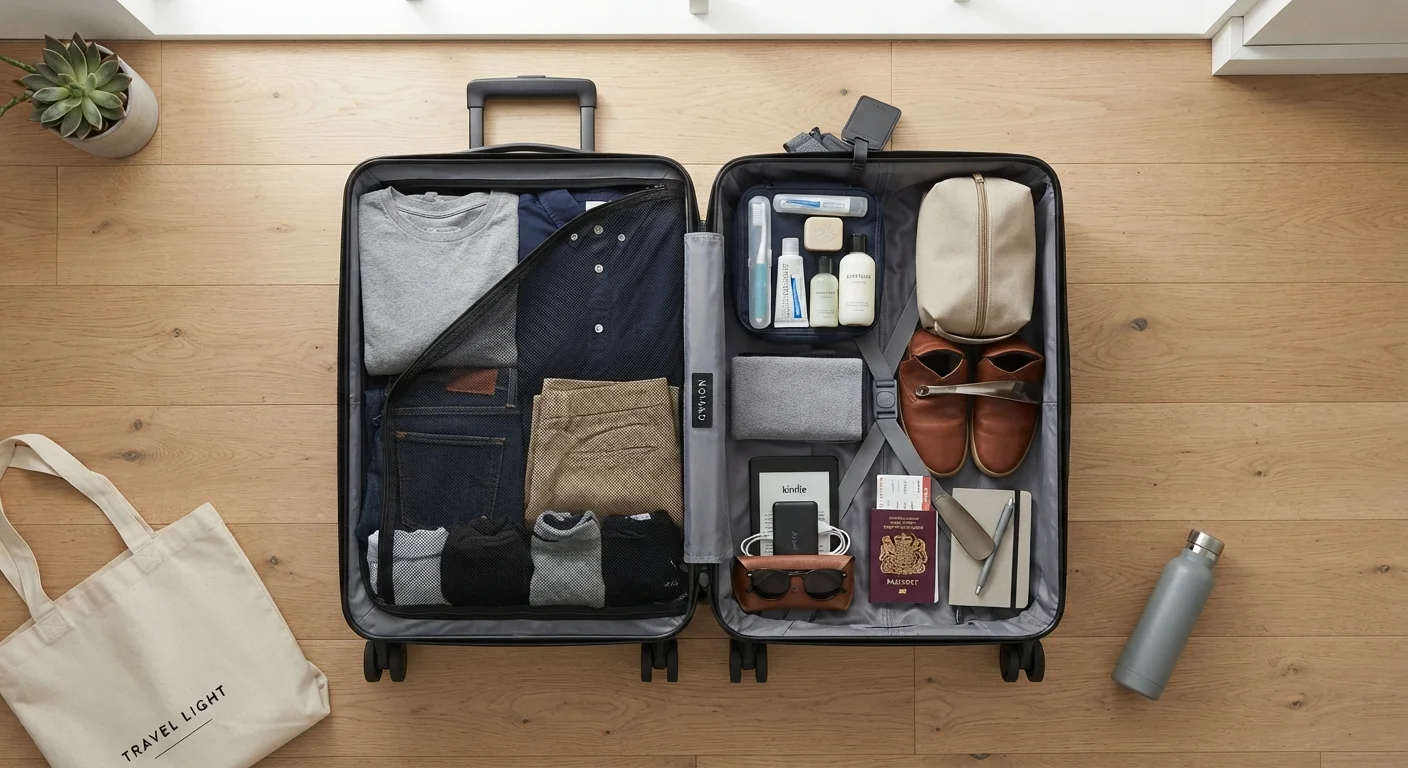
- Most travelers can cover a week or more with a carry-on by choosing versatile, quick-dry clothing.
- Packing light does not mean sacrificing comfort; it means choosing items that work harder.
- Airlines and hotels are reliable sources for toiletries, reducing what you must carry.
- Checked bags do not automatically protect your belongings better than a carry-on kept with you.
- Wearing heavier items on travel day solves the weight problem without adding bag space.
Why these myths stick around
Many travelers overpack for the same reason they keep old habits: the advice they received early on was rooted in anxiety, not experience. 'Just in case' thinking spreads from traveler to traveler, and certain beliefs about minimalist packing have become so widely repeated that they feel like facts. Several of them are not.
The myths below come up consistently in packing conversations. Each one has a concrete correction, and understanding why the myth formed makes it easier to set aside.
If you want a broader look at the psychology behind this pattern, why overpacking happens and how to stop it covers the behavioral side in more depth.
Myth
You need a separate outfit for every single day of the trip.
Fact
A small set of versatile, quick-dry pieces can cover multiple days through washing and layering.
The one-outfit-per-day rule assumes you will never wash anything and that every item can only be worn once. Neither is true. Merino wool and synthetic quick-dry fabrics can be hand-washed in a sink and dry overnight in most climates. Three or four bottoms and five or six tops can produce enough combinations for a two-week trip without repetition becoming obvious.
The real goal is choosing pieces that layer, coordinate, and resist odor rather than packing for every possible scenario you can imagine.
Myth
Packing light means you will always be missing something you need.
Fact
Most items travelers worry about forgetting are available to buy or borrow at the destination.
Convenience stores, pharmacies, and hotel shops carry toiletries, over-the-counter medications, phone chargers, and basic clothing in almost every destination. The cost of buying a forgotten item is usually small compared to the time and money spent on checked baggage fees or hauling a heavy bag through transit.
The genuinely irreplaceable items are few: prescription medications, specific documents, and a handful of personal electronics. Everything else can usually be sourced locally if needed.
Myth
A checked bag keeps your belongings safer than a carry-on.
Fact
Checked bags are out of your control from the moment they leave your hands until the carousel.
Checked luggage passes through multiple handling points where damage, theft, and misdirection can occur. Airlines report thousands of delayed or lost bag incidents each year, and locks on checked bags provide limited protection because security personnel have override tools.
A carry-on stays with you throughout your journey. You see it boarded, you retrieve it yourself, and it never disappears into a baggage system. For items of genuine value, a carry-on is the more secure option.
Myth
Packing light only works for short trips or warm destinations.
Fact
Layering systems and packable outerwear make light packing workable for cold weather and extended travel.
Cold-weather trips do require more thought, but bulk is not the only solution to staying warm. A base layer, a mid-layer fleece, and a packable down jacket take up far less space than a single heavy coat and cover a wider temperature range when worn together.
Extended trips follow the same logic as shorter ones: the length of the trip does not change how many clothes fit in a bag. Washing clothes every few days handles duration. The carry-on only mindset guide goes into detail on adapting this approach across different trip types.
Myth
Rolling clothes saves so much space that you can pack almost anything.
Fact
Rolling helps with organization and wrinkles, but it does not significantly reduce total volume.
Rolling is useful for keeping clothes visible and reducing creases in certain fabrics. It does not compress fabric; it simply changes the shape of the bundle. Packing cubes, which compress contents when zipped, offer more measurable volume reduction than rolling alone.
The bigger gains come from choosing fewer items and lighter fabrics, not from the geometry of how clothes are folded. Treating rolling as a magic solution leads travelers to believe they can include more than the bag can realistically hold.
Putting the corrections into practice
Knowing a myth is false does not automatically change behavior. The most effective way to pack lighter is to build a packing list before you open the bag, then cut it by roughly a third before you start loading. Most travelers find that the items removed are ones they would never have touched.
Wearing your bulkiest clothes on travel day, such as boots, a heavier jacket, or thick layers, keeps them out of the bag without leaving them at home. This one habit alone can free up significant space.
For anyone still weighing whether to check a bag at all, a practical trade-off guide comparing carry-on and checked luggage walks through the real costs and conveniences of each option. And for a fuller picture of what minimalist packing genuinely requires, the honest trade-offs of packing light covers what works and what does not without overpromising.