

Key Takeaways
- Prolonged sitting carries health risks independent of whether you exercise regularly.
- Active daily living means reducing sedentary time across the whole day, not only adding workouts.
- Even short movement breaks throughout the day are associated with better metabolic health.
- Both structured exercise and everyday movement contribute to well-being in different ways.
- Small changes to daily routines can meaningfully reduce overall sedentary time.
Option A
Sedentary lifestyle
The default pattern for many desk-based adults.
Best for: Understanding the health risks of prolonged inactivity, even when formal exercise is part of your week.
Option B
Active daily living
Movement woven into ordinary hours, not just gym time.
Best for: Adults who want to reduce sitting time and build consistent low-intensity movement throughout the day.
If you sit for most of the workday and already have a gym routine
Active daily living
Research suggests that regular exercise does not fully offset the effects of long unbroken sitting. Adding movement breaks throughout the day addresses a gap that workouts alone do not cover.
If you have no current exercise habit and want to start somewhere accessible
Active daily living
Building movement into existing routines, such as walking during calls or taking stairs, creates a sustainable foundation without requiring extra time or equipment.
If you want to understand what is actually driving your fatigue or low energy
Active daily living
Accumulated sedentary time affects energy, mood, and metabolic function. Reducing it through daily movement patterns often produces noticeable changes before formal exercise does.
What the research actually distinguishes
Most adults think about physical health in terms of exercise: do you work out, or do you not? That framing misses something important. Researchers now distinguish between two separate behaviors: sedentary time (hours spent sitting or reclining with low energy expenditure) and physical activity (any movement that raises energy use above resting level). These are not simply opposites on one scale. A person can exercise for 45 minutes each morning and still accumulate nine hours of sitting by evening, with measurable effects on metabolic health.
The CDC's physical activity guidelines address structured exercise clearly, and unpacking what those guidelines mean in practice is useful context. What the guidelines cannot fully capture is the effect of everything that happens between exercise sessions.
Why sitting time is its own risk factor
Prolonged, unbroken sitting affects how the body processes glucose and triglycerides. During long periods of inactivity, muscle contractions that normally help regulate blood sugar essentially pause. This is why researchers have found associations between extended sitting and markers of metabolic dysfunction, even in people who are otherwise physically active.
This does not mean exercise is irrelevant. Structured activity builds cardiovascular fitness, muscle strength, and bone density in ways that incidental movement does not fully replicate. The point is that both matter, and they address different aspects of health. What the science says about walking illustrates how even modest-intensity movement produces measurable benefits when done consistently.
What active daily living actually looks like
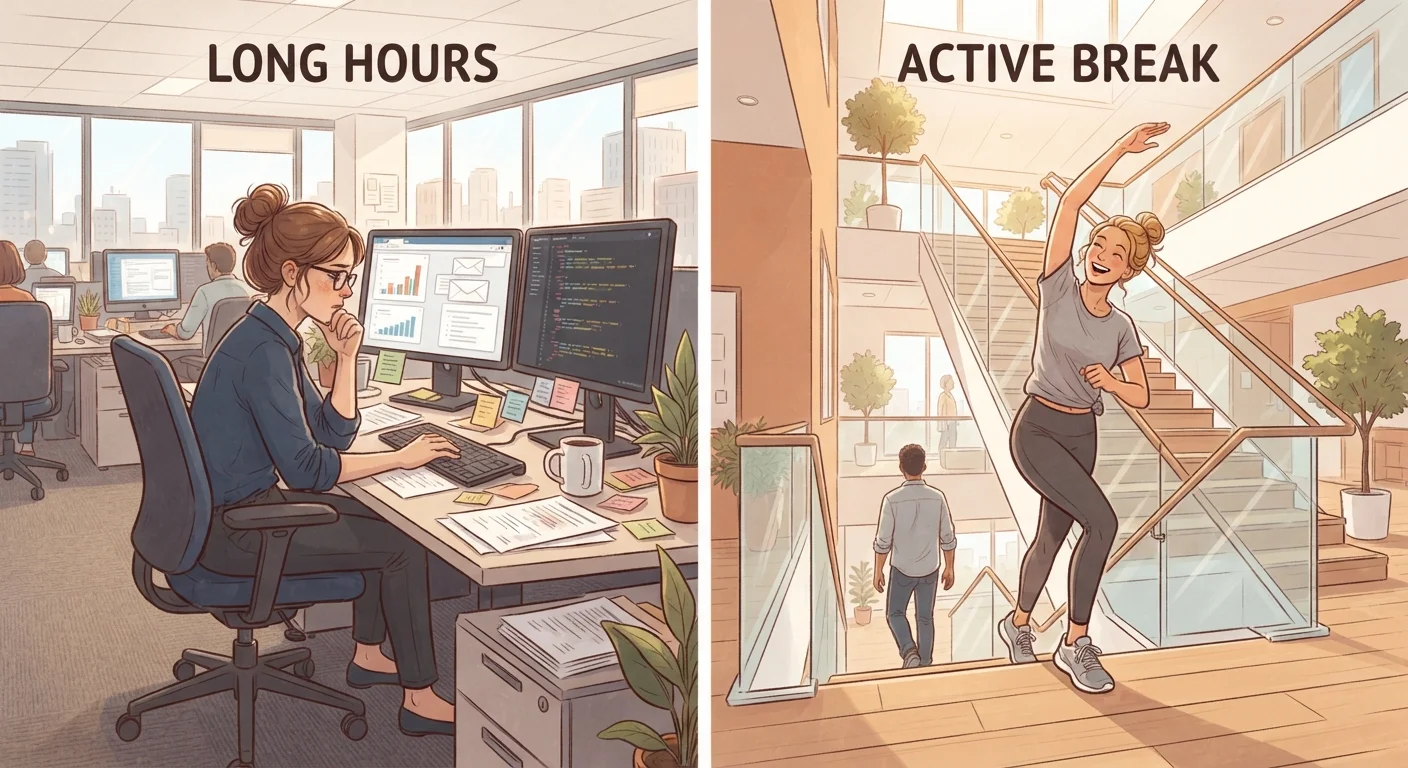
Active daily living is not a fitness program. It is the accumulation of movement across ordinary hours: standing during a phone call, walking to a colleague's desk rather than sending a message, taking stairs, doing light stretching between tasks. None of these require athletic ability or extra time carved from a busy schedule.
The practical goal is to interrupt prolonged sitting rather than eliminate it. Short breaks every 30 to 60 minutes are a reasonable target for most adults. Realistic strategies for weaving movement into packed days go further into how to build this without restructuring your schedule.
For those who want to build on these small changes, why incremental changes tend to outlast dramatic overhauls explains the behavioral pattern behind durable habit formation. And if mornings are a potential window for movement, building a morning movement habit that sticks offers a practical starting point.
This article is for general informational purposes only and is not medical advice. Consult a qualified healthcare professional before making changes to your activity level, especially if you have an existing health condition.