

Key Takeaways
- Health tracking can reveal patterns in sleep, activity, and heart rate that are hard to notice otherwise.
- Data from consumer wearables is not the same as clinical measurement and should not replace professional assessment.
- Privacy risks are real: many health apps share or sell user data to third parties.
- Constant monitoring can tip into anxiety or obsessive checking for some people.
- Used with intention, tracking is most useful as a starting point for conversation with a healthcare provider.
Reveals patterns that are invisible day to day
A week of sleep data, for example, can show you that you consistently get less rest on workdays than you realize. That kind of trend is hard to spot from memory alone.
Supports motivation for consistent movement
Research published in journals studying behavioral health has found that visible progress metrics can support short-term behavior change, particularly for walking and daily activity goals.
Can flag anomalies worth discussing with a doctor
Some wearables detect irregular heart rhythm patterns and have prompted users to seek evaluation that led to a clinical diagnosis. These cases are real, though they are not universal.
Creates a shared language with healthcare providers
Bringing weeks of resting heart rate or sleep data to an appointment gives a clinician more context than a single office reading, which can improve the quality of the conversation.
Consumer-grade accuracy has meaningful limits
Optical heart rate sensors on wrists perform differently during exercise than at rest, and sleep staging algorithms vary widely across devices. A reading is an estimate, not a clinical measurement.
Health data is among the most sensitive data you own
Many apps share aggregated or individual health data with advertisers, insurers, or research partners. Reviewing an app's privacy policy before use is worth the time, and the article on app permissions explains what access requests actually mean.
Constant monitoring can increase health anxiety
For people already prone to health worry, watching every heart rate spike or sleep score can amplify stress rather than reduce it. This is not a universal effect, but it is well-documented in clinical literature.
Metrics can substitute for, rather than support, professional care
Self-diagnosing based on wearable data and avoiding a doctor visit is a real risk. The data is a signal, not a conclusion, and practical fitness guidance is still best shaped with professional input.
Gamification can distort healthy behavior
Chasing a step count or calorie goal can override intuitive cues like hunger, fatigue, or pain. This matters especially for people with a history of disordered relationships with food or exercise.
Our Verdict
Health tracking tools can give you a useful, broad picture of your daily habits, especially for sleep and activity. Their accuracy has real limits, though, and the privacy trade-offs deserve serious attention before you sign up. The data is most valuable when it prompts a conversation with a clinician rather than a self-diagnosis.
People who want a general snapshot of their activity and sleep habits and who will use that data as a starting point for professional guidance, not a replacement for it.
What health tracking actually does
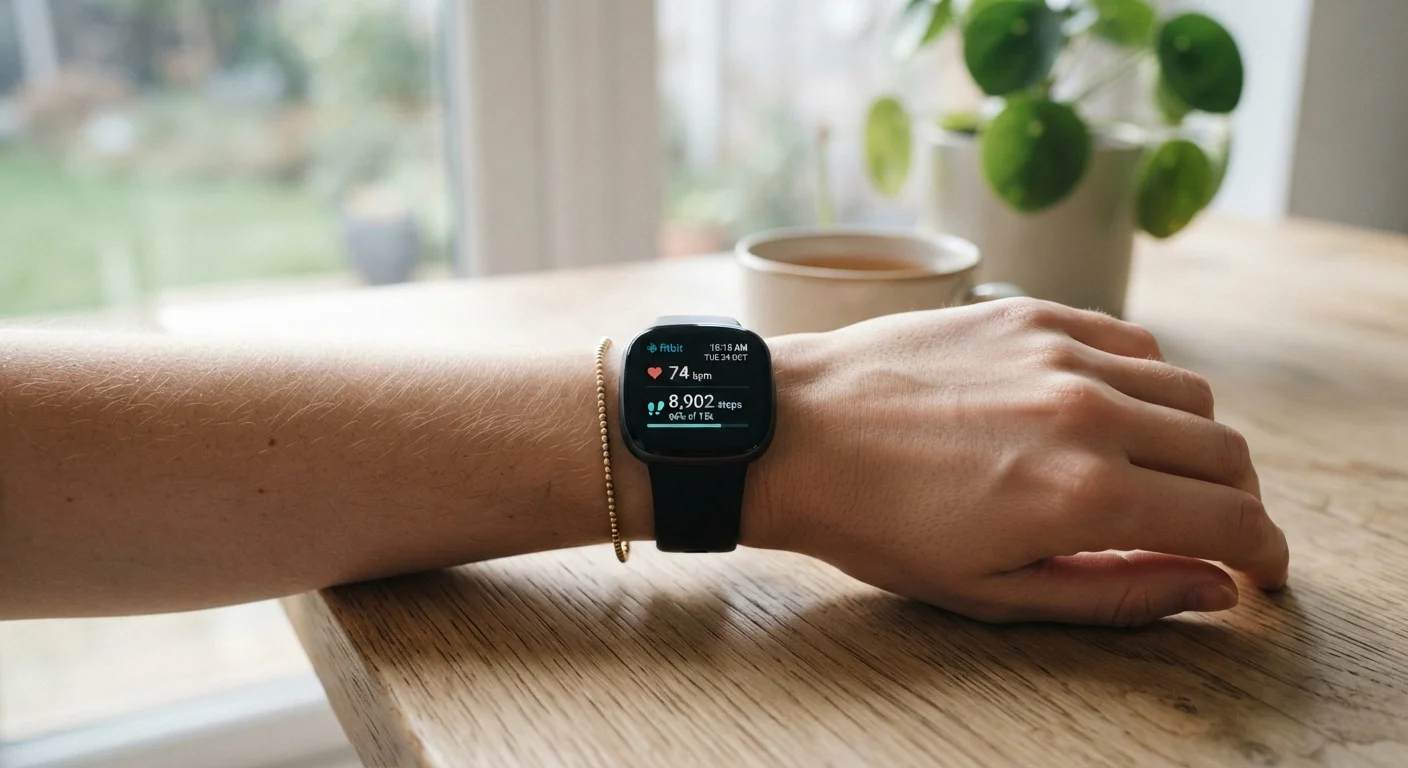
Wearables and health apps collect data passively: steps taken, heart rate, sleep duration, and, on newer devices, blood oxygen levels or skin temperature. The appeal is obvious. You get a continuous record of how your body is behaving across days and weeks, not just during a ten-minute office visit.
The data is collected through sensors like optical heart rate monitors, accelerometers, and microphones. Each has a different accuracy profile. An accelerometer counting steps is fairly reliable. An optical sensor estimating sleep stages is considerably less so, because it infers sleep from movement and heart rate rather than the brain activity a sleep study would measure directly.
Understanding that gap between what a device measures and what it claims to tell you is the foundation for using this data well.
This article is general health information
Nothing here is medical advice, and no information in this article should be used to self-diagnose, start, or stop any treatment. If a wearable reading concerns you, speak with a qualified healthcare provider. Individual health needs vary significantly, and a clinician is the right person to interpret any data in the context of your history.
The case for tracking
The clearest benefit of health tracking is pattern recognition. Memory is a poor tool for noticing gradual change. A person who has been sleeping poorly for months often adjusts to it without realizing how much the habit has shifted. A few weeks of logged data can make that drift concrete and motivating.
Tracking also has a documented, if modest, effect on physical activity. Seeing a step count or active minutes total gives immediate feedback that walking an extra block or taking the stairs actually registered. That feedback loop matters for habit formation, even if the effect weakens over time for many users.
For people managing a chronic condition, continuous data can genuinely help. A person with hypertension who logs resting heart rate over weeks has more to bring to a doctor's appointment than a single reading taken under the stress of an office visit. The data does not replace clinical judgment, but it enriches it.
Reveals patterns that are invisible day to day
A week of sleep data, for example, can show you that you consistently get less rest on workdays than you realize. That kind of trend is hard to spot from memory alone.
Supports motivation for consistent movement
Research published in journals studying behavioral health has found that visible progress metrics can support short-term behavior change, particularly for walking and daily activity goals.
Can flag anomalies worth discussing with a doctor
Some wearables detect irregular heart rhythm patterns and have prompted users to seek evaluation that led to a clinical diagnosis. These cases are real, though they are not universal.
Creates a shared language with healthcare providers
Bringing weeks of resting heart rate or sleep data to an appointment gives a clinician more context than a single office reading, which can improve the quality of the conversation.
The real costs of constant monitoring
The privacy dimension is often underweighted. Health data is sensitive in ways that other personal data is not. It can affect insurance eligibility in some contexts, reveal conditions you may not want shared, and be difficult to delete once it exists on a third-party server. Before using any health app, reading its data-sharing policy is genuinely worthwhile. The article on understanding app permissions is a useful companion for anyone uncertain about what they are agreeing to.
Accuracy is the other persistent problem. Consumer devices are not medical instruments. Their readings are estimates. When those estimates are misread as diagnoses, people may worry unnecessarily about normal variation or, in the other direction, feel falsely reassured. Neither outcome is good, and both are common.
There is also a behavioral risk. Tracking numbers can replace listening to your body. Someone who is exhausted might override fatigue to hit a step goal. Someone watching calories might become rigid in ways that are counterproductive. The broader limitations of calorie counting illustrate the same problem: a single metric cannot capture the full picture of health.
Consumer-grade accuracy has meaningful limits
Optical heart rate sensors on wrists perform differently during exercise than at rest, and sleep staging algorithms vary widely across devices. A reading is an estimate, not a clinical measurement.
Health data is among the most sensitive data you own
Many apps share aggregated or individual health data with advertisers, insurers, or research partners. Reviewing an app's privacy policy before use is worth the time, and the article on app permissions explains what access requests actually mean.
Constant monitoring can increase health anxiety
For people already prone to health worry, watching every heart rate spike or sleep score can amplify stress rather than reduce it. This is not a universal effect, but it is well-documented in clinical literature.
Metrics can substitute for, rather than support, professional care
Self-diagnosing based on wearable data and avoiding a doctor visit is a real risk. The data is a signal, not a conclusion, and practical fitness guidance is still best shaped with professional input.
Gamification can distort healthy behavior
Chasing a step count or calorie goal can override intuitive cues like hunger, fatigue, or pain. This matters especially for people with a history of disordered relationships with food or exercise.
How to get value without the downsides
The most useful framing is to treat tracking data as a conversation starter with a clinician, not a conclusion. If your wearable shows elevated resting heart rate for two weeks, that is worth mentioning to a doctor. It is not a diagnosis.
Periodic, intentional use tends to work better than continuous monitoring for most people. Tracking sleep for a month to understand a pattern, then stepping back, is a different relationship with the tool than checking your scores every morning and adjusting your mood accordingly. Research on screen time and well-being suggests that how you engage with digital tools matters as much as how long you use them.
People with a history of anxiety around health, or a difficult relationship with food or exercise, should be especially thoughtful. A conversation with a mental health professional about whether tracking is likely to help or harm is a reasonable step before starting. Tracking is a tool with genuine uses. Like any tool, it works better when you choose it deliberately rather than defaulting to it.
1 in 5
U.S. adults using a health wearable
According to Pew Research Center survey data, roughly one in five American adults report wearing a smartwatch or fitness tracker regularly.
~30%
Wrist-worn heart rate error rate during vigorous exercise
Studies examining optical heart rate sensors on consumer wearables have found error rates of around 20 to 30 percent during high-intensity movement compared to chest-strap ECG readings.