

Key Takeaways
- Mindfulness can temporarily intensify distress for some people, particularly those with unprocessed trauma.
- Pushing through discomfort without guidance can reinforce anxiety rather than reduce it.
- Shorter, eyes-open, or movement-based practices are valid alternatives to seated breath focus.
- A licensed mental health professional should be consulted if distress consistently increases during practice.
- The goal of mindfulness is awareness, not a specific feeling of calm.
Why mindfulness sometimes backfires
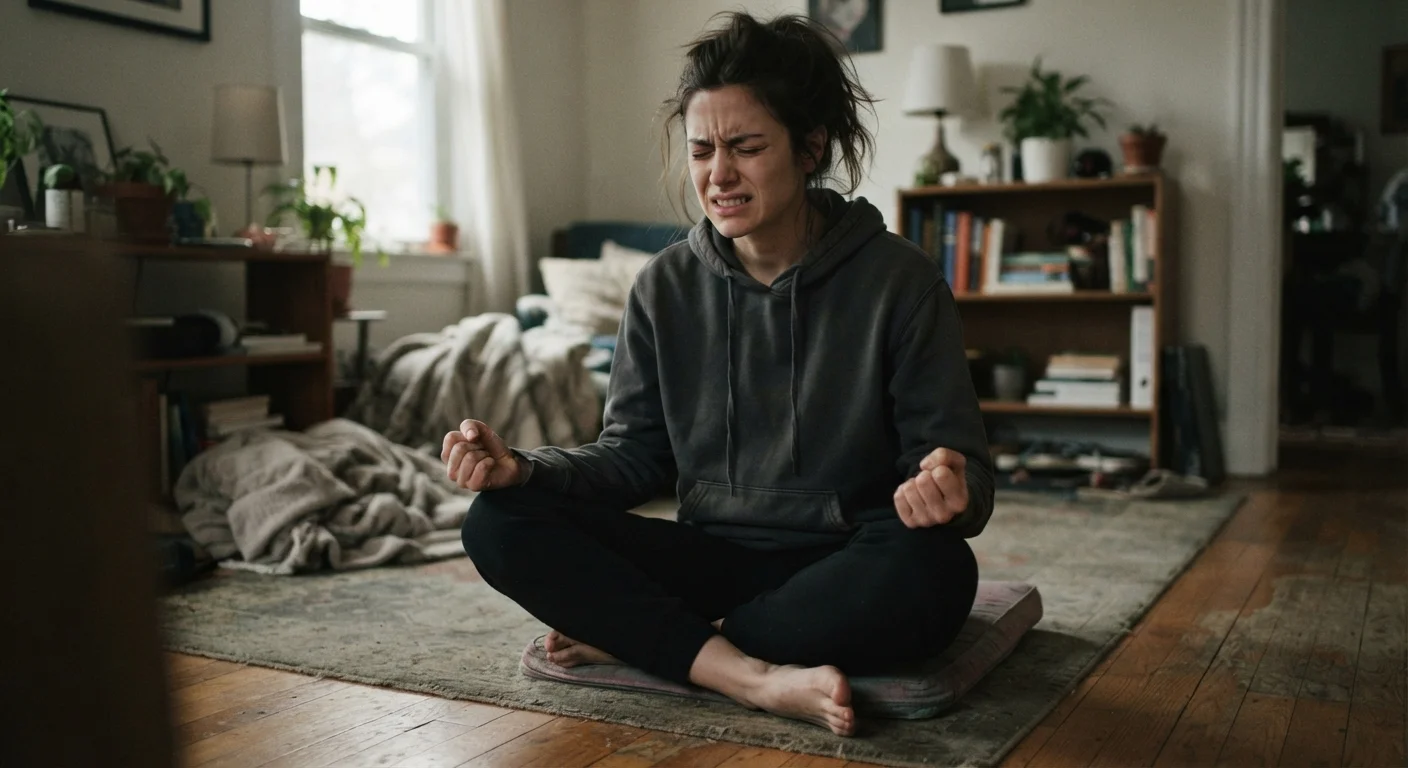
Mindfulness gets recommended for stress, anxiety, burnout, and a long list of workplace frustrations. So when someone sits down to practice and walks away feeling worse, the natural reaction is confusion or self-blame. The reality is that adverse responses to mindfulness are documented and more common than most guides acknowledge.
A growing body of clinical literature, including research published in journals such as Perspectives on Psychological Science, has identified a range of unwanted effects: heightened anxiety, intrusive thoughts, depersonalization (a sense of feeling detached from oneself), and in some cases the surfacing of painful memories. These are not signs of failure. They reflect how the practice actually works on the mind, and why context and approach matter.
Understanding what goes wrong is the first step toward deciding whether to adjust your practice or seek support from a mental health professional.
Treating discomfort as proof that mindfulness is working.
Why it happens: Popular accounts of mindfulness often frame discomfort as a necessary hurdle, so people push through distress believing it will resolve on its own.
Starting with long, unguided sessions before building any tolerance.
Why it happens: Apps and programs often recommend 10 to 20 minute sessions from day one, and people assume more time means faster results.
Using breath focus when anxiety is already high.
Why it happens: Breath awareness is the most commonly taught entry point, so people default to it regardless of their current state. For some, close attention to breathing while anxious amplifies the physical sensations of anxiety.
Practicing without any awareness of past trauma.
Why it happens: Trauma histories are common and not always recognized by the person who has them. Sitting quietly with internal experience can surface memories or bodily responses that feel overwhelming without warning.
Judging the session by whether you felt calm afterward.
Why it happens: Mindfulness is widely marketed as a stress-reduction tool, which creates the expectation that every session should produce noticeable relaxation.
How to adjust without abandoning the practice
Many people find that small changes to format and framing shift the experience considerably. Eyes-open mindfulness, walking attention exercises, or grounding in physical sensation can provide the benefits of present-moment awareness without the enclosed quality of seated breath focus. Understanding the difference between meditation and mindfulness can help you choose a format that fits your current state rather than defaulting to one approach.
If you notice that certain thought patterns reliably surface and spiral during practice, recognizing cognitive distortions beforehand can reduce how much weight you give them in the moment. Mindfulness does not eliminate those patterns, but it creates distance from them. That distance takes practice, and it is reasonable to build it gradually.
~25%
Meditators reporting at least one adverse effect
A 2019 study in PLOS ONE found roughly one in four meditators reported at least one unwanted effect, including anxiety, fear, or perceptual disturbances.
58%
Adults who have tried mindfulness at least once
A 2017 National Health Interview Survey found a substantial rise in mindfulness practice among US adults over the prior five years.
Start with two or three minutes rather than twenty. Notice what arises without labeling the session a success or failure based on how calm you felt. Calm is a possible outcome, not the definition of good practice. Several common misconceptions about what mindfulness should feel like keep people from adjusting in useful ways.
This article is for general informational purposes only and is not a substitute for professional mental health advice, diagnosis, or treatment. If you are experiencing significant distress, please consult a licensed mental health professional.