

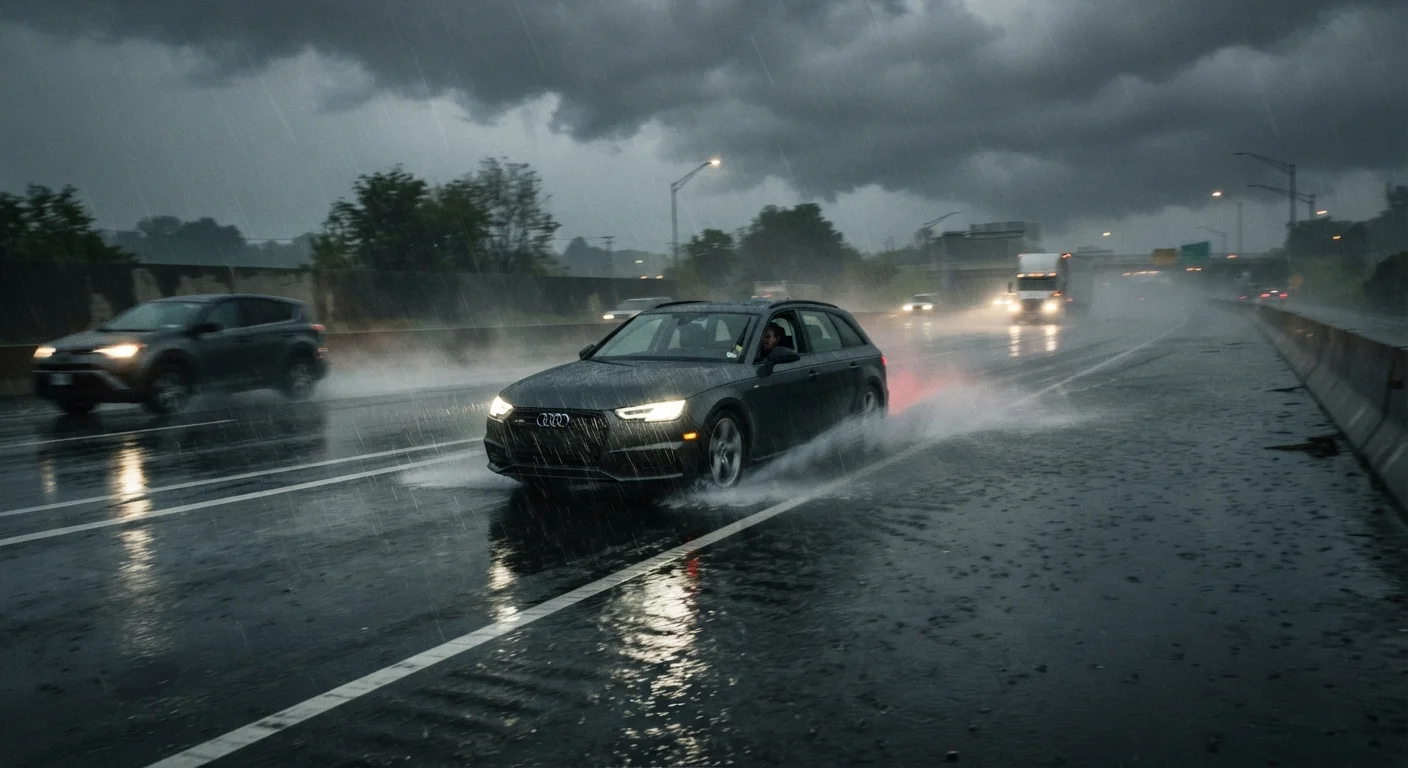
Key Takeaways
- Wet roads can double or triple your stopping distance compared to dry conditions.
- Reducing speed is the single most effective adjustment you can make in heavy rain.
- Headlights on during rain improve both your visibility and your visibility to other drivers.
- Worn tires significantly increase hydroplaning risk; tread depth matters before storms hit.
- If visibility falls to near zero, the safest option is to pull off the road completely.
What you will need
Why rain changes how your car behaves
Water on the road does not just reduce visibility. It changes the friction between your tires and the pavement, which affects how quickly you can brake, how sharply you can steer, and how easily your car can lose traction. A dry road offers high grip; a wet road, depending on rain intensity and road surface, can cut that grip substantially.
Stopping distance is the most immediate concern. On a wet road at 60 mph, a typical passenger car needs considerably more distance to stop than it would on dry pavement. The exact numbers vary by vehicle, tires, and road surface, but the margin is large enough to matter in any emergency stop. See how speed and stopping distance relate for the physics behind this.
Rain also creates a surface film of water mixed with oil and road grime, especially in the first minutes of a shower after a dry spell. That film is more slippery than plain water. Roads that have been dry for days can be particularly treacherous when rain first starts.
Check your tires before storm season
Tread depth and tire condition are much easier to address before rain arrives than during it. A quick visual check and the penny or quarter test can tell you whether your tires are ready for wet roads. For more on keeping your vehicle road-ready, see the car maintenance guidance available on this site.
Before you drive: what to check
Rain exposes weaknesses that dry roads can hide. Tires with low tread depth cannot channel water away from the contact patch efficiently, which is the main trigger for hydroplaning. The legal minimum tread depth in most US states is 2/32 of an inch, but many safety organizations suggest replacing tires at 4/32 for wet-weather driving.
Check that your windshield wipers clear the glass cleanly in a single pass. Smearing or streaking means the blades are worn and should be replaced. Wiper blades are inexpensive and easy to swap; driving in a downpour with degraded wipers is an unnecessary risk.
What you will need
Confirm your defroster works on both the front and rear windows. Rain quickly fogs glass from inside the cabin, and a non-functional defroster can make a manageable situation dangerous fast.
Step-by-step: adjusting your driving in heavy rain
The adjustments below apply as soon as rain becomes heavy enough to affect road surface or visibility. Each one builds on the defensive driving principles that apply in any hazardous condition.
Slow down before you need to
Reduce your speed as soon as rain starts affecting road conditions, not after you feel the car slip. A lower speed gives your tires more time to channel water and gives you more time to react. There is no fixed number that applies to every rain event; use road conditions, visibility, and traffic as your guide.
Turn on headlights
Most US states require headlights when wipers are in use. Beyond the legal requirement, lights make your car visible to drivers ahead and behind you, especially in spray and reduced-light conditions. Use low beams; high beams reflect off rain and can reduce your own visibility.
Increase following distance
The standard three-second following gap is for dry roads. In heavy rain, extend that to at least five or six seconds. This gives you more braking distance and more time to respond if the vehicle ahead stops suddenly or loses control.
Brake and steer smoothly
Abrupt inputs, sharp steering corrections or hard braking, can break traction on a wet road more easily than on a dry one. Apply the brakes progressively. If your car has anti-lock brakes (ABS), press firmly and hold; do not pump the pedal. Steer steadily rather than making sudden corrections.
Avoid standing water where possible
Water pooling in lanes or at the sides of the road is a hydroplaning risk. When you cannot avoid it, slow down before you reach the water, not while you are in it. Braking on a water-covered surface is less effective than braking on pavement. After passing through standing water, gently apply the brakes to help dry and reseat the brake pads.
When to pull over and wait it out
Some rain events are severe enough that continuing to drive is not the right call. If your wipers cannot keep the windshield clear, if you can no longer see lane markings, or if spray from other vehicles is blocking your view entirely, pulling off the road is a reasonable and safe decision.
Choose a parking lot, rest area, or well-lit area away from the travel lanes. Turn on your hazard lights so other drivers can see a stopped vehicle. Do not stop on a highway shoulder unless there is no alternative; shoulders are dangerous even in clear conditions.
Flash flooding is a separate and serious concern. Moving water as shallow as one foot can move a small car. If water is flowing across the road and you cannot determine its depth, do not attempt to cross. This applies on local roads as much as in rural areas.
For conditions like black ice or packed snow, the adjustments differ from rain. Driving on ice and snow covers that terrain specifically.