

Key Takeaways
- Hydroplaning can begin at speeds as low as 35 mph on standing water.
- Worn tire tread is one of the biggest risk factors because it reduces the tire's ability to channel water away.
- If your vehicle hydroplanes, ease off the accelerator gradually and steer straight without sudden inputs.
- Hard braking during hydroplaning can make loss of control worse, especially without ABS.
- Slowing down before you reach standing water is more effective than reacting once you're in it.
Hydroplaning
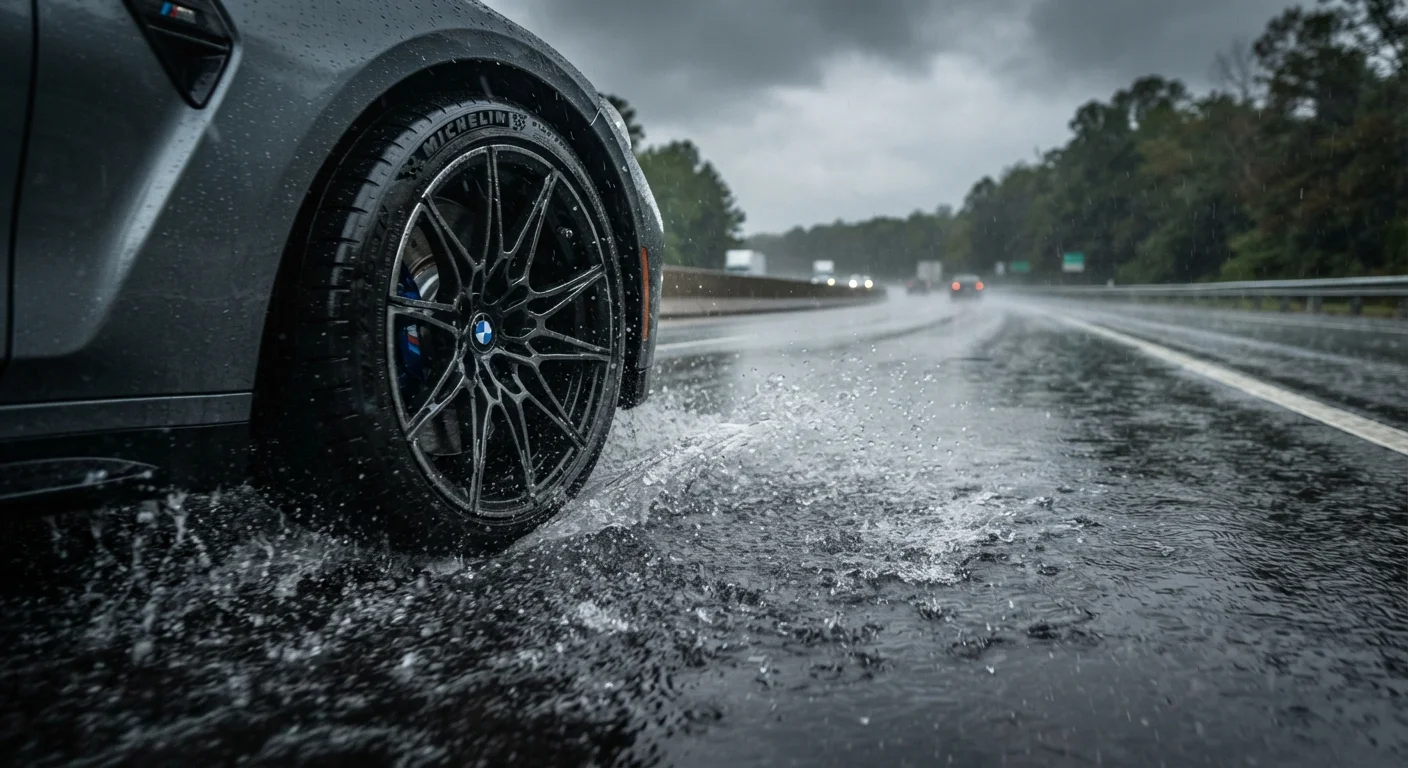
Hydroplaning happens when a layer of water builds up between a tire and the road faster than the tire can displace it. The tire loses direct contact with the pavement, and the vehicle effectively floats on water for a brief period. During this time, steering and braking have little to no effect.
The phenomenon is also called aquaplaning. It involves a pressure buildup in front of the tire that lifts the tread away from the road surface, reducing friction to near zero.
What actually happens when a tire hydroplanes
A tire's tread is designed to do one job in wet conditions: push water out of the contact patch so rubber stays in contact with pavement. Each groove and channel in the tread acts as a path for water to escape. When water arrives faster than those channels can move it, pressure builds in front of the tire and lifts it off the road surface.
At that moment, the driver loses the two things needed to control a vehicle: traction for steering and traction for braking. The car responds to neither because the tires have nothing to grip. The sensation is often described as a sudden lightness in the steering wheel, sometimes accompanied by a brief float or drift.
The condition can last fractions of a second or several seconds depending on speed, water depth, and road surface. Even a brief episode at highway speed can cause significant drift before the driver has time to process what is happening.
One sign to watch for before contact
If the road ahead looks glassy or reflective in patches, water may be pooling rather than draining. Treat those sections as you would a known hazard: reduce speed before reaching them. Reacting after your tires are already on standing water gives you far less margin.
The factors that raise your risk
Speed is the most direct variable. The faster a tire travels, the less time it has to channel water out of the contact patch. Research cited by the National Highway Traffic Safety Administration (NHTSA) has consistently identified speed as a primary factor in wet-weather crash risk.
Tire tread depth is the second major factor. A tire with deep, open tread grooves moves water efficiently. A tire worn to 2/32 of an inch (the legal US minimum) has far less capacity to do that work. Drivers with tires near the end of their service life face a much higher hydroplaning risk than those with tires in good condition. Worn tires also compromise braking performance in ways that compound the problem.
Tire inflation matters too. An underinflated tire has a distorted contact patch that moves water less effectively. Overinflation reduces the contact area. Neither condition helps in the rain.
Road surface plays a role as well. Water collects in wheel ruts, low spots, and road edges. Highways with poor drainage or heavy truck traffic tend to develop ruts in the travel lanes that pool water quickly after rain begins.
~35 mph
Speed at which hydroplaning can begin
NHTSA research indicates hydroplaning is possible at speeds as low as 35 mph when significant standing water is present on the road surface.
2/32"
US legal minimum tire tread depth
Tires at this depth have significantly reduced water-channeling capacity compared to tires with 4/32" or more of tread remaining.
~75%
Weather-related crashes occurring on wet pavement
According to the Federal Highway Administration, wet pavement accounts for roughly 75% of all weather-related crashes annually in the US.
How to respond in the moment
If your steering feels suddenly light or the vehicle drifts without responding to your inputs, your tires have likely lost contact with the road. The correct response is calm and deliberate.
- Ease off the accelerator. Do not lift your foot suddenly; reduce pressure smoothly so the vehicle decelerates gradually.
- Keep the steering wheel straight. If the vehicle begins to yaw, make small corrections rather than turning sharply. A large steering input when traction returns can cause an overcorrection.
- Avoid braking. If you must slow down further and your vehicle has ABS (anti-lock braking system), you can apply gentle, steady brake pressure. Without ABS, hard braking can lock the wheels and extend the episode.
- Wait for the tires to reconnect. Once you feel steering response return, you are back in contact with the road.
This situation shares some recovery principles with a tire blowout at speed: in both cases, the instinct to brake hard or steer sharply is the wrong one.
Reducing the risk before it rains
The most effective time to address hydroplaning risk is before wet weather arrives. Check tread depth regularly using the quarter or penny test, or have a mechanic measure it during routine service. If tread depth is at or near 2/32 of an inch, the tires are due for replacement regardless of their age.
Keep tires inflated to the pressure listed on the driver's door jamb, not the maximum figure printed on the tire sidewall. Check pressure when tires are cold for an accurate reading.
When driving in rain, reduce speed before you reach standing water rather than reacting once you're in it. Increase following distance as well. A shorter following distance leaves almost no time to respond when the vehicle ahead causes a spray or sudden slowdown. Similar spacing principles apply on ice and snow, where traction is equally reduced.
Avoid using cruise control in rain. If a tire hydroplanes while cruise control is active, the system may attempt to maintain speed by adding throttle at exactly the wrong moment.