

| Typical brake pad lifespan | 25,000 to 65,000 miles (varies by driving style and pad type) |
| Rotor replacement needed when | Thickness falls below manufacturer minimum or surface is deeply scored |
| Brake fluid change interval | Every 2 years or per manufacturer schedule; check owner's manual |
| ABS warning light meaning | Anti-lock function may be offline; base braking usually still works |
| DIY limit | Visual checks and fluid level checks only; hydraulic and caliper repairs need a qualified mechanic |
What your brakes are trying to tell you
Brakes communicate through sound, feel, and vehicle behavior. Most drivers notice something is off well before a brake failure occurs, but the signals are easy to misread or delay acting on. This reference covers the most common warning signs, what each one typically means, and when a mechanic needs to be involved.
For a broader look at how the braking system works, see how car brakes work and when to have them inspected.
| Typical brake pad lifespan | 25,000 to 65,000 miles (varies by driving style and pad type) |
| Rotor replacement needed when | Thickness falls below manufacturer minimum or surface is deeply scored |
| Brake fluid change interval | Every 2 years or per manufacturer schedule; check owner's manual |
| ABS warning light meaning | Anti-lock function may be offline; base braking usually still works |
| DIY limit | Visual checks and fluid level checks only; hydraulic and caliper repairs need a qualified mechanic |
Common warning signs and what they indicate
Squealing or high-pitched noise when braking
A persistent squeal during braking usually means the brake pads have worn down to their wear indicator, a small metal tab built into the pad specifically to produce this noise. It is a deliberate alert, not a coincidence. At this point the pads still have a thin margin of material, but they need inspection soon. Some squealing after the vehicle has sat in rain or overnight condensation is normal and clears within a few stops.
Grinding or metal-on-metal sound
Grinding almost always means the brake pad material is fully gone and the metal backing plate is contacting the rotor directly. This damages the rotor with each stop and reduces braking effectiveness. Have a mechanic inspect the vehicle promptly. Do not delay this repair.
Pulling to one side when braking
If the vehicle drifts left or right during braking, one side is doing more work than the other. Common causes include uneven pad wear, a stuck caliper (the clamp that presses the pad against the rotor), or a hydraulic imbalance in the brake lines. A mechanic can diagnose which side and component is involved.
Soft, spongy, or low brake pedal
A pedal that sinks toward the floor or feels mushy suggests air in the brake lines or a hydraulic fluid leak. The brake system relies on incompressible fluid to transfer force; air compresses and reduces that transfer. This is a condition that warrants same-day professional attention. Check the brake fluid reservoir under the hood for low level as a first observation, but do not attempt to bleed or repair hydraulic lines yourself without mechanical training.
Vibration or pulsing through the pedal
Pedal vibration under braking often points to warped rotors. Rotors can warp from repeated hard stops or from uneven heat distribution. The vibration comes from the pad surface hitting high and low spots as the rotor turns. Warped rotors typically need resurfacing or replacement.
Burning smell after driving
A sharp chemical or burning smell after heavy use, such as descending a long hill, can mean the brakes have overheated. Pull over safely, allow them to cool, and avoid riding the brake pedal continuously on descents. If the smell occurs during normal driving with no obvious cause, have the vehicle checked for a stuck caliper.
Brake warning light
The brake warning light on the dashboard can indicate low brake fluid, a pressure imbalance between the front and rear circuits, or that the parking brake is still engaged. If the light stays on after releasing the parking brake, check the fluid level. A lit ABS (anti-lock braking system) light means the anti-lock function may be inactive; the base brakes usually still work, but the ABS will not engage during hard stops. Either light warrants a diagnostic scan.
When to see a mechanic
Grinding, a soft pedal, fluid loss, or a brake warning light that stays on all call for professional inspection without delay. Squealing and vibration are less urgent but should be addressed within a few days, not ignored for weeks. Catching wear early typically means replacing pads before rotors are damaged, which costs less than rotor replacement.
During a routine oil change or tire rotation, ask the shop to measure pad thickness and inspect rotor condition. Most mechanics include a visual brake check at no extra charge. You can also do a basic visual check yourself through the wheel spokes; DIY car checks you can do in 15 minutes walks through what to look for without lifting the vehicle.
Before any long drive, brakes are worth a specific look. The pre-road-trip safety walkthrough covers brakes alongside tires, fluids, and lights as part of a complete check.
Brake pad
A friction material pressed against the rotor to slow the wheel. Pads wear down over time and must be replaced before the material is fully gone.
Rotor (brake disc)
The metal disc that rotates with the wheel. The caliper clamps brake pads against it to create friction and decelerate the vehicle.
Caliper
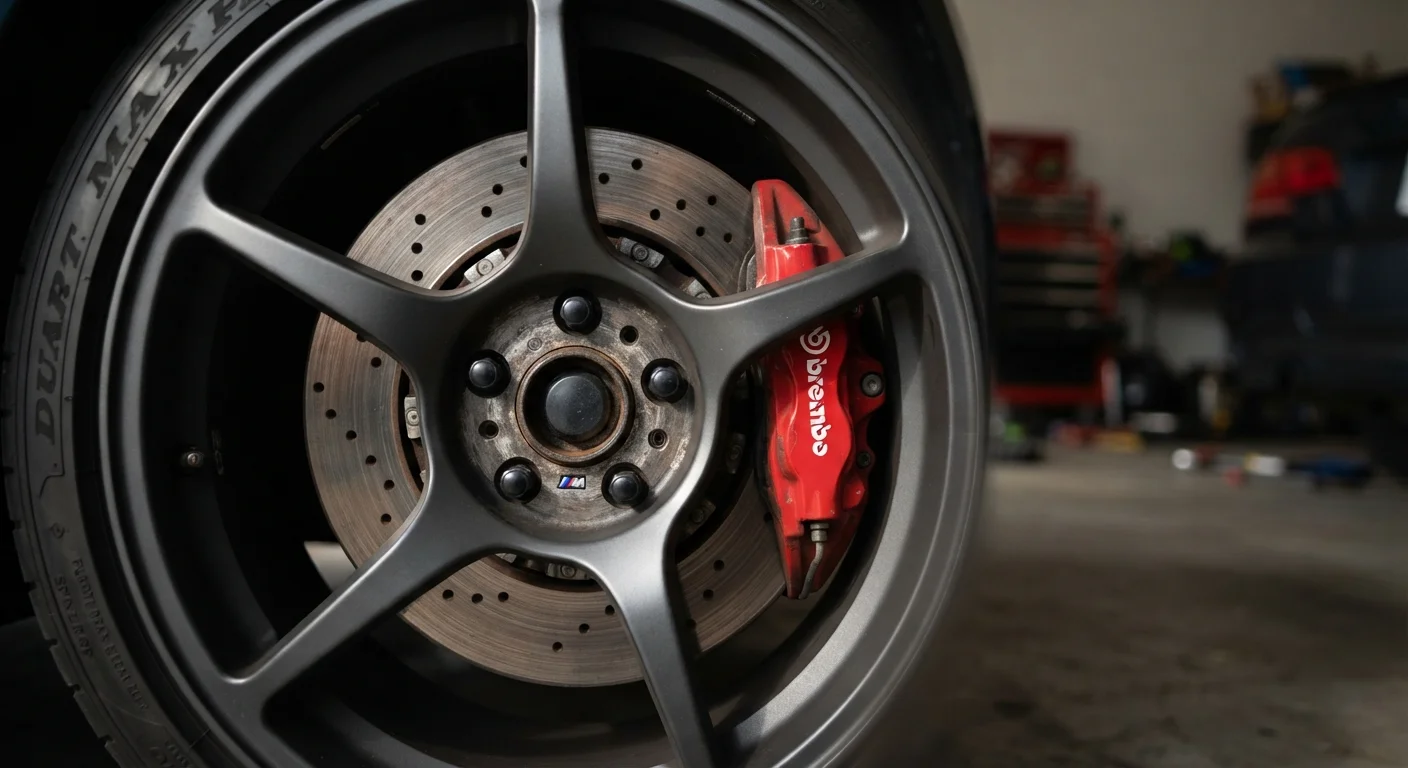
The hydraulic clamp that squeezes the brake pads against the rotor when the pedal is pressed. A stuck caliper can cause pulling or overheating.
Brake fluid
Hydraulic fluid that transfers pedal force through the brake lines to the calipers. It absorbs moisture over time, which lowers its boiling point and reduces braking performance.
ABS (anti-lock braking system)
A system that rapidly modulates brake pressure during hard stops to prevent wheel lockup, helping the driver maintain steering control.
Wear indicator
A small metal tab built into a brake pad that contacts the rotor and produces a squealing sound when the pad has reached minimum safe thickness.