

Key Takeaways
- Disc brakes use hydraulic pressure to squeeze pads against a rotor, generating the friction needed to stop.
- Brake fluid is the hydraulic medium that transfers pedal force to the calipers; contaminated fluid reduces stopping power.
- Most manufacturers recommend a brake inspection every 12,000 miles or once a year, whichever comes first.
- Worn brake pads, soft pedal feel, and pulling to one side are signals that a qualified mechanic should inspect the system.
- Never delay brake service: degraded stopping ability is a direct safety risk.
Automotive braking system
A braking system is the collection of components that slows and stops your vehicle by converting kinetic energy into heat through friction. Most modern cars use hydraulic disc brakes at all four wheels, though some use drum brakes at the rear. When you press the brake pedal, pressurized fluid transmits that force to clamps that squeeze brake pads against spinning metal rotors.
Antilock braking systems (ABS) add sensors and a control module that rapidly modulate hydraulic pressure to prevent wheel lockup during hard stops, improving steering control on slippery surfaces.
The anatomy of a disc brake system
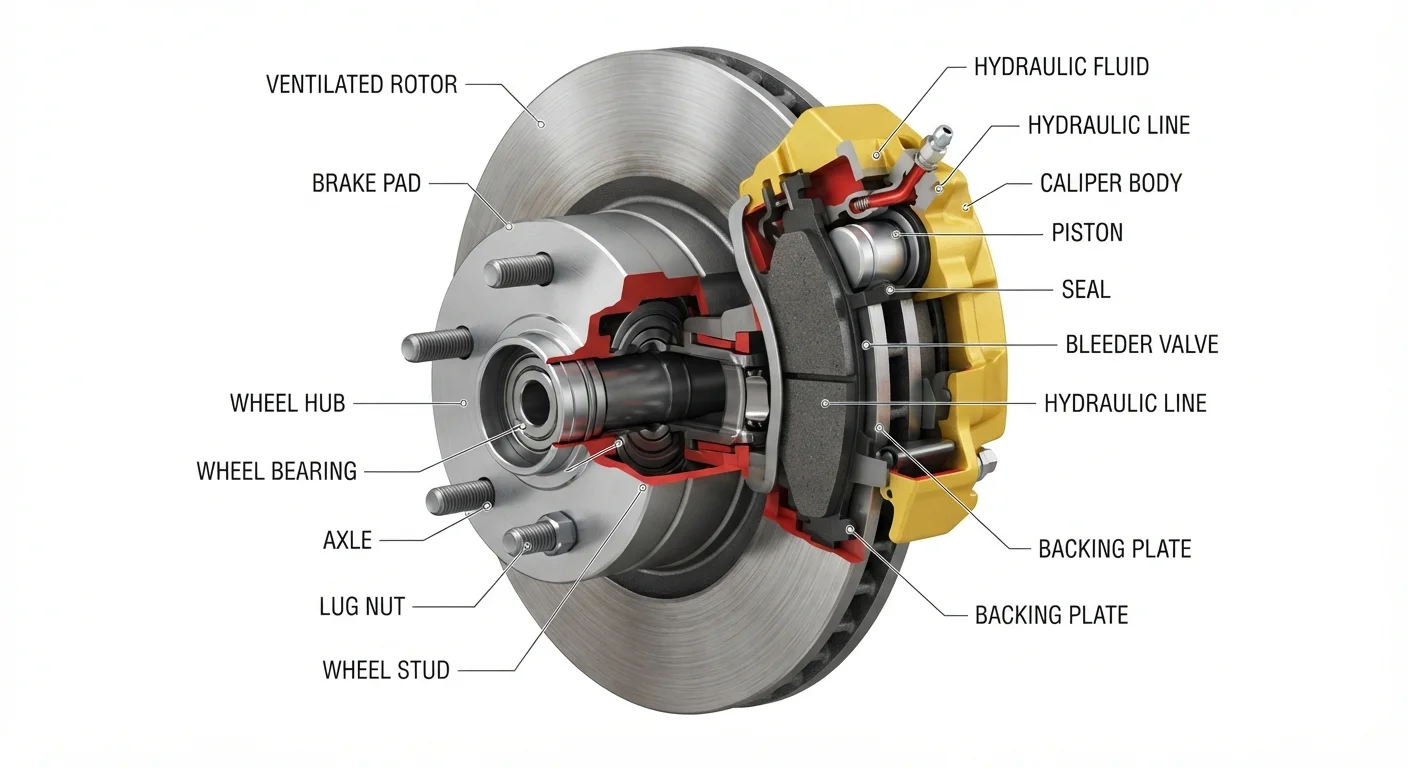
The four main components of a disc brake system work together in a precise sequence every time you press the pedal.
Brake rotor: A flat, circular metal disc that mounts directly to the wheel hub and rotates with the wheel. When the brakes engage, the rotor is what gets gripped.
Brake caliper: A hydraulically actuated clamp that straddles the rotor. Inside the caliper sit one or more pistons that extend outward when hydraulic pressure builds.
Brake pads: Friction material bonded to a metal backing plate and held inside the caliper. When the pistons extend, they push the pads against both sides of the spinning rotor. The resulting friction converts wheel speed into heat, slowing the car.
Hydraulic lines and brake fluid: The circuit that connects your pedal to the calipers. Pressing the pedal compresses a master cylinder, which forces brake fluid through sealed lines. Because liquid does not compress, the pressure transfers almost instantly to each caliper. Brake fluid and the other fluids in your car each have specific roles; keeping them in good condition matters as much as the mechanical parts.
Drum brakes, still found at the rear of some vehicles, work on a similar hydraulic principle. Wheel cylinders push curved brake shoes outward against the inside of a spinning drum rather than squeezing a rotor.
What ABS adds to the system
An antilock braking system (ABS) does not change the fundamental friction mechanics described above. It adds wheel-speed sensors at each corner and an electronic control unit (ECU) that monitors those sensors during hard stops.
If one wheel begins to lock up, the ECU rapidly pulses hydraulic pressure to that wheel's caliper, allowing it to keep rotating slightly rather than skidding. A locked wheel loses the ability to steer, so ABS lets the driver maintain directional control during an emergency stop. The pulsing sensation you may feel through the pedal during a hard stop on a slippery surface is ABS working as intended.
Test your brakes in a safe location
Periodically find an empty parking lot and perform a firm, controlled stop from about 30 mph. Pay attention to whether the vehicle stops straight, whether the pedal feels firm, and whether any unusual sounds occur. This informal check can surface problems between scheduled inspections.
How brakes wear over time
Brake pads thin gradually with every stop. Built into many pads is a small metal tab called a wear indicator. When the friction material wears down to a certain thickness, that tab contacts the rotor and produces the high-pitched squealing sound many drivers associate with brake wear. That sound is a deliberate signal, not a coincidence.
Rotors wear too, though more slowly than pads. They can also warp from repeated heat cycles, which produces a pulsing or vibrating sensation through the brake pedal. A mechanic can measure rotor thickness with a micrometer; if it has worn below the manufacturer's minimum, replacement is necessary rather than resurfacing.
Brake fluid degrades differently. It is hygroscopic, meaning it absorbs moisture from the atmosphere over time. Water in the fluid lowers its boiling point, which can cause vapor lock under heavy braking and allows corrosion to develop inside calipers and lines. High-mileage vehicles are especially susceptible because their hydraulic components have had more years of exposure.
Inspection intervals and what mechanics check
Most manufacturers recommend a brake inspection every 12,000 miles or once a year, whichever comes first. Your owner's manual is the authoritative source for your specific vehicle.
During an inspection, a mechanic will measure pad thickness, check rotor condition and thickness, inspect caliper function and hardware, examine hydraulic lines for leaks or cracking, and test brake fluid for moisture content. The results typically appear in an inspection report using a color-coded system. Understanding how to read that report helps you ask informed questions and prioritize any recommended work.
You can also do a basic visual check at home. Simple DIY car checks include looking through the wheel spokes to assess pad thickness without tools. That does not replace a professional measurement, but it can alert you to obvious wear between scheduled visits.
If you notice any of the symptoms described in our guide to brake warning signs, such as grinding noises, pedal softness, or the vehicle pulling during stops, arrange an inspection promptly rather than waiting for the next scheduled interval. Brake performance is directly tied to overall driving safety, and delaying a known problem compounds the risk.