

| Fluids to monitor regularly | 6 main types |
| Engine oil check method | Dipstick (engine off, level surface) |
| Brake fluid color when healthy | Clear to pale yellow |
| Coolant reservoir marking | Min and max lines on translucent tank |
| Transmission fluid color when healthy | Red or pink, no burnt smell |
Why fluids matter more than most drivers realize
A modern vehicle depends on several distinct fluids to keep its systems running safely. Each one performs a specific job, and when a level drops or the fluid degrades, it can cause damage that far outweighs the cost of a simple top-up or change. Knowing what to look for takes less time than you might expect. For a broader routine, see the DIY car checks you can do in 15 minutes guide.
| Fluids to monitor regularly | 6 main types |
| Engine oil check method | Dipstick (engine off, level surface) |
| Brake fluid color when healthy | Clear to pale yellow |
| Coolant reservoir marking | Min and max lines on translucent tank |
| Transmission fluid color when healthy | Red or pink, no burnt smell |
The six fluids every driver should know
Engine oil lubricates the moving metal parts inside the engine, reduces friction, and carries heat away from surfaces. Check it with the dipstick when the engine is cool and the car is on level ground. Oil should appear amber to light brown and sit between the two marks on the dipstick. Black, gritty oil or a level below the minimum mark means it needs attention. Interval guidelines vary by vehicle and oil type, so check your owner's manual rather than relying on a generic number.
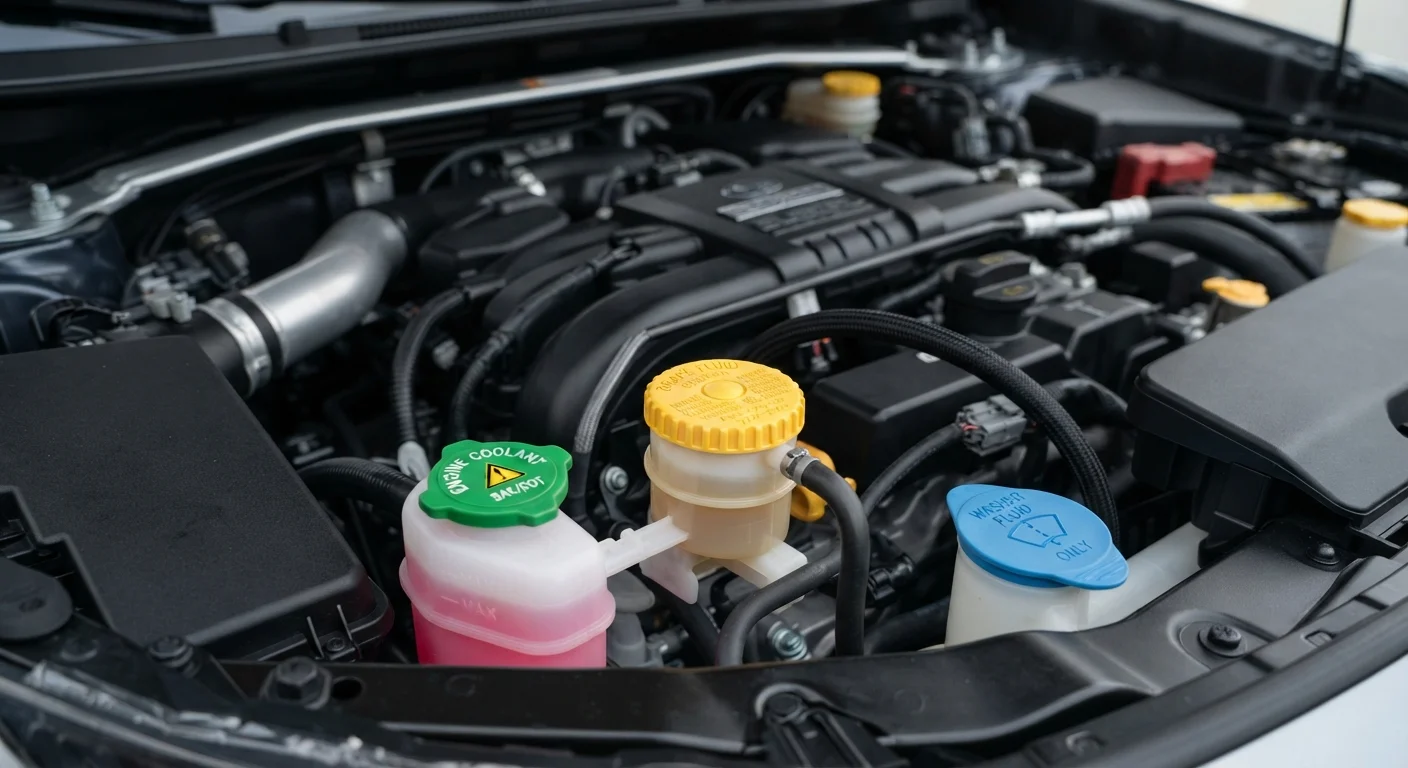
Coolant (antifreeze) keeps the engine from overheating and prevents freezing in cold weather. The translucent overflow reservoir near the radiator has min and max lines. Coolant is typically green, orange, or pink depending on the formulation. A low level can signal a leak; a milky or oily appearance can point to a more serious internal problem worth having a mechanic inspect.
Brake fluid transmits the force from your pedal through the hydraulic lines to the brakes themselves. The reservoir is usually a small plastic tank on top of the brake master cylinder. Fluid should be at or near the max line and appear clear to pale yellow. Dark brown fluid or a level that keeps dropping despite no visible leak warrants professional inspection. For more context, see how car brakes work.
Transmission fluid lubricates the gearbox components and helps manage heat. Many automatic transmissions have a dipstick similar to the engine oil dipstick; others are sealed and require a shop inspection. Healthy fluid is typically red or pink and does not smell burnt. If your vehicle has a manual transmission, the fluid type and check process differ; the manual vs. automatic transmission overview explains those differences.
Power steering fluid (on vehicles without electric power steering) pressurizes the system that makes turning the wheel easier. The reservoir is marked with a steering wheel icon. Low fluid or a whining noise when turning can both point to a leak.
Windshield washer fluid is the one fluid that poses no mechanical risk if it runs low, but driving without it when you need it is a safety issue. Use a washer-rated formula rather than plain water, which can freeze and can leave mineral deposits on the pump.
Hydraulic system
A system that uses pressurized fluid to transmit force. In brakes, pressing the pedal pressurizes fluid in lines that activate the brake calipers or wheel cylinders.
Dipstick
A metal rod inserted into a fluid reservoir (typically engine oil or transmission fluid) with min and max markings that show the current fluid level.
Head gasket
A seal between the engine block and cylinder head. If it fails, coolant and engine oil can mix, which is a serious and costly repair.
Coolant formulation
The specific chemical mix in antifreeze. Different vehicles require different types (green, orange, pink, or others), and mixing incompatible types can cause damage.
Reading the signs something is wrong
Color and consistency tell you a lot. Oil that has gone black and thick has broken down. Coolant that looks oily has likely mixed with engine oil, which points to a head gasket problem. Brake fluid that has darkened has absorbed moisture over time and its boiling point has dropped, which affects braking performance under hard use.
Puddles under the car are worth identifying. An oily dark spot under the engine suggests an oil leak. A sweet-smelling, slippery puddle near the front is often coolant. A clear or slightly oily puddle near a wheel could be brake fluid. Transmission fluid leaks tend to appear toward the center of the car.
Vehicles with high mileage often need more frequent fluid checks because seals age and small leaks become more common. The high-mileage vehicle maintenance guide covers which fluids become more critical as mileage climbs.
If you are uncertain about a fluid's condition or the source of a drop in level, a licensed mechanic can inspect the system. Some fluid degradation is not visible without testing, and attempting repairs on sealed or pressurized systems without proper training carries real risk of injury or vehicle damage.