

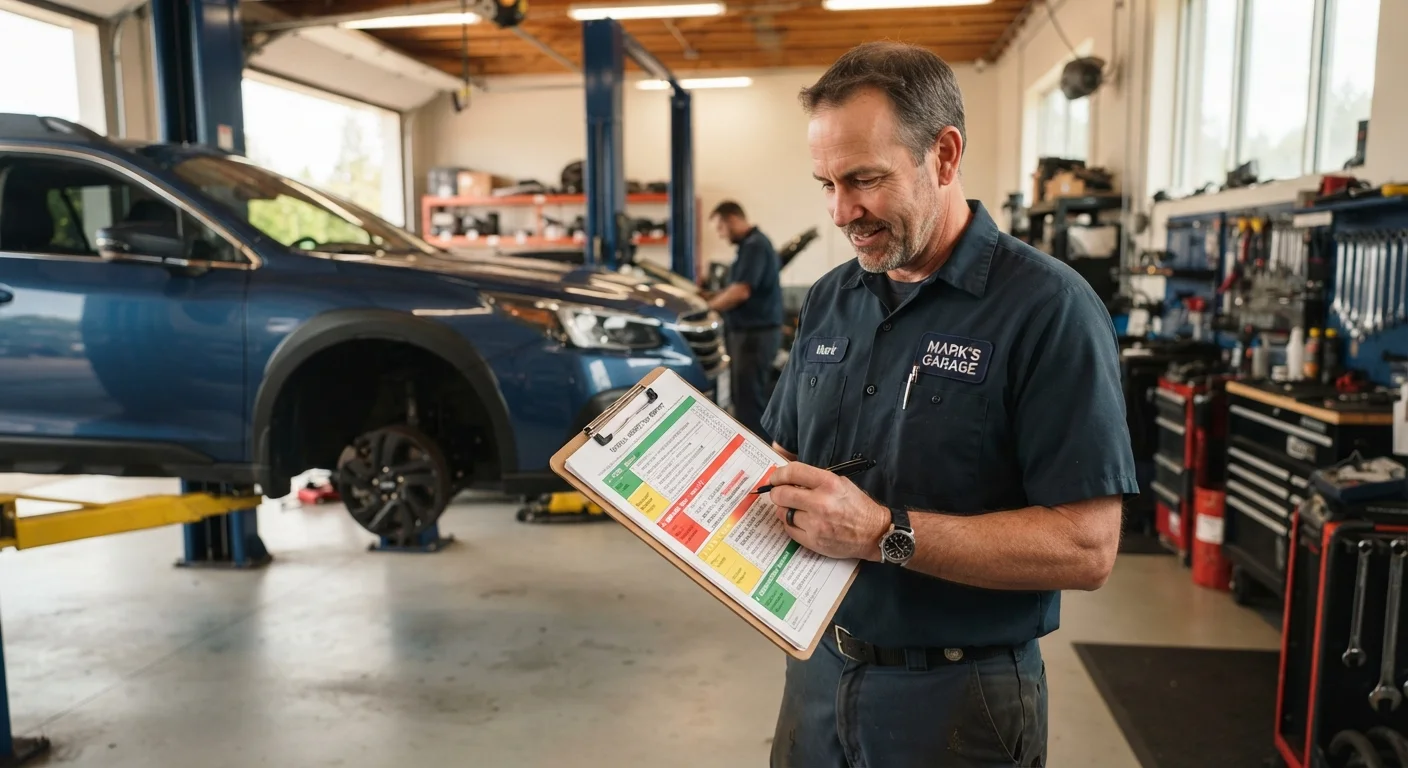
Key Takeaways
- Color-coded ratings (red, yellow, green) signal urgency, not just the presence of a problem.
- Not every flagged item requires immediate repair; some are advisory notes for future monitoring.
- You have the right to ask for clarification, written estimates, and time to think before authorizing work.
- A second opinion on expensive or unexpected findings is reasonable and common practice.
- High-mileage vehicles tend to generate longer reports because more components are near or past service intervals.
Start here
What an inspection report actually is
Next
How color codes and severity ratings work
Go deeper
Common items on the report and what they mean
Apply it
Questions to ask before approving any work
What an inspection report actually is
When you bring your car in for routine service, most shops perform a multi-point inspection alongside the work you requested. The result is a printed or digital report that documents the condition of your vehicle's major systems at that moment.
The report is not a repair order. It is a snapshot. Items listed on it are flagged for your awareness, not automatically added to your bill. You decide what gets fixed. Understanding that distinction puts you in control of the conversation with your service advisor.
Multi-point inspection
A standardized check of multiple vehicle systems performed visually or by measurement, usually during routine service. It covers items like brakes, tires, fluids, and filters.
Severity rating
A label (often a color: red, yellow, green) that tells you how urgent a flagged item is, from immediate safety concern to a future monitoring note.
Wear threshold
The minimum acceptable measurement for a part, such as brake pad thickness. Below the threshold, the part needs replacement to remain safe.
Advisory item
A note on an inspection report flagging something to watch over time, not necessarily to fix right now. Often shown in yellow.
Written estimate
A document listing the specific repairs recommended, parts costs, and labor charges before any work begins. You have the right to request one.
If your vehicle has higher mileage, expect a longer report. More components will be near or past their service intervals. See what changes at high mileage for context on which items become more critical over time.
How color codes and severity ratings work
Most shops use a three-tier color system to communicate urgency:
- Red means the item is a safety concern or has failed a wear threshold. The shop typically recommends addressing these before driving further.
- Yellow (or orange) marks items that are approaching a service interval or showing early wear. These warrant monitoring and planning, not panic.
- Green confirms the item is within acceptable range at this time.
Red-rated items affect driving safety
If your report lists a red-rated item involving brakes, steering, or suspension, ask your mechanic directly whether the car is safe to drive before leaving the shop. Do not assume a red flag is simply a sales prompt. These ratings exist to flag genuine risk.
A yellow flag on, say, your air filter does not carry the same weight as a yellow flag on your brake fluid. Read the note next to each item, not just the color, to understand what the mechanic actually observed.
Report formats vary by shop
There is no single industry-wide standard for inspection report layout. One shop may use a printed checklist; another may send a digital report with photos via text. The color-code system (red, yellow, green) is widely used but not universal. When you receive a report in an unfamiliar format, ask the service advisor to walk you through the rating scale before you review the findings.
Common items on the report and what they mean
Most multi-point reports cover a consistent set of systems. Here is what you are likely to see:
- Brake pads and rotors: Pads are measured in millimeters. A reading below roughly 3mm is commonly flagged red, though thresholds vary by shop and vehicle.
- Tire tread depth: Measured with a gauge. Less than 2/32 of an inch is the legal minimum in most states; shops often flag tires at 4/32 for advance warning.
- Fluid levels and condition: Low fluid may mean a leak or simply normal consumption. Discolored or degraded fluid (such as dark brown brake fluid) is a separate concern from level alone.
- Belts and hoses: Visual checks for cracking, fraying, or swelling. These are often advisory items on newer vehicles.
- Battery: Load-tested for cold cranking amps. A marginal result often shows up yellow before a battery fails completely.
For items you want to understand better before your next service, simple visual checks you can do at home cover several of the same systems.
Ask to see the wear yourself
When a mechanic flags a worn part, ask them to show it to you or provide a photo before you approve the repair. Most shops do this without hesitation. Seeing the actual measurement or wear level helps you understand the urgency and builds trust in the recommendation.
Questions to ask before approving any work
You are not obligated to approve repairs on the spot. Before you authorize anything beyond what you originally came in for, ask:
- What exactly did you observe, and can you show me?
- Is this a safety issue right now, or is it something to plan for?
- What is the written estimate, including parts and labor?
- How long can I reasonably wait before addressing this?
A good service advisor will answer these clearly. If the answers feel evasive or the pressure to approve feels rushed, slow down. You have time to think.
Knowing how to read your tires helps too. Understanding the numbers on your tire sidewall gives you a foundation for evaluating tire-related findings on your own.
When to get a second opinion
A second opinion is worth getting when a single visit produces a large estimate you did not expect, when the flagged items feel inconsistent with how the car has been driving, or when you simply want confirmation before committing to a significant repair.
Bring your inspection report with you to the second shop. A second mechanic can review the same findings and either confirm them or tell you what they observe independently. This is a normal part of car ownership, and reputable mechanics expect it.
If the report includes safety system findings such as brakes or steering, how safety ratings are measured can provide useful background on why those systems receive particular attention.