

Key Takeaways
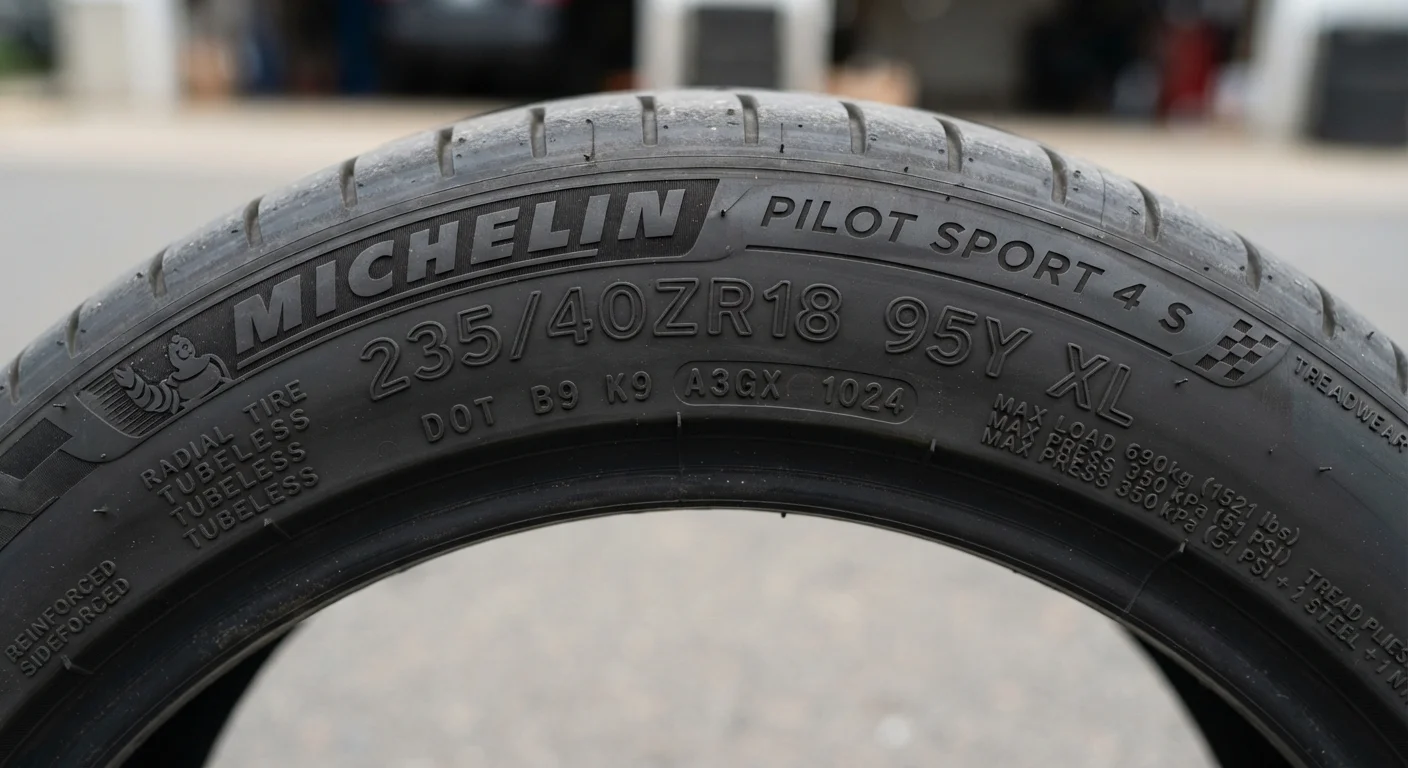
- A typical tire code like P215/65R17 93H tells you the tire type, width, aspect ratio, construction, rim diameter, load index, and speed rating.
- The load index and speed rating are safety limits, not suggestions; exceeding them puts you and other drivers at risk.
- Matching the code on your replacement tire to your vehicle's door jamb placard is the most reliable way to get the right fit.
- The DOT code stamped separately on the sidewall includes the tire's manufacture date, which matters when assessing age-related wear.
- A mechanic or tire professional can help you interpret any markings you are unsure about.
Tire sidewall markings
The string of letters and numbers molded into the side of every passenger tire is a standardized code that describes the tire's physical dimensions, construction type, load capacity, and speed rating. Reading it correctly helps you confirm you have the right tire for your vehicle and driving conditions. Replacing a tire with one that does not match these specs can affect handling, fuel economy, and safety.
The format follows standards set by the Tire and Rim Association (TRA) in the US and the European Tyre and Rim Technical Organisation (ETRTO) globally, so the same code system appears on tires sold worldwide.
Breaking down the main code
Take a tire labeled P215/65R17 93H. Each segment has a specific meaning.
The opening letter or letters identify the tire's service type. P means passenger vehicle. LT means light truck. If there is no letter, the tire follows a metric standard common in European manufacturing.
The three-digit number that follows (215 in this example) is the section width in millimeters, measured from sidewall to sidewall when the tire is mounted and inflated.
The two-digit number after the slash (65) is the aspect ratio: the tire's sidewall height expressed as a percentage of its section width. A ratio of 65 means the sidewall height is 65% of 215 mm. Lower aspect ratios produce a shorter, stiffer sidewall, which is why performance-oriented tires often carry numbers like 45 or 35.
The letter R stands for radial construction, the standard for virtually all modern passenger tires. Radial tires have cord plies arranged perpendicular to the direction of travel, which improves flexibility and heat dissipation.
The two-digit number after R (17) is the rim diameter in inches. This must match your wheel exactly; a tire marked 17 will not seat correctly on a 16-inch or 18-inch rim.
Load index and speed rating
The number and letter at the end of the main code (93H in the example) are the load index and speed rating. Both are safety specifications.
The load index is a standardized number that corresponds to the maximum weight one tire can support when properly inflated. A load index of 93 equals 1,433 pounds per tire. Because load index numbers are not intuitive, tire manufacturers and vehicle door jamb stickers use them as a lookup value rather than printing the raw weight. Your vehicle's door jamb placard will specify the minimum load index your car requires.
The speed rating is a letter that indicates the maximum sustained speed the tire is designed to handle safely. Common ratings include S (112 mph), T (118 mph), H (130 mph), V (149 mph), and W (168 mph). Replacing a tire with one that carries a lower speed rating than your vehicle requires is not advisable, even if the dimensions match perfectly.
Check the door jamb, not the old tire
When buying replacement tires, read the size from your driver's door jamb sticker rather than the tire already on the car. A previous owner may have used the wrong size, and copying it means buying the same mistake. The door jamb placard also lists the correct inflation pressure, which affects both wear and fuel economy.
For a broader look at how tire services connect to vehicle safety, see tire rotation, alignment, and balancing explained.
The DOT code and manufacture date
Separate from the size code, every tire carries a DOT (Department of Transportation) code. It begins with the letters DOT and ends with a four-digit week-and-year stamp. The final four digits are the ones that matter most for age assessment: the first two digits are the week of manufacture, and the last two are the year. A code ending in 1822 means the tire was made in the 18th week of 2022.
Rubber compounds degrade over time even when a tire looks fine on the surface. Many tire and safety organizations suggest having older tires inspected by a qualified mechanic once they reach six years of age, and considering replacement around the ten-year mark regardless of tread depth. The manufacture date stamped on the sidewall is the only reliable way to know a tire's age.
If you are comparing a new set of tires, the manufacture date also tells you whether stock has been sitting in a warehouse. A tire made recently is preferable to one that has been stored for two or three years before sale.
Understanding tire markings is one piece of routine vehicle knowledge. Reading a mechanic's inspection report covers how to interpret the full range of findings a shop may flag during a service visit.
Matching tires to your vehicle
The most authoritative source for your correct tire size is the sticker on your driver's door jamb, not the tire currently on the car. A previous owner may have mounted a different size, and copying that number could perpetuate an incorrect fitment.
Your owner's manual lists approved sizes and, for some vehicles, acceptable alternatives for winter or all-season use. If your vehicle came with a staggered fitment (wider tires on the rear than the front), the manual will specify both sizes.
When a tire professional recommends a different size than what the door jamb lists, ask them to explain the trade-offs in writing. Changes to section width, aspect ratio, or rim diameter can affect speedometer accuracy, clearance inside the wheel well, and the behavior of traction control and stability systems.
Tire condition affects more than ride comfort. Brake warning signs can sometimes trace back to uneven tire wear or mismatched sizes putting irregular stress on the braking system. Checking both together during routine maintenance gives you a fuller picture of your vehicle's safety.
This article is for general informational purposes only. For tire selection specific to your vehicle, consult a qualified tire or automotive professional.