

Key Takeaways
- Tire rotation moves tires to different positions to even out tread wear across all four.
- Wheel alignment adjusts wheel angles so the vehicle tracks straight and handles predictably.
- Wheel balancing corrects uneven weight distribution that causes vibration at speed.
- All three services are distinct and none substitutes for another.
- Rotation is typically needed every 5,000 to 8,000 miles; alignment and balancing intervals depend on vehicle condition and symptoms.
Our Verdict
Tire rotation, wheel alignment, and wheel balancing each address a different problem. Skipping any one of them can shorten tire life, affect fuel economy, or make the vehicle less predictable to drive. Most drivers need rotation most often, but alignment and balancing checks are worth scheduling whenever new tires are installed or handling changes.
| Best for | Recommended |
|---|---|
| Preventing uneven tread wear on a well-maintained vehicle | Tire rotation |
| Correcting pull, drift, or steering that feels off-center | Wheel alignment |
| Eliminating vibration felt through the steering wheel or seat | Wheel balancing |
What each service actually does
These three services are often listed together on a shop menu, which can make them seem interchangeable. They are not. Each targets a specific mechanical condition.
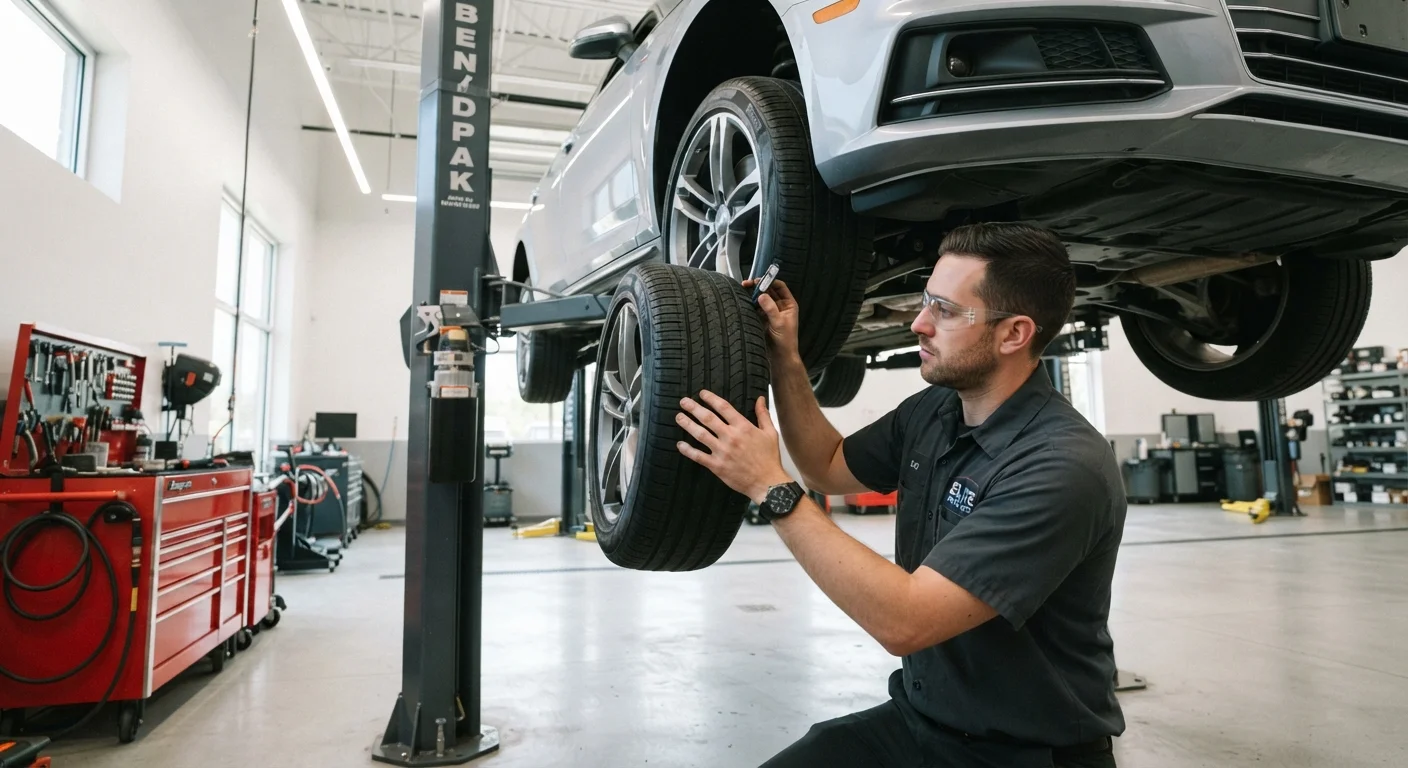
Tire rotation moves tires from one position on the vehicle to another, typically front-to-rear or in an X pattern. Front tires on a front-wheel-drive car wear faster than rear tires because they handle both steering and power delivery. Rotating them extends the usable life of the full set by distributing that wear more evenly.
Wheel alignment adjusts the angles at which your tires meet the road. The three main angles are camber (tilt inward or outward), toe (pointing inward or outward), and caster (the steering axis angle). When those angles drift out of spec, the vehicle pulls to one side, tires wear in uneven strips, and fuel efficiency drops. Alignment is adjusted using a lift-mounted laser or camera system that measures each angle and corrects it to the manufacturer's specification.
Wheel balancing corrects uneven weight distribution around the circumference of a tire-and-wheel assembly. Even a small imbalance, sometimes as little as a quarter ounce, can cause noticeable vibration at highway speeds. A technician spins the assembly on a balancing machine, identifies heavy spots, and attaches small weights to counteract them.
| Tire rotation | Wheel alignment | Wheel balancing | |
|---|---|---|---|
| What it corrects | Uneven tread wear across the set | Wheel angle out of manufacturer spec | Uneven weight in tire-and-wheel assembly |
| Main symptom when needed | Tires wearing unevenly | Vehicle pulls; steering off-center | Vibration at highway speeds |
| Typical interval | Every 5,000 to 8,000 miles | Every 1 to 2 years or after impact | With new tires or when vibration appears |
| Equipment required | Lift and basic hand tools | Alignment rack with laser or camera system | Computerized spin balancer |
| Can it substitute for the others? | No | No | No |
How to tell which service you need
The symptoms point in different directions, which makes it easier to communicate clearly with a mechanic.
- Uneven tread wear across the set, with some tires noticeably more worn than others, suggests rotation is overdue.
- The vehicle pulling left or right on a flat road, or the steering wheel sitting off-center when driving straight, points to an alignment issue.
- Vibration through the steering wheel or seat that gets worse at specific speeds (often 55 to 70 mph) is a classic sign of imbalance.
Some symptoms overlap. A vehicle that has gone a long time without any of the three services may show more than one issue at once. A technician can inspect tread wear patterns and run both an alignment check and a balance spin to identify what actually needs correction.
For vehicles with significant mileage, these services become more consequential. Maintenance priorities shift on high-mileage vehicles, and tire wear compounds faster when alignment or balance has been off for extended periods.
Check tread wear before your next rotation
Run your hand across each tire from the inside edge to the outside edge. Feathering (where one side of each tread block is rounded and the other is sharp) often indicates a toe alignment issue. Wear only on the inner or outer edge points to a camber problem. Spotting these patterns early can help a technician diagnose the root cause rather than simply rotating tires that will wear the same way again.
Typical service intervals
Manufacturer recommendations vary, so the owner's manual is the most reliable reference. General guidelines give a useful starting point.
Rotation is recommended every 5,000 to 8,000 miles for most passenger vehicles. Many drivers time it with oil changes to make it easier to remember.
Alignment does not follow a strict mileage interval the way rotation does. Most mechanics recommend checking it every one to two years, and any time new tires are installed, the vehicle hits a significant pothole or curb, or handling changes noticeably. Suspension repairs and replacements also call for an alignment check afterward.
Balancing is typically done when new tires are mounted, and again if vibration appears. It is also good practice after a tire repair or when a wheel weight has visibly fallen off.
Proper tire maintenance connects directly to traction. Hydroplaning risk increases when tread is worn unevenly, which is one concrete reason rotation schedules matter beyond just extending tire life. If you want a closer look at what the numbers and letters on your tires mean, the sidewall markings explain load rating, speed rating, and more.
Cost and what to expect at the shop
Prices vary by region and shop, but rotation is generally the least expensive of the three. Alignment typically costs more because it requires specialized equipment and more technician time. Balancing falls in the middle and is often included when new tires are purchased.
Bundling services can be cost-effective when a vehicle is due for more than one. If you are buying a new set of tires, asking for balancing and an alignment check at the same appointment avoids paying a second labor charge later.
A shop that recommends all three every single visit without inspecting the vehicle first deserves a follow-up question: what specific reading or symptom is prompting each recommendation? A good technician will show you the alignment printout or the balance machine result rather than simply asserting the service is needed. Understanding other routine maintenance services puts you in a better position to have those conversations confidently.