

Key Takeaways
- Do not brake immediately after a blowout; that response can cause you to lose control.
- Briefly accelerating and steering straight helps stabilize the vehicle first.
- Gradual deceleration and a controlled pull to the shoulder is the correct sequence.
- Front tire blowouts are harder to control than rear tire blowouts.
- Tire condition, pressure, and load all affect blowout risk.
What you will need
Why the first seconds matter most
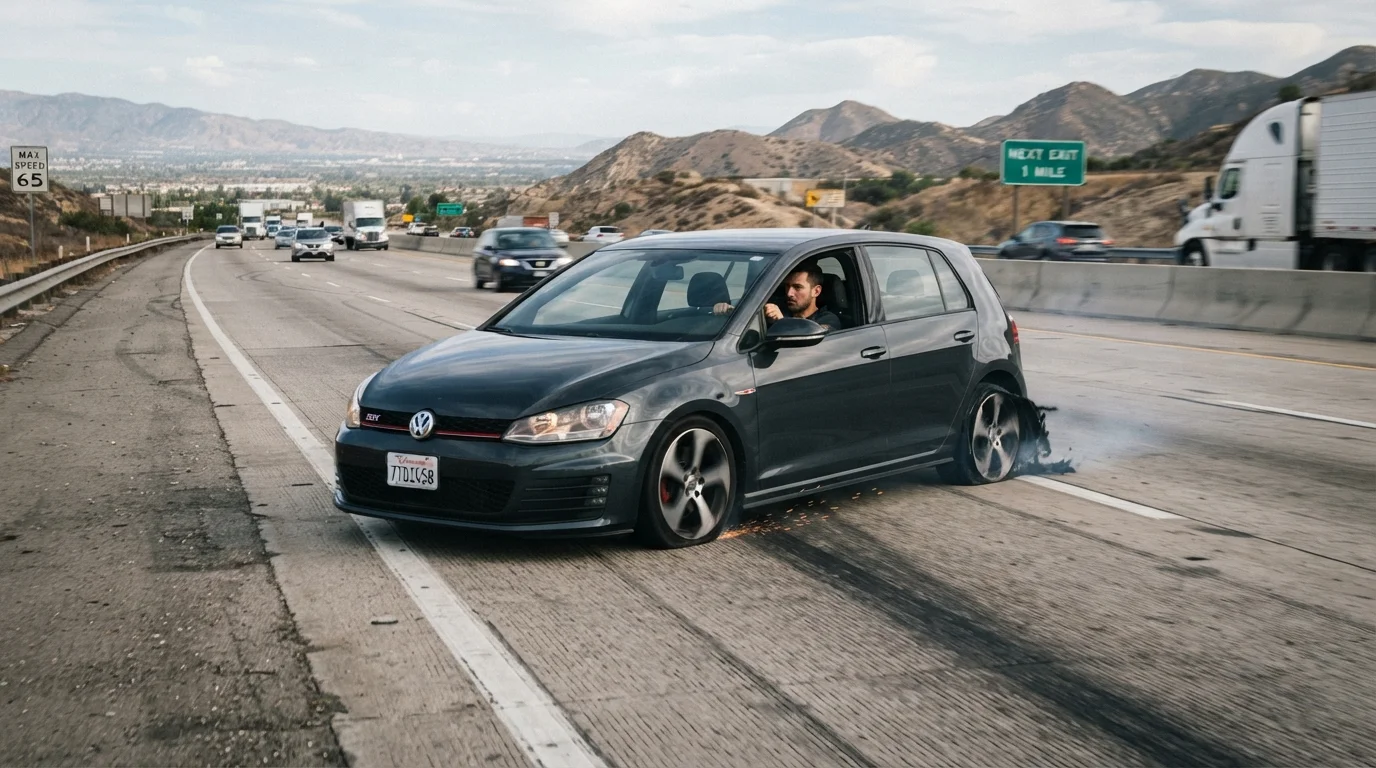
A tire blowout at highway speed produces a sudden, violent change in how your vehicle handles. The damaged tire creates drag on one side, pulling the car in that direction while the remaining tires still grip normally. Speed amplifies everything: at 70 mph, a driver has very little time and even less room for error before a bad reaction turns a manageable situation into a crash.
The problem is that the natural instinct, braking hard and yanking the wheel away from the pull, is exactly the wrong thing to do. Practicing the correct mental sequence before you ever need it is the only way to override that reflex when it counts.
For related guidance on how tire grip and road conditions interact, see our article on hydroplaning.
Never yank the wheel or brake hard
The instinct to brake immediately or jerk the steering wheel is the most dangerous response to a blowout. Hard braking transfers weight onto the damaged tire and makes the vehicle far harder to control. Sudden steering input at speed can send the car into a spin or rollover. Override that instinct deliberately.
How to respond step by step
The steps below describe the correct response sequence. Each builds on the previous one, so order matters.
Grip the wheel firmly with both hands
The moment you feel or hear the blowout, tighten your grip on the steering wheel with both hands. The vehicle will pull strongly toward the damaged tire. Your job in this instant is to hold the wheel steady and resist that pull without overcorrecting in the opposite direction.
Apply brief, gentle throttle
This is the step that feels most counterintuitive. Applying a small amount of throttle immediately after the blowout helps stabilize the vehicle by maintaining forward momentum and keeping weight distributed across all four tires. You are not trying to accelerate; you are preventing the nose from dipping or the car from spinning as the damaged tire drags.
Steer straight and hold your lane
Once the vehicle feels stable, focus on keeping it pointed straight down the road. Do not attempt to move toward the shoulder yet. At higher speeds, a lane change or sharp steering input can transfer too much weight too quickly and cause a loss of control. Hold your position until your speed drops naturally.
Ease off the throttle and let the car decelerate
Release the accelerator gradually and allow engine braking and road friction to slow the vehicle. Do not touch the brake pedal yet. Let speed drop to around 30 mph or below before attempting any braking or lane changes.
Signal, brake gently, and move to the shoulder
Once your speed is well below highway speed, activate your turn signal, check your mirrors, and steer gradually toward the right shoulder. Apply the brake with light, steady pressure. Avoid any sharp braking even at this reduced speed, as the deflated tire still affects handling. Pull as far off the travel lane as possible before stopping completely.
Once you are safely stopped, turn on your hazard lights if you have not already, and assess the damage from a safe position away from traffic. Do not attempt to change a tire on the travel lane or close to moving vehicles. If you cannot safely reach the shoulder or an exit, stay in the vehicle with your seatbelt on and call for roadside assistance.
For more on reading your vehicle's warning signals before a situation becomes an emergency, see our article on brake warning signs.
Check tire pressure before long trips
Underinflated tires generate excess heat at highway speeds, which is one of the most common contributors to blowouts. A quick pressure check before driving long distances takes about two minutes and takes very little effort. Consult your owner's manual or the sticker inside the driver's door jamb for the correct pressure rating for your vehicle.
Reducing the risk before it happens
Blowouts are not random. Most result from a combination of factors that are manageable with routine attention.
- Tire pressure: running significantly underinflated causes the tire sidewall to flex excessively, building heat. That heat eventually breaks down the tire structure.
- Tire age and tread: rubber degrades over time regardless of mileage. Most tire manufacturers suggest inspecting tires carefully after six years and replacing them by ten years, though driving conditions affect this.
- Overloading: carrying weight beyond your vehicle's rated capacity puts added stress on all four tires. Your vehicle's maximum load rating appears on the door jamb sticker.
- Road hazards: potholes and debris can cause immediate structural failure. Maintaining adequate following distance gives you more time to see and avoid hazards. See our article on following distance for practical guidance on judging that gap accurately.
Front blowouts demand extra care
A front tire blowout creates a much stronger pull on the steering wheel than a rear blowout, and the vehicle responds more aggressively. The same technique applies, but you need a firmer grip and more deliberate corrections. If you feel uncertain about controlling the vehicle, prioritize staying in your lane over anything else until speed drops.