

Key Takeaways
- A collections account can stay on your credit report for up to seven years from the original delinquency date.
- The score damage from a collection is heaviest in the first year and gradually lessens as the account ages.
- Paying or settling a collection does not remove it from your report, but it does change the status.
- Newer scoring models may ignore paid collections entirely, though many lenders still use older models.
- Disputing inaccurate collection entries with the credit bureaus is a legitimate and legal right.
Collections account
A collections account appears on your credit report when a creditor transfers an unpaid debt to a collection agency, typically after several months of missed payments. The original account is usually marked as charged off, and the collection account is listed as a separate negative entry. Both can appear on your report and affect your credit score.
Under the Fair Credit Reporting Act (FCRA), most negative items, including collections, can remain on a credit report for up to seven years from the date of first delinquency on the original account.
How a collections account lands on your report
When a borrower stops paying a debt, the original creditor typically waits 90 to 180 days before either selling the account to a third-party debt collector or assigning it to a collection agency. Once that transfer happens, the collector reports a new account to the credit bureaus. The original account may already show as a charge-off, a separate negative mark covered in detail in our overview of charge-offs and derogatory marks.
The collection entry carries the original delinquency date forward. That date is what governs the seven-year reporting window under the Fair Credit Reporting Act. Whether the debt changes hands five more times, the clock does not restart.
How the damage shifts over time
Credit scoring models weight the recency of negative information heavily. A collection reported last month does far more damage than the same collection from four years ago. This is intentional: the models are trying to predict future credit behavior, and recent financial stress is a stronger signal than old stress.
In practical terms, the score impact of a collection follows a rough curve. The first 12 to 24 months tend to carry the steepest penalty. After that, the account ages and its weight in scoring calculations decreases. By year five or six, the entry is close to falling off entirely, and its influence on most scoring models is relatively small compared to current account activity.
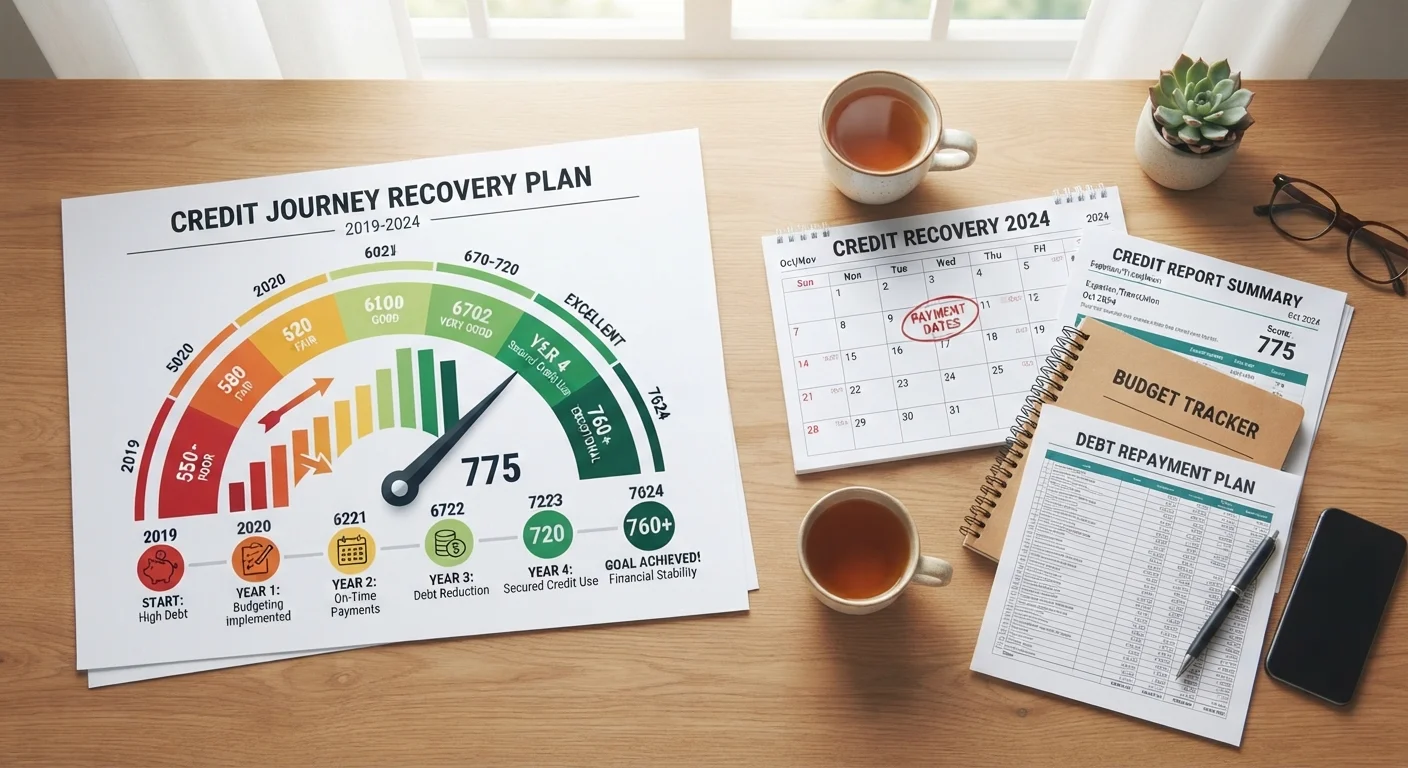
This means that building positive credit history during those years, on-time payments on open accounts, low credit utilization, and account age, actively works to offset the collection's presence. The collection does not disappear, but it competes with more recent, favorable information.
7 years
Maximum reporting period for collections under FCRA
The Fair Credit Reporting Act sets this limit from the date of first delinquency on the original account.
~180 days
Typical wait before a debt enters collections
Most original creditors wait roughly 90 to 180 days of non-payment before sending an account to collections, though timelines vary by creditor and debt type.
FICO 9
Scoring model that ignores paid collections
FICO 9 and VantageScore 4.0 do not count paid collection accounts, though many lenders still use earlier models such as FICO 8.
Paid vs. unpaid: what actually changes
Paying a collection does not remove it from your report. The entry stays until the seven-year window closes. However, the status changes from 'unpaid' to 'paid,' and that distinction matters in two ways.
First, some mortgage and auto loan underwriters require collections to be satisfied before approving a loan. Having a paid collection on file can clear that procedural hurdle even if the score impact is limited. Second, newer credit scoring models, including FICO 9 and VantageScore 4.0, ignore paid collections when calculating your score. The catch is that many lenders still use older models such as FICO 8, which does count paid collections. Knowing which model your lender uses is worth asking about before paying solely for score improvement.
If a collection contains inaccurate information, including a wrong balance, wrong date, or an account you do not recognize, you have the right to dispute it with each credit bureau directly. A successfully disputed and removed collection does improve your score, sometimes substantially.
What this means for your financial recovery
A collections account is a setback, not a permanent barrier. The credit system is designed so that recent behavior carries more weight than old behavior. Someone who had a collection five years ago but has made every payment on time since then looks meaningfully different to a lender than someone who collected the same account last year.
The most direct path through recovery is adding positive information consistently. Different account types affect your credit profile differently, so a mix of on-time revolving and installment payments builds a broader, stronger history over time. Avoiding new delinquencies matters more than any single action on the old collection.
For anyone managing an active collection dispute or negotiating with a collector, keeping written records of all communications is practical and important. If you are considering settling a collection for less than the full balance, consult a licensed credit counselor or financial adviser first, since forgiven debt can have tax consequences depending on the amount.
This article is for general informational purposes only and does not constitute financial, legal, or tax advice. Consult a qualified professional for guidance specific to your situation.