

Key Takeaways
- Payment history is the single largest factor, accounting for 35% of your FICO Score.
- Credit utilization, the share of available revolving credit you are using, makes up 30% of your score.
- A longer average credit history generally produces a stronger score, all else being equal.
- Opening several new accounts in a short period can lower your score temporarily.
- Carrying a mix of credit types can help, but it is not worth taking on debt you do not need.
- This article is general financial education; consult a licensed financial adviser for guidance specific to your situation.
Credit score
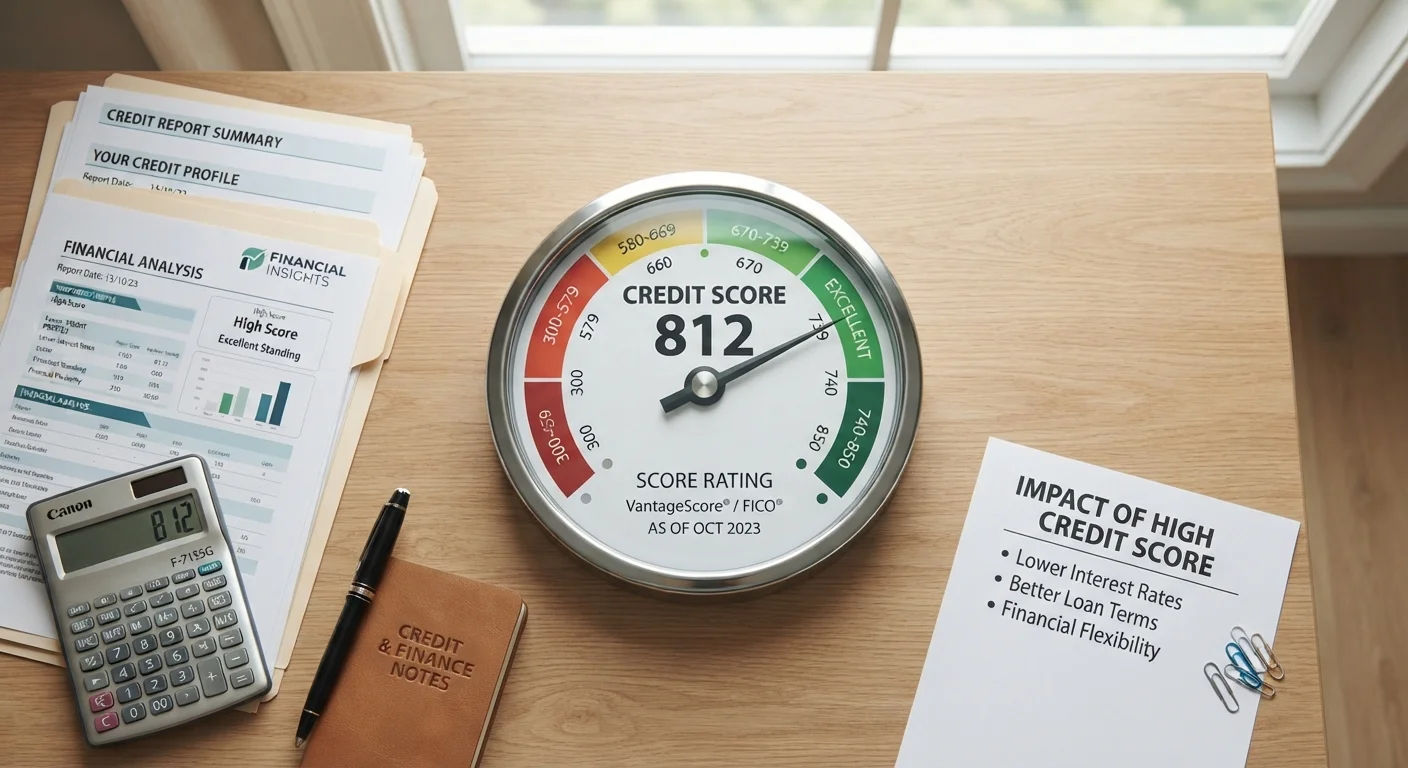
A credit score is a three-digit number, typically ranging from 300 to 850, that summarizes how reliably you have managed borrowed money. Lenders use it to assess the risk of extending you credit. The most widely used scoring model in the US is the FICO Score, developed by Fair Isaac Corporation.
FICO Scores and VantageScores use the same 300-850 range but weight factors differently. Lenders may use industry-specific versions of these scores when evaluating applications for auto loans or credit cards.
The five factors behind every FICO Score
FICO Scores are calculated from data in your credit report, organized into five categories. Each category carries a specific percentage weight, though the exact impact on any individual score depends on the full picture of that person's credit file.
- Payment history (35%) - whether you pay on time
- Amounts owed (30%) - how much of your available credit you are using
- Length of credit history (15%) - how long your accounts have been open
- Credit mix (10%) - the variety of account types you carry
- New credit (10%) - recent applications for new accounts
These weights come from FICO's published scoring criteria and apply to the base FICO Score model. If you are new to credit concepts entirely, start with the fundamentals before working through each factor below.
Payment history and amounts owed: the two heavyweights
Together, payment history and amounts owed account for 65% of your base FICO Score, so they deserve the most attention.
Payment history records whether you paid each account on time. A single missed payment can lower a strong score by a meaningful amount, and the damage grows with how late the payment is (30 days, 60 days, 90 days past due) and how recent it occurred. Bankruptcies, collections, and charge-offs also appear here and carry the heaviest penalties.
Amounts owed is often called credit utilization. For revolving accounts such as credit cards, it measures how much of your available credit limit you are currently using. A borrower with a $10,000 total credit limit carrying $3,000 in balances has a 30% utilization rate. Most scoring guidance suggests keeping this figure below 30%, with lower generally producing better scores. Revolving credit and installment loans are treated differently in this calculation, which is worth understanding if you carry both.
35%
Share of FICO Score from payment history
According to FICO's published scoring criteria, payment history is the single largest component of the base FICO Score.
30%
Share of FICO Score from amounts owed
FICO's published breakdown shows amounts owed, including credit utilization on revolving accounts, is the second-largest scoring factor.
300-850
FICO Score range used by US lenders
The base FICO Score range is published by Fair Isaac Corporation and is the scale most US lenders reference when evaluating creditworthiness.
Length of history, credit mix, and new credit
The remaining three factors carry less individual weight but still shape your score in ways that are easy to overlook.
Length of credit history considers how long your oldest account has been open, how long your newest account has been open, and the average age across all accounts. Closing an old account reduces your average account age and can lower your score. This is one reason financial educators often suggest keeping older accounts open even if you rarely use them.
Credit mix looks at whether you have experience managing different account types: credit cards, auto loans, mortgages, student loans. Having a variety can benefit your score modestly, but this factor is not significant enough to justify taking on debt purely for the sake of diversification.
New credit tracks hard inquiries and recently opened accounts. Each hard inquiry from a lender typically causes a small, short-lived dip in your score. Rate shopping for a mortgage or auto loan within a short window is treated as a single inquiry by most scoring models, which limits the impact. Understanding when inquiries hurt and when they don't can help you time applications more strategically. Before you apply for any new credit, a readiness checklist can help you assess whether the timing makes sense for your financial situation.
What the math means for everyday decisions
Knowing the weights helps you prioritize. Paying on time every month protects the factor that matters most. Paying down revolving balances addresses the second-largest factor. Both actions are within reach for most people and produce measurable results over time.
Actions that seem minor, such as opening several store credit cards in one shopping season or closing old accounts during a balance transfer, can move your score in ways that surprise people. Some of the most common score-damaging patterns are not obvious until you understand how the underlying model works.
Credit scores are one input lenders use alongside income, employment history, and existing debt obligations. A strong score improves your position, but it does not guarantee approval or a specific rate. This article provides general financial education and does not constitute personalized advice. For decisions about your own credit and borrowing, consult a licensed financial adviser or credit counselor.