

Key Takeaways
- Accumulated short bouts of movement throughout the day carry real health benefits, not just dedicated gym sessions.
- Habit stacking, attaching movement to existing routines, is one of the most reliable ways to stay consistent.
- Walking is among the most accessible and well-researched forms of exercise available to adults.
- Reducing prolonged sitting matters independently of how much structured exercise you do.
- No equipment or large blocks of free time are required to maintain an active daily life.
Why time pressure keeps people sedentary
When adults report why they skip exercise, lack of time tops the list in survey after survey. That response is honest, but it often rests on a narrow definition of movement: the hour-long gym session that requires a bag, a commute, and a shower afterward. When that format does not fit the day, nothing happens instead.
The research picture is more forgiving. Physical activity guidelines from the U.S. Department of Health and Human Services recognize that movement accumulated in shorter bouts counts toward weekly totals. A ten-minute walk before work, a few sets of bodyweight moves at lunch, and a brief evening stretch collectively contribute to the same physiological benefits as one longer session. The gap between "I have no time" and "I can move today" is often a matter of format, not minutes.
The strategies below are aimed at adults with genuinely full days. None requires a gym membership, a large window of free time, or fitness experience. For those returning to movement after a gap, a realistic low-pressure restart can help set the right pace.
Practical ways to weave movement into a packed day
These approaches work across different job types, living situations, and fitness levels. Pick what fits your current schedule and build from there.
Stack movement onto existing habits
Habit stacking means attaching a movement cue to something you already do reliably. Walk during phone calls you would otherwise take seated. Do calf raises while waiting for coffee to brew. Stretch for five minutes immediately after closing your laptop at the end of the workday. The existing habit acts as a reliable trigger, so you spend no mental energy deciding when to move.
This approach works because the decision cost drops to nearly zero. You are not adding a new slot to your calendar; you are modifying what happens during a slot that already exists.
Attaching movement to existing habits removes the decision cost that derails most fitness intentions.
Take walking seriously as exercise
Walking is one of the most studied forms of physical activity, with a strong body of evidence linking regular walking to cardiovascular health, mood regulation, and metabolic function. It requires no equipment, no warm-up ritual, and no skill acquisition. For a full look at what the evidence shows, the science behind walking for fitness covers the research in detail.
Practically: walk to a farther coffee shop, take stairs instead of the elevator, park at the far end of a lot, or replace one short car trip per day with a walk. These substitutions rarely require more than five extra minutes but accumulate quickly across a week.
Regular walking has a strong evidence base for cardiovascular and metabolic health, with no equipment required.
Use bodyweight exercises in small spaces
A living room, a hotel room, or even a hallway is enough space for effective bodyweight movement. Squats, lunges, push-ups, and glute bridges cover the major muscle groups and require nothing beyond floor space. No-equipment exercises for small spaces offer a practical starting point if you want a structured set of moves.
A ten-to-fifteen-minute session before a shower or after dinner costs little time and adds meaningful load-bearing movement to days that are otherwise entirely sedentary. The session does not need to be intense; consistency across the week matters more than any single effort.
Ten to fifteen minutes of bodyweight movement in any room is enough to add meaningful load-bearing activity to a sedentary day.
Break up long sitting stretches deliberately
Prolonged uninterrupted sitting is linked to metabolic and cardiovascular concerns that accumulate regardless of how active a person is in structured exercise time. The two behaviors, sitting and exercising, appear to affect the body through different biological pathways.
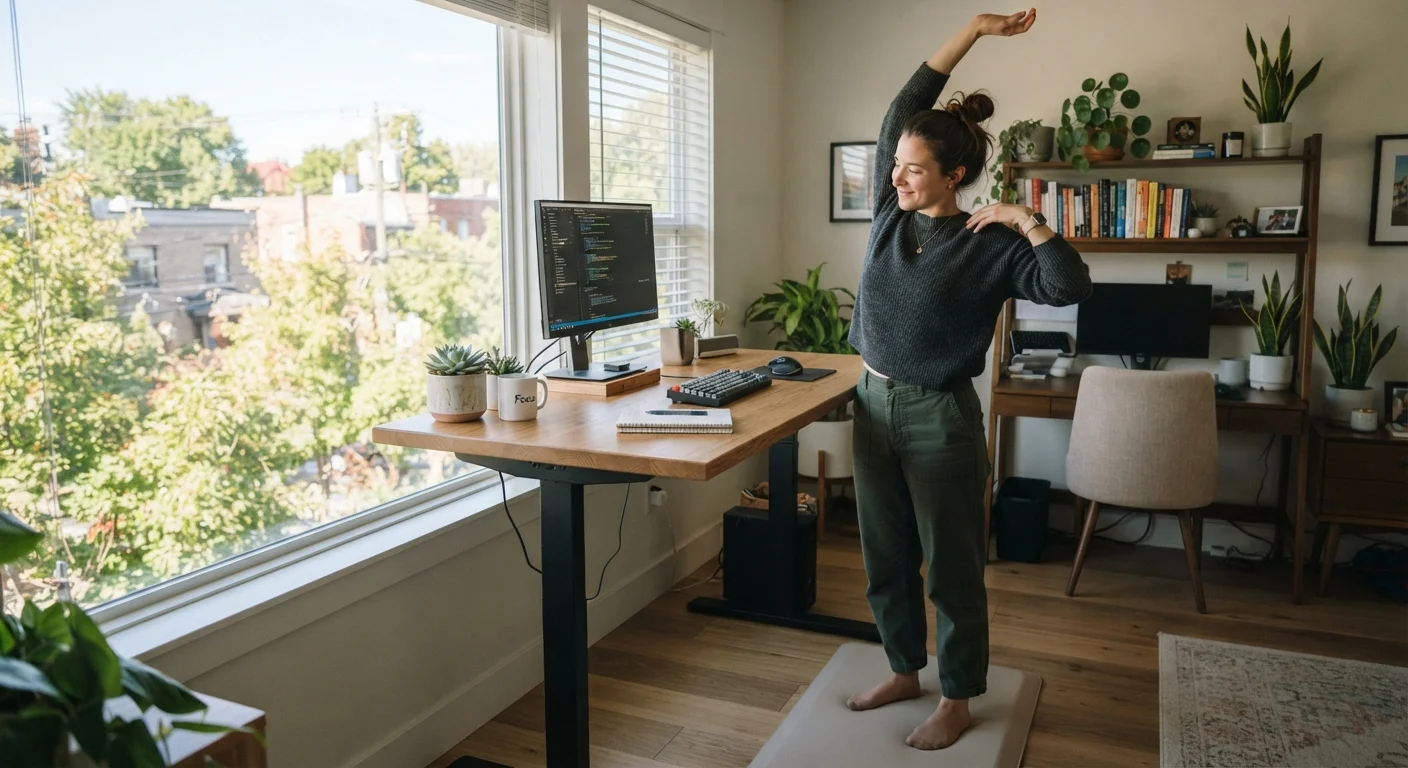
A practical target: stand or move briefly every 30 to 60 minutes during a seated workday. A standing desk, a scheduled phone alarm, or a short walk to a colleague's desk rather than sending an email all accomplish this. A movement routine designed for desk workers addresses the specific areas that prolonged sitting affects most.
Breaking up long sitting stretches benefits health independently of how much structured exercise you complete.
Reframe 'short' as sufficient
Many adults discount a five-minute walk or a brief set of stretches because it does not match their mental image of a real workout. This comparison keeps them from doing anything at all on days when a full session is not possible. Short bouts are not a consolation prize; they are a legitimate form of physical activity with their own documented benefits.
On particularly packed days, the goal is simply to move. Keeping that standard low enough to clear on difficult days is what keeps the habit alive across months and years, which is where the real health benefit comes from.
Short movement bouts are a legitimate form of physical activity, not a consolation prize for missing a full workout.
Combine movement with stress management
Physical activity and stress reduction overlap considerably. A short walk, light stretching, or a brief bodyweight circuit at midday does double duty: it interrupts sedentary behavior and provides a physiological reset that can improve focus for the rest of the afternoon. For adults whose packed schedules are also stressful, this overlap is worth using deliberately. Stress management approaches that fit a busy schedule cover the broader toolkit, of which movement is one reliable part.
A midday movement break does double duty: it interrupts sitting and provides a physiological reset that can sharpen afternoon focus.
Track accumulation, not sessions
Instead of counting workouts, try tracking total daily minutes of movement across all contexts: commuting on foot, brief desk breaks, and evening walks all count. Many adults find they are closer to the recommended 150 minutes of moderate-intensity activity per week than they thought, which makes the gap feel manageable rather than discouraging.
This article is for general informational purposes only and is not medical advice. Consult a qualified healthcare professional before starting a new exercise routine, particularly if you have an existing health condition.
Making the approach last
Consistency matters more than intensity for most everyday adults. A morning movement habit can anchor the day, but movement does not have to be front-loaded. Spreading it across morning, midday, and evening is equally valid and often more sustainable for people with variable schedules.
If desk work takes up most of your day, pairing these strategies with deliberate attention to prolonged sitting pays off. Brief, deliberate movement throughout the day can help offset the effects of long sedentary stretches, independently of how much structured exercise you log. The two goals support each other rather than compete.