

Key Takeaways
- Prolonged sitting carries health risks even for people who exercise regularly.
- Breaking up sitting with short movement every 30 to 60 minutes is supported by current evidence.
- No gym or special equipment is needed to add effective movement to a desk-heavy day.
- Standing, walking, and simple stretching all count as meaningful interruptions to sedentary time.
- Consistent small habits over time tend to produce more durable results than occasional intense sessions.
Sedentary behavior and movement breaks
Sedentary behavior refers to extended periods of physical inactivity while awake, most often sitting or reclining. Movement breaks are brief, deliberate interruptions to that stillness. Research consistently links prolonged sitting to increased risk of cardiovascular issues, metabolic changes, and musculoskeletal discomfort, independent of how much exercise a person gets otherwise. Brief, regular movement throughout the day can help counteract some of those effects.
The concept of 'active couch potato' syndrome describes individuals who meet weekly exercise guidelines yet still face health risks from hours of uninterrupted daily sitting, suggesting that exercise and breaking up sedentary time are separate health behaviors.
Why prolonged sitting is a distinct health concern
Most adults know that regular physical activity matters. Fewer realize that sitting for long, unbroken stretches carries its own set of risks, separate from whether they exercise. The distinction matters because a person can meet the standard recommendation of 150 minutes of moderate-intensity activity per week and still spend the majority of their waking hours seated.
Prolonged sitting is associated with reduced insulin sensitivity, slower circulation in the legs, increased pressure on spinal discs, and a higher likelihood of cardiovascular and metabolic concerns over time. These effects are not simply undone by a morning run. The body responds to stillness during the hours it is still, regardless of what happened earlier in the day.
For a broader look at how everyday movement and formal exercise work differently in the body, see sedentary living versus active daily habits.
Use existing cues rather than new reminders
Attaching a movement break to something you already do reliably, such as finishing a meeting, sending an email, or refilling your water, tends to stick better than setting a separate alarm. Layering a new behavior onto an existing one reduces the mental effort of remembering it.
What movement breaks actually do
When you stand up and move, blood flow increases, postural muscles re-engage, and the metabolic processes that stall during stillness resume. Even a two-minute walk has been shown in published studies to produce measurable short-term improvements in blood glucose regulation compared to remaining seated.
The goal is not to replace structured exercise. It is to interrupt the physiological effects of extended stillness before they accumulate. Think of it as resetting a timer rather than completing a workout.
Frequent position changes also reduce the compressive load on the lumbar spine and help prevent the hip flexor tightening that comes from hours in a chair. Many people notice less lower-back discomfort on days when they move more consistently, though individual results vary and persistent pain warrants a professional evaluation.
6-8 hours
Average daily sitting time for U.S. adults
Estimates from the American Journal of Epidemiology and related surveillance data suggest most working-age U.S. adults sit for six to eight hours daily, excluding sleep.
2 minutes
Walking duration linked to measurable glucose improvements
A study published in Diabetes Care found that two-minute light-intensity walks after meals produced meaningful short-term reductions in postprandial blood glucose compared to sitting.
34%
Increased cardiovascular risk associated with high sitting time
A meta-analysis in Annals of Internal Medicine found that high volumes of sedentary time were associated with roughly a 34% greater risk of cardiovascular events, largely independent of leisure-time physical activity.
Practical strategies that require no gym
The most effective movement habits tend to be those that fit without friction into an existing schedule. Here are approaches that work within a desk-heavy day:
- Set a repeating timer or use a wearable reminder to stand and move for two to three minutes every 45 to 60 minutes.
- Take calls on foot whenever the content allows. Walking during phone conversations adds steps without requiring extra time.
- Use bathroom trips, water refills, or transitions between tasks as automatic movement triggers.
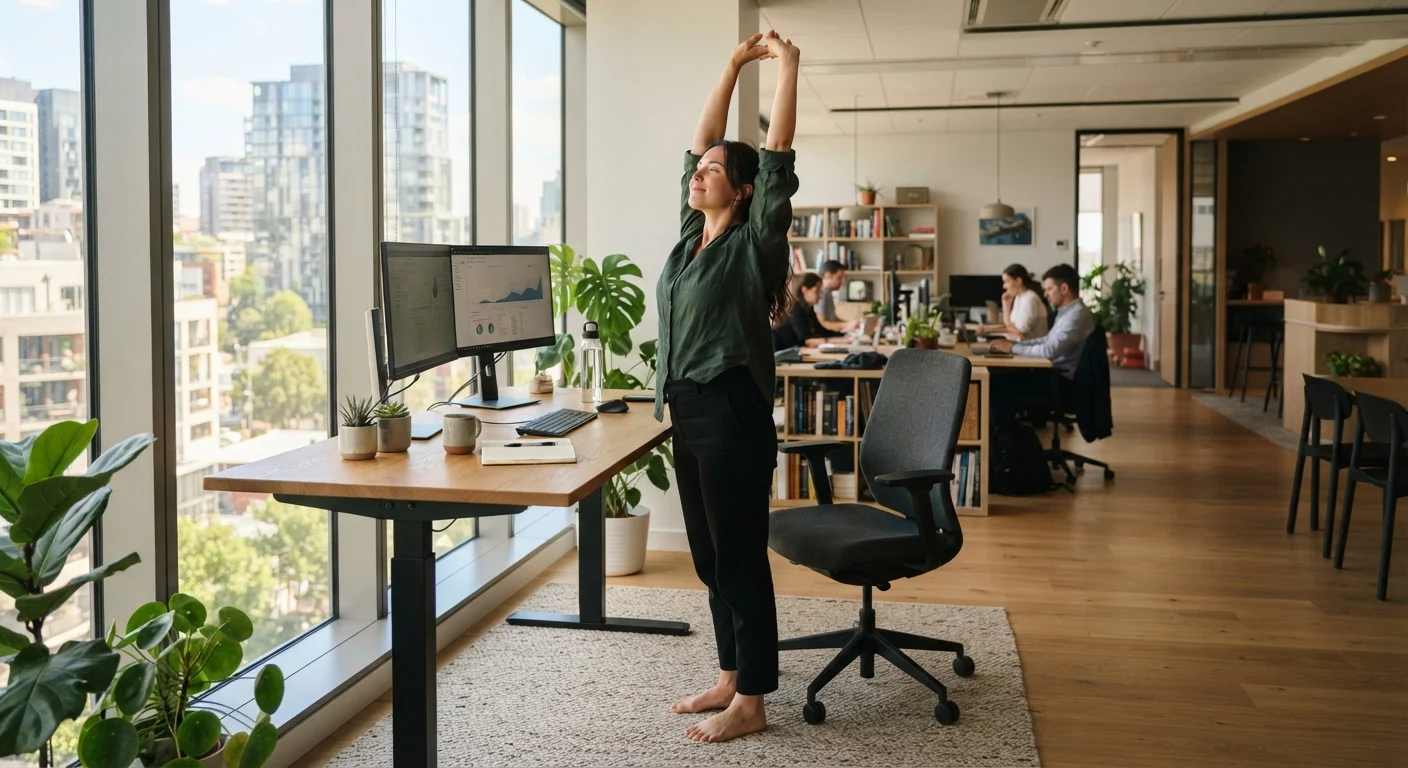
- Keep a few simple stretches at your workstation: calf raises, shoulder rolls, and a standing hip-flexor stretch all require no equipment and minimal space.
- If you have any stair access, one or two flights at a transition point in your day counts.
For a structured routine targeting the muscle groups most affected by desk work, a full-body routine for desk workers offers a no-equipment sequence you can follow at home or in the office.
Building the habit so it actually continues
One-off movement breaks are useful. A consistent pattern is more useful. The challenge for most people is not knowing what to do but remembering to do it when deep in a task.
Attaching movement to existing anchors works better than relying on willpower alone. The start of each hour, the end of a meeting, or finishing a document are concrete cues that can reliably trigger a two-minute break. Over time, these attachments become automatic.
If mornings are more controllable than the rest of your day, building a morning movement habit offers a framework for anchoring movement early before the day's demands set in. For days where time is genuinely scarce, realistic strategies for fitting movement into a packed schedule addresses how to work within real constraints.
Progress does not require perfection. Missing a break on a busy afternoon is not a failure; it is normal. What matters is returning to the pattern, not maintaining an unbroken streak.
This article is for general informational purposes only and is not medical advice. Speak with a qualified healthcare professional about any personal health concerns or before making significant changes to your physical activity routine.