

| Yellow leaves (lower, uniform) | Nitrogen deficiency or overwatering |
| Interveinal chlorosis | Iron or magnesium deficiency |
| Crisp brown tips | Low humidity or salt buildup from fertilizer |
| Wilting in wet soil | Likely root rot from prolonged overwatering |
| Pale, stretched growth | Insufficient light |
| Webbing on leaf undersides | Spider mite infestation |
| White powdery coating | Powdery mildew fungal disease |
| Sticky residue on leaves | Aphid or scale insect activity |
How to read what your plant is showing you
Plants communicate through their leaves, stems, and soil. Each visible change points to a specific stress: too much water, too little light, nutrient deficiency, or pest activity. Matching the symptom to the cause is the first step toward correcting it.
| Yellow leaves (lower, uniform) | Nitrogen deficiency or overwatering |
| Interveinal chlorosis | Iron or magnesium deficiency |
| Crisp brown tips | Low humidity or salt buildup from fertilizer |
| Wilting in wet soil | Likely root rot from prolonged overwatering |
| Pale, stretched growth | Insufficient light |
| Webbing on leaf undersides | Spider mite infestation |
| White powdery coating | Powdery mildew fungal disease |
| Sticky residue on leaves | Aphid or scale insect activity |
This guide covers the most common visual signs and what each one typically means. Keep in mind that more than one problem can occur at the same time, so look at the whole plant, not just one leaf.
Leaf color and texture changes
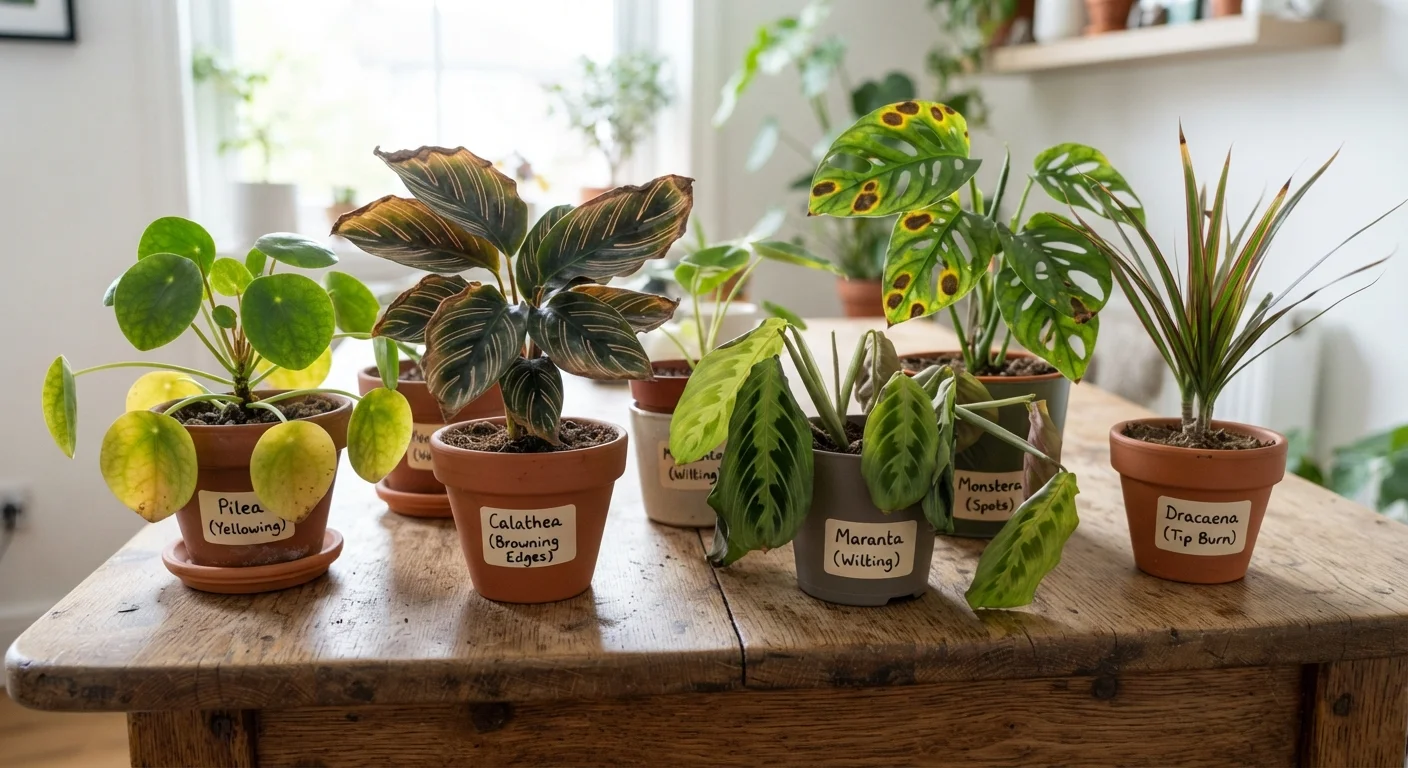
Yellow leaves are the most frequent distress signal, and they have several possible causes. Uniform yellowing across older, lower leaves often points to nitrogen deficiency. Yellow leaves that feel soft and wet at the base usually indicate overwatering. If the yellowing appears between leaf veins but the veins themselves stay green, that pattern (called interveinal chlorosis) suggests an iron or magnesium deficiency.
Brown leaf tips typically mean the plant is losing moisture faster than its roots can supply it. Low humidity, inconsistent watering, or salt buildup from fertilizer are the most common reasons. Brown tips that are dry and crisp differ from brown tips that are soft and mushy; mushy tips suggest rot from excess moisture.
Pale or washed-out leaves across the whole plant usually mean insufficient light. Leaves may also become smaller as the plant stretches toward a light source.
Dark or blackened patches on leaves can signal frost damage, fungal disease, or bacterial infection. Fungal spots often have a yellow halo around a darker center.
Interveinal chlorosis
A yellowing of leaf tissue between the veins while the veins themselves remain green. It usually points to a deficiency in iron, manganese, or magnesium.
Root rot
Decay of a plant's roots caused by fungal pathogens that thrive in waterlogged soil. Affected roots turn brown or black and lose their ability to absorb water.
Rootbound
A condition where a plant's roots have filled its container and have no room to expand. Growth slows and the plant may wilt quickly after watering.
Powdery mildew
A fungal disease that produces a white, powdery coating on leaf surfaces. It spreads in warm, humid conditions with poor airflow.
Structural symptoms: wilting, dropping, and stunted growth
Wilting has two very different causes. A plant that wilts and recovers after watering was simply dry. A plant that wilts even when the soil is wet is likely suffering from root rot, where damaged roots can no longer move water upward. Root rot is often caused by prolonged overwatering and requires removing the affected roots and repotting into fresh, well-draining soil.
Leaf drop in a plant that was previously healthy often follows a sudden environmental change: a draft, a move to lower light, a significant temperature swing, or a shift in watering frequency. Some drop is normal in fall for outdoor plants; abrupt or heavy drop indoors warrants a closer look at conditions.
Stunted or distorted new growth can have several causes. Tight, curled new leaves sometimes point to pest activity, particularly aphids or spider mites, which feed on tender growth. Very slow growth in a plant that has been in the same pot for more than a year may simply mean it is rootbound and needs a larger container.
Staying ahead of these issues is easier when you pair observation with a consistent care routine. The seasonal garden prep guide outlines when to repot, fertilize, and adjust watering through the year.
Signs that point to pests or disease
Tiny white or yellow speckling on leaf surfaces, often with fine webbing on the undersides, is a strong indicator of spider mites. Sticky residue on leaves or nearby surfaces often accompanies aphid or scale infestations. Soft, cottony white clusters in leaf joints are a sign of mealybugs.
Powdery mildew shows as a white, flour-like coating on leaf surfaces and spreads quickly in conditions with poor airflow and moderate humidity. It is different from the dusty residue that can come from hard tap water on leaf surfaces, which wipes off cleanly without leaving any discoloration.
If you see multiple symptoms at once (yellowing plus spots plus sticky residue), treat for pests first, then reassess soil moisture and nutrition after any infestation is under control. Addressing root cause order matters: nutrient corrections do little if pests are still actively feeding.