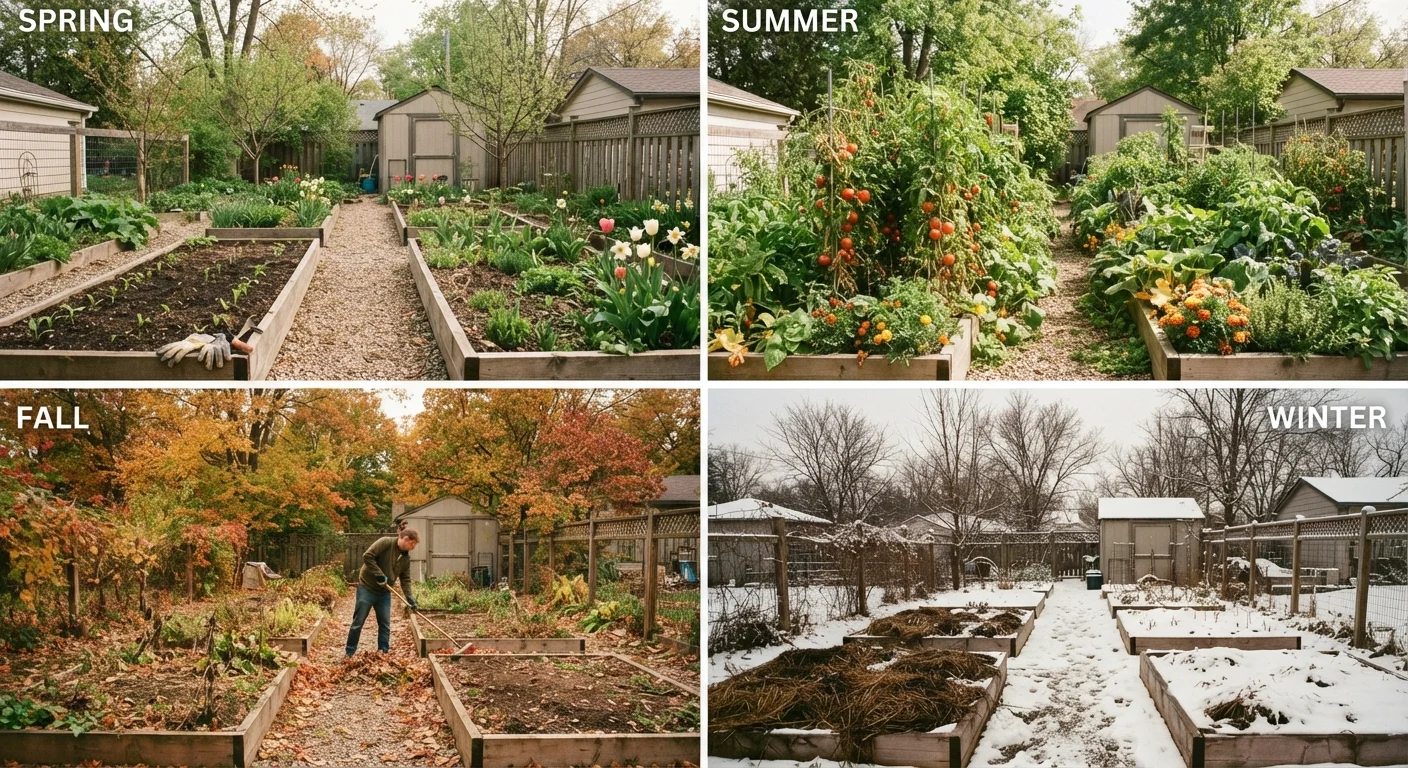
Each season has distinct garden tasks; skipping one often creates more work in the next.
Soil care in fall and spring is the single most useful habit for long-term garden health.
Perennials need different attention than annuals at each transition point.
Winter is not a rest period for gardeners; it is a planning and protection window.
Most seasonal tasks take under an hour when done on schedule.
20–40 min
Summary
20 items · 20 to 40 minutes per seasonal session
Why timing your garden tasks matters
A garden managed on a seasonal schedule stays healthier and demands less corrective work than one tended reactively. Plants have natural cycles, and the soil, pests, and weather all follow predictable patterns. Working with those patterns rather than against them reduces wasted effort.
This checklist covers the four seasons as they apply to most of the continental United States. Gardeners in frost-free climates or high-altitude regions will need to adjust timing, but the sequence of tasks stays largely the same. If you are deciding which plants belong in which season, understanding annuals vs. perennials is a useful starting point before you work through this list.
Seasonal garden checklist
Work through each group when the season arrives. Items marked must are the ones that, if skipped, tend to cause the most damage or lost productivity. Items marked should are strongly advisable. Items marked nice to have improve results but are genuinely optional.
Spring
Test your soil pH and nutrient levels before planting, so any amendments have time to work in before seeds or transplants go in the ground.Must
Clear out dead plant material from beds, remove winter mulch from perennials that have started sprouting, and pull any weeds that established during the thaw.Must
Divide overcrowded perennials before new growth gets tall, replanting divisions or giving them away.Should
Start seeds indoors six to eight weeks before your last expected frost date, or weigh whether transplants suit your schedule better.Should
Check irrigation lines and hoses for winter damage before the first watering of the season.Must
Summer
Water deeply and less frequently rather than shallowly every day, which encourages roots to grow deeper and makes plants more drought-tolerant.Must
Deadhead spent blooms on flowering plants to extend the blooming period and prevent unwanted self-seeding.Should
Monitor plants weekly for signs of stress or pest activity. Early identification of yellowing, wilting, or spotting prevents small problems from spreading.Must
Apply a two- to three-inch layer of mulch around beds to retain moisture and suppress weeds during peak heat.Should
Note which areas of your yard get the most direct light during the longest days. This observation helps with fall planting and next year's layout. Sunlight requirement labels explain how to use that data.Nice to have
Fall
Plant spring-flowering bulbs (tulips, daffodils, alliums) after soil temperatures cool below 60 degrees Fahrenheit but before the ground freezes.Must
Add compost or aged organic matter to empty beds and work it lightly into the top few inches of soil so it breaks down over winter.Must
Cut back dead annuals and pull them entirely to reduce overwintering sites for pests and disease.Must
Apply a protective layer of mulch over perennial root zones after the first hard frost to moderate soil temperature fluctuations.Should
Drain and store hoses, shut off outdoor water lines, and winterize any drip irrigation to prevent freeze damage.Must
Winter
Review notes or photos from the past growing season and sketch any changes you want to make to bed layouts or plant selections.Should
Order seeds for the coming spring before popular varieties sell out, comparing options for your climate and light conditions.Should
Inspect and sharpen garden tools: clean blades with a stiff brush, remove rust with steel wool, and apply a light coat of oil to metal surfaces.Should
Check stored bulbs and root vegetables for rot or shriveling, removing any damaged pieces before they affect healthy ones.Must
Research any soil amendments your fall test recommended so you have them on hand for early spring application.Nice to have
Do not skip the fall soil step
Adding organic matter in fall gives it the entire winter to break down and integrate. Skipping this step means starting spring with compacted, nutrient-poor soil that takes much of the growing season to recover. Even a thin layer of compost spread before the ground freezes makes a measurable difference by planting time.
Soil and ongoing care across all seasons
Healthy soil connects every item on this checklist. Amending in fall, aerating in spring, and adding compost throughout the year builds structure over time rather than patching problems after they appear. For a deeper look at that process, building better garden soil over time walks through organic matter, aeration, and consistent practices season by season.
If outdoor space is limited and you garden in containers, drainage and soil volume become especially important at each seasonal transition. Container gardening guides cover those adjustments in detail.
Before winter, your home exterior also needs attention alongside the garden. A home winterization walkthrough covers pipes, drafts, and drainage that directly affect outdoor beds and irrigation lines.
Home & Garden Editorial Team is the collective byline for our editorial team and contributor network. Articles published under this byline or an editorial pen name are researched, written, and reviewed according to our editorial standards for clarity, consistency, and independence before publication.
Disclaimer: The content on this site is for informational purposes only and is not a substitute for professional advice. Always consult a qualified professional for guidance specific to your situation.