

Key Takeaways
- Soil structure improves gradually through consistent additions of organic matter each season.
- Compost, mulch, and cover crops all feed the microbial life that makes nutrients available to plants.
- Compaction and tilling both disrupt soil structure; minimizing foot traffic protects what you build.
- A soil test takes the guesswork out of amendments and prevents over-correction.
- Healthy soil drains well, holds moisture, and crumbles loosely when squeezed.
What healthy soil actually looks like
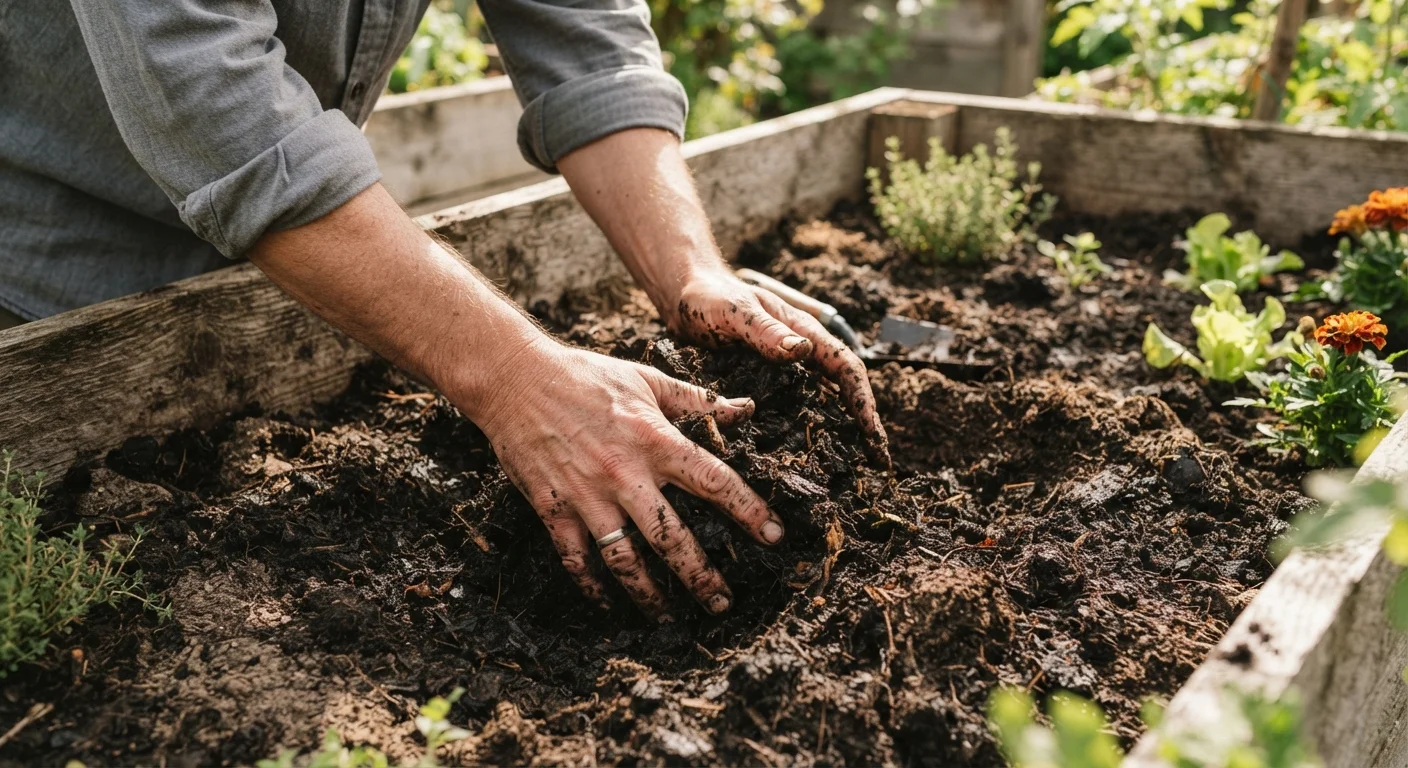
Good garden soil is not just dirt. It has a loose, crumbly texture called friable structure, which means it breaks apart easily without clumping into hard chunks or turning to dust. When you grab a handful and squeeze, it should hold its shape briefly, then crumble when pressed. Water should soak in rather than pool.
That structure comes from a combination of mineral particles (sand, silt, and clay), organic matter, air pockets, water, and billions of microorganisms. The microbes, fungi, earthworms, and other organisms break down organic material into nutrients that plant roots can absorb. Without biological activity, even a well-amended bed loses productivity over time.
Before changing anything, test your soil. A basic test from your local cooperative extension office or a mail-in kit tells you pH, organic matter content, and nutrient levels. Acting on real numbers prevents over-correcting, which can cause as many problems as neglect. See how pH affects nutrient uptake for more on reading and adjusting those results.
Practices that build soil over time
Soil improvement is cumulative. Each of the practices below adds something the season before it left off, and the results compound year after year.
Add finished compost to beds every season
Compost supplies organic matter, feeds soil microbes, and improves both drainage in clay soils and water retention in sandy ones. It works gradually, so regular additions matter more than a single large dose.
Mulch the soil surface to protect what is below
Bare soil loses moisture, erodes in rain, and bakes under summer sun, all of which harm microbial life and soil structure. A layer of organic mulch moderates temperature, retains moisture, and breaks down slowly to add organic matter. See how mulch depth and type affect results for material-specific guidance.
Plant cover crops in empty beds during off-season months
Cover crops (such as winter rye, crimson clover, or buckwheat) hold soil in place, add organic matter when turned in, and some fix nitrogen from the air into the soil. Empty, bare beds lose structure over winter.
Avoid compacting soil by limiting foot traffic on beds
Compacted soil collapses the pore spaces that roots and microbes depend on. Once compacted, soil needs significant work to recover. Defined pathways keep weight off the growing area.
Minimize tilling to protect soil structure
Deep, repeated tilling breaks up fungal networks, brings weed seeds to the surface, and destroys the aggregate structure that takes seasons to build. A no-till or low-till approach preserves what organic matter and microbial activity have already built.
Use fertilizers to supplement rather than replace organic matter
Fertilizers supply nutrients but do not build soil structure or feed the full range of soil life the way compost and organic matter do. Relying on fertilizer alone can leave soil physically degraded even when plants appear to grow well. Organic and synthetic fertilizers affect soil differently, and understanding those differences helps you use them appropriately.
Starting and sustaining the habit
The biggest obstacle to better soil is inconsistency. Adding compost once and then forgetting about it for three years produces limited results. Consistent, modest inputs work better than occasional large ones.
A practical approach: spread 1 to 2 inches of finished compost across beds each spring before planting, and again in fall after cleanup. Use mulch throughout the growing season to protect the soil surface. Plant a cover crop in any empty bed over winter. These three steps, done each year, create a compounding cycle that most gardeners notice within two seasons as improved drainage, fewer weeds, and plants that recover more quickly from dry spells.
If you are starting a new garden from bare or compacted ground, the beginner's guide to starting a vegetable garden covers soil preparation alongside site selection and plant choices. For year-round timing on soil work and other garden tasks, seasonal garden prep by time of year lays out a full calendar.