

Key Takeaways
- Six or more hours of direct sun per day is the single most important factor in site selection.
- Amending native soil with compost before planting gives roots a better start than fertilizer alone.
- Starting with four to six easy vegetables reduces the learning curve in year one.
- Consistent, deep watering two or three times a week outperforms light daily sprinkling.
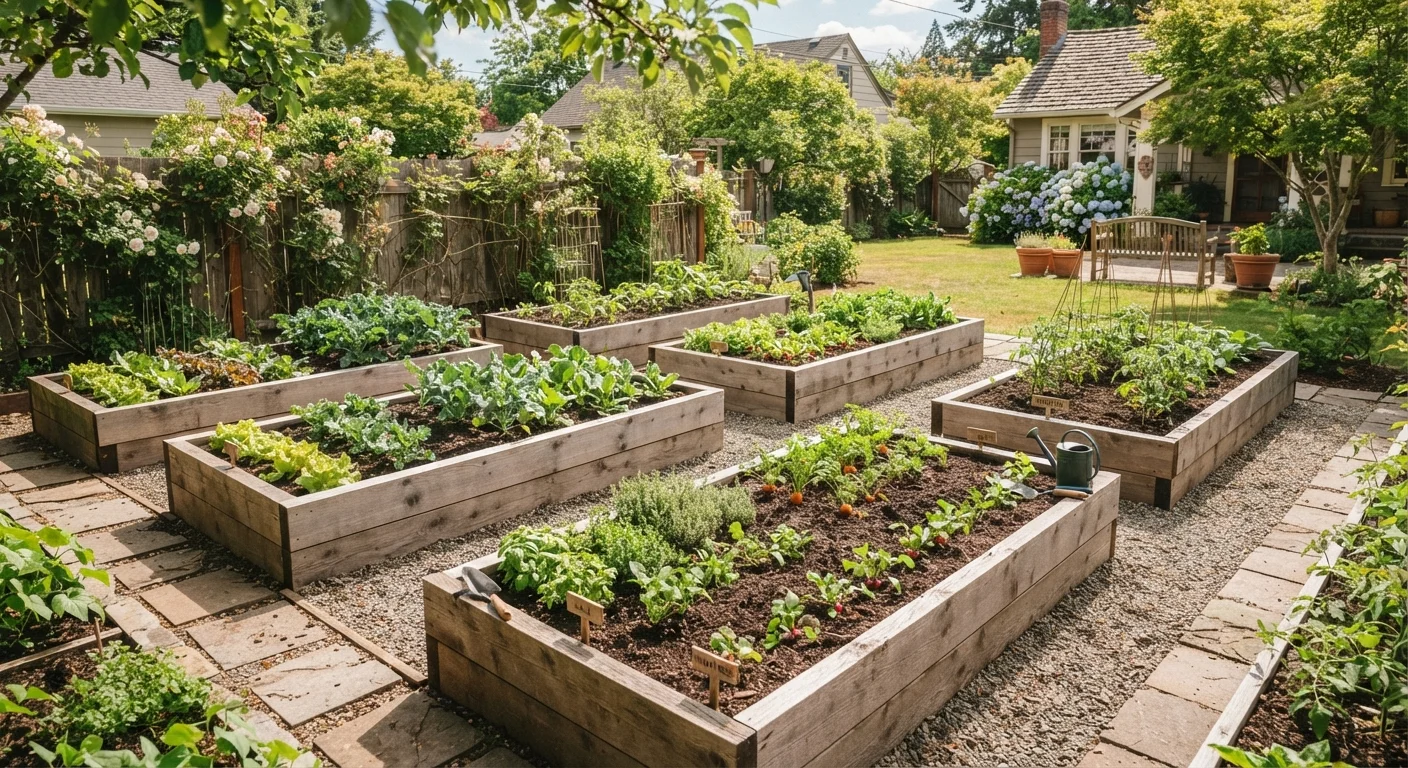
- Raised beds are not required, but they make drainage and soil control much simpler.
Start here
Choosing the right spot
Next
Preparing the ground
Then
Picking your first vegetables
Apply it
Planting and basic care
Refine
Common beginner mistakes to avoid
Choosing the right spot
Sun is the factor most new gardeners underestimate. Vegetables need at least six hours of direct sunlight each day; eight is better for fruiting crops like tomatoes and peppers. Walk your yard at midday and note which areas receive uninterrupted light, and which are shaded by trees, fences, or the house itself.
Beyond sun, look for level or gently sloping ground that does not pool water after rain. Standing water causes root rot. Access to a water source within reasonable hose distance matters too, because hauling water by hand across a yard grows old quickly.
If you have limited outdoor space, containers are a real option. Our container gardening guide covers what that approach requires in terms of soil, drainage, and plant selection.
Preparing the ground
Once you have chosen a site, the goal is to give roots loose, well-drained soil with enough organic matter to hold moisture and nutrients. Most native soils need improvement before they can support productive vegetables.
Check for buried utilities before digging
Before breaking ground on a new in-ground bed, call 811 (the national Dig Safe line in the US) to have underground utility lines marked. This is free, legally required in most states, and prevents serious injury.
Remove existing grass or weeds first. For a new in-ground bed, you can smother vegetation with cardboard covered by several inches of compost (a method called sheet mulching), or you can cut and remove it manually. Avoid repeated tilling, which disrupts soil structure and brings weed seeds to the surface.
Work two to four inches of compost into the top six to eight inches of soil. If you are building a raised bed, fill it with a mix of topsoil and compost. Our guide to building better garden soil goes deeper on how to improve soil structure season after season.
Test your soil before you buy anything
A basic soil test (available through most county cooperative extension offices for a small fee) tells you your soil's pH and nutrient levels before you spend money on amendments. Results come with specific recommendations for your garden, so you add only what is actually needed.
Picking your first vegetables
Starting with crops that are forgiving and fast to produce keeps year one encouraging. Lettuce, radishes, green beans, zucchini, cherry tomatoes, and herbs like basil and chives are reliable choices for beginners because they germinate well and do not require complicated care.
Frost date
The average calendar date of the last freezing temperature in spring or the first in fall. Knowing your local frost dates tells you when it is safe to plant warm-season crops outdoors.
Compost
Decomposed organic material, such as food scraps or leaves, used to improve soil structure, drainage, and nutrient content.
Hardiness zone
A geographic area defined by its average annual minimum winter temperature. The USDA publishes a Plant Hardiness Zone Map that helps gardeners choose plants suited to their region.
Transplant
A seedling grown indoors or in a greenhouse and then moved to the garden. Transplants give slow-growing crops a head start over direct-seeded plants.
Soil amendment
Any material mixed into soil to improve its physical or chemical properties. Compost, perlite, and aged manure are common amendments.
Limit yourself to four to six varieties in your first season. A smaller, well-tended garden produces more than a large, neglected one. Once you know how your space performs and how much time you have to spend, you can add variety in following seasons.
Timing matters as much as selection. Cool-season crops like lettuce and spinach tolerate frost and go in early spring or fall. Warm-season crops like tomatoes, peppers, and cucumbers need warm soil and go in after your last frost date. Your local cooperative extension office publishes free planting calendars specific to your region.
Planting and basic care
Space plants according to the instructions on the seed packet or transplant tag. Crowding is one of the most common first-year errors: plants too close together compete for light, air, and nutrients, and poor air circulation promotes fungal disease.
Water deeply two or three times a week rather than lightly every day. Deep watering pushes moisture further into the soil, encouraging roots to follow. A layer of mulch, two to three inches thick, slows evaporation and reduces how often you need to water.
Check plants every few days for signs of pest damage or disease. Catching problems early, when populations are small, makes them far easier to manage than if you wait until damage is widespread. Remove damaged leaves, hand-pick visible insects, and look up any unfamiliar spots or wilting before assuming the plant is lost.
For a full picture of what your garden needs month by month, see our seasonal garden prep checklist.
Common beginner mistakes to avoid
Overwatering is more common than underwatering in new gardens. Soggy soil suffocates roots. Before watering, push a finger two inches into the soil; if it still feels moist, wait another day.
Planting too early in spring is a frequent setback. Warm-season crops planted before the soil has warmed consistently above 60 degrees Fahrenheit may sit dormant, rot, or grow slowly enough that a transplant started later actually catches up. A soil thermometer costs very little and removes the guesswork.
Skipping records is a habit worth breaking from the start. A simple notebook with planting dates, what you grew, and what worked or did not work gives you something concrete to improve on in year two. Memory is not reliable across a full growing season.