

Key Takeaways
- Container size and drainage holes are the two most consequential decisions you will make.
- Potting mix formulated for containers outperforms garden soil in pots every time.
- Most vegetables and herbs grow well in containers when given adequate sun and consistent water.
- Containers dry out faster than ground beds, so checking moisture daily matters more than following a fixed schedule.
- Matching plant size to pot volume prevents the most common cause of container failure: root crowding.
Why container gardening works
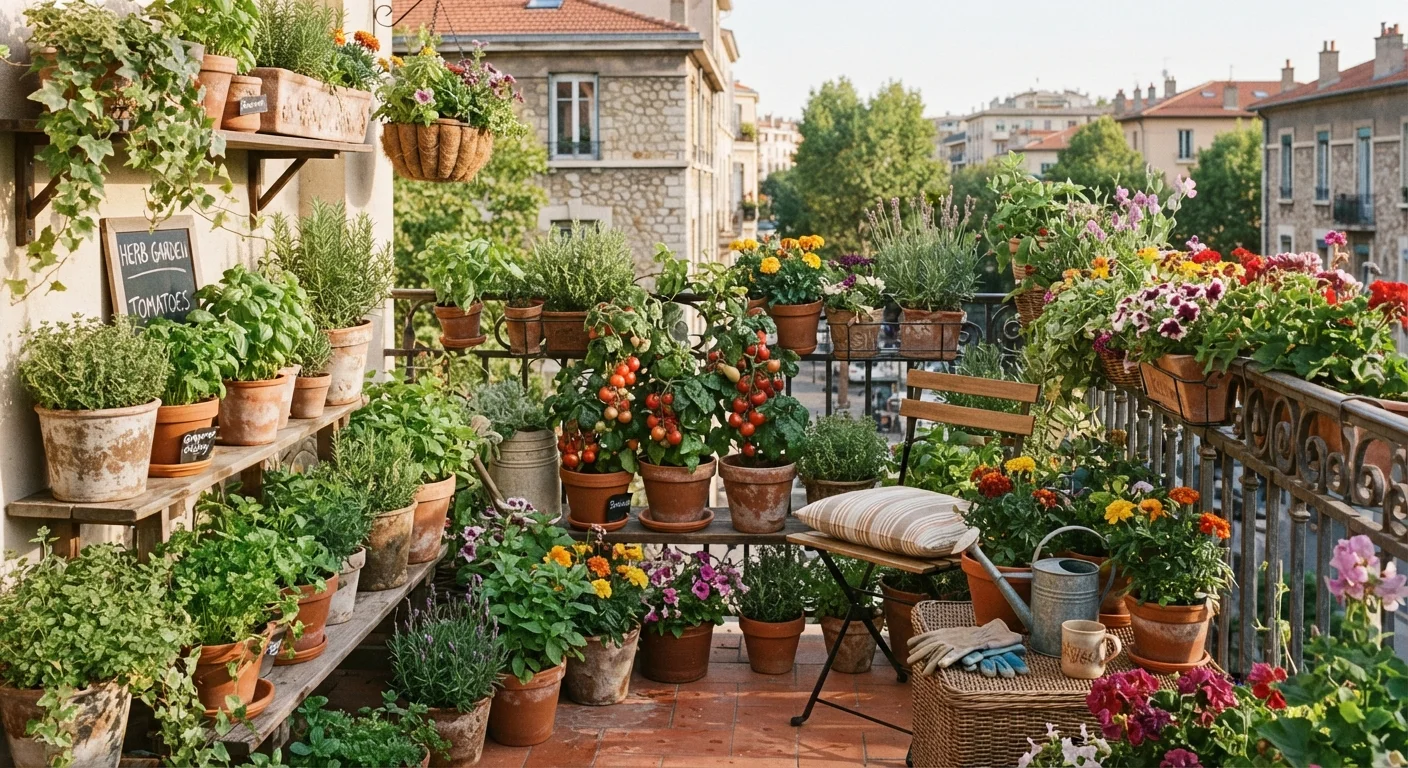
A lack of ground space does not mean a lack of growing space. Patios, balconies, stoops, and even sunny windowsills can support herbs, vegetables, and ornamentals when the right containers are used. Container gardening also gives growers precise control: you choose the soil, the position, and the watering schedule rather than working around what the ground provides.
For renters or anyone in a climate with challenging native soil, containers remove two of the biggest barriers to gardening. You are not committed to a fixed bed, and you can move plants to chase sunlight or protect them from an early frost. That mobility has real practical value across a growing season.
If you are also growing in the ground, see the in-ground beginner's guide for how the two approaches compare.
Choosing the right containers
Container material affects how often you water and how well roots stay healthy. Terracotta is porous, which means it breathes well but dries out fast, making it better suited to plants that prefer drier conditions. Plastic and glazed ceramic retain moisture longer and are lighter, which matters on a weight-limited balcony. Fabric grow bags drain freely and air-prune roots, producing compact root systems that many vegetables respond well to.
Size is the variable most gardeners underestimate. A container that looks large on a shelf may hold only a few quarts of soil once you account for headspace. Tomatoes, peppers, and large herbs such as rosemary need at least 5 gallons of volume. Lettuce, radishes, and compact flowers can do well in 2-gallon containers. When in doubt, go larger: a bigger pot holds more moisture, moderates soil temperature better, and gives roots room to grow without hitting walls.
Every container needs at least one drainage hole. Without one, water pools at the bottom, starves roots of oxygen, and leads to rot. If you find a pot you want to use that lacks drainage, drill holes rather than skipping them. A common misconception is that adding gravel to the bottom of a pot without holes creates drainage. It does not; that gravel layer myth actually raises the water table inside the pot and makes waterlogging worse.
Drainage holes are not optional
A container without drainage will kill most plants within weeks by suffocating roots in standing water. Before potting anything, confirm that the container has at least one hole at the base. If you are using a decorative outer pot (a cache pot) without holes, remove the inner pot to water it and let it drain fully before placing it back.
Soil and drainage
Garden soil does not belong in containers. It compacts over time, blocks drainage, and can introduce pests or pathogens. Potting mix is formulated to stay loose and drain freely in the confined space of a pot, which is a different set of demands than open ground. For moisture-sensitive plants such as succulents or Mediterranean herbs, mix in perlite (a lightweight volcanic material that improves drainage) at roughly one part perlite to four parts potting mix.
For tips on improving soil health in general, building better garden soil over time covers the underlying principles that apply across all growing situations.
Picking plants that suit containers
Most edibles grow in containers with reasonable success. Compact or dwarf varieties of tomatoes, peppers, cucumbers, and beans are bred specifically with limited space in mind. Herbs including basil, chives, parsley, mint, and thyme perform well in small pots and are among the most practical choices for a balcony because they are used in small quantities and lose flavor quickly after grocery store harvest.
Leafy greens such as spinach, kale, and lettuce grow fast in shallow containers and tolerate partial shade better than fruiting crops. Root vegetables including radishes and beets work in deeper pots but can struggle if the container is narrower than their mature root spread.
Before buying any plant, check its tag for spacing, light, and water requirements. The guide to reading plant tags explains every symbol and term you will encounter, so you can match plants to your actual conditions rather than guessing.
Group containers together to reduce moisture loss. Plants placed close to each other raise the local humidity slightly and shade each other's pots, which slows evaporation from the soil surface.
Heat and wind are the primary drivers of container drying. Reducing surface exposure cuts watering frequency without any other change.
Repot any plant that is visibly rootbound (roots circling the bottom or pushing out of drainage holes) into a container one size larger. Do not jump more than one size at a time, because excess soil volume around small roots holds moisture the plant cannot yet use.
Root crowding restricts water and nutrient uptake, leading to wilting and poor production even when watering is consistent.
Watering and feeding
Containers dry out faster than ground beds because they have a fixed volume of soil exposed on all sides to air and sun. Checking soil moisture daily during summer is a baseline habit, not an overreaction. Push a finger about an inch into the soil: if it feels dry at that depth, water thoroughly until it drains from the bottom holes. Shallow watering wets only the top layer and trains roots upward, making plants more vulnerable to heat stress.
Potting mix has limited nutrients, and watering flushes them out over time. A slow-release granular fertilizer worked into the soil at planting gives plants a baseline supply. Liquid fertilizers applied every two to three weeks through the growing season supplement what the mix cannot hold long-term. Fruiting crops such as tomatoes and peppers have higher nutrient demands than herbs or greens, so adjust accordingly.
Maintaining your containers through the seasons
Container plants do not benefit from the thermal mass of ground soil, which means they are more exposed to temperature swings. In cold climates, move tender plants indoors or to a sheltered spot before the first frost. Ceramic and terracotta containers can crack if left outside filled with wet soil that freezes, so drain and store them if your winters drop below freezing reliably.
At the end of each growing season, empty containers, clean them with a dilute bleach solution to reduce pathogen carryover, and replace the potting mix rather than reusing it season after season. Reused mix compacts and loses structure, which undermines drainage and root health. For a full picture of what to do in each season, the seasonal garden prep guide covers timing across spring, summer, fall, and winter.