

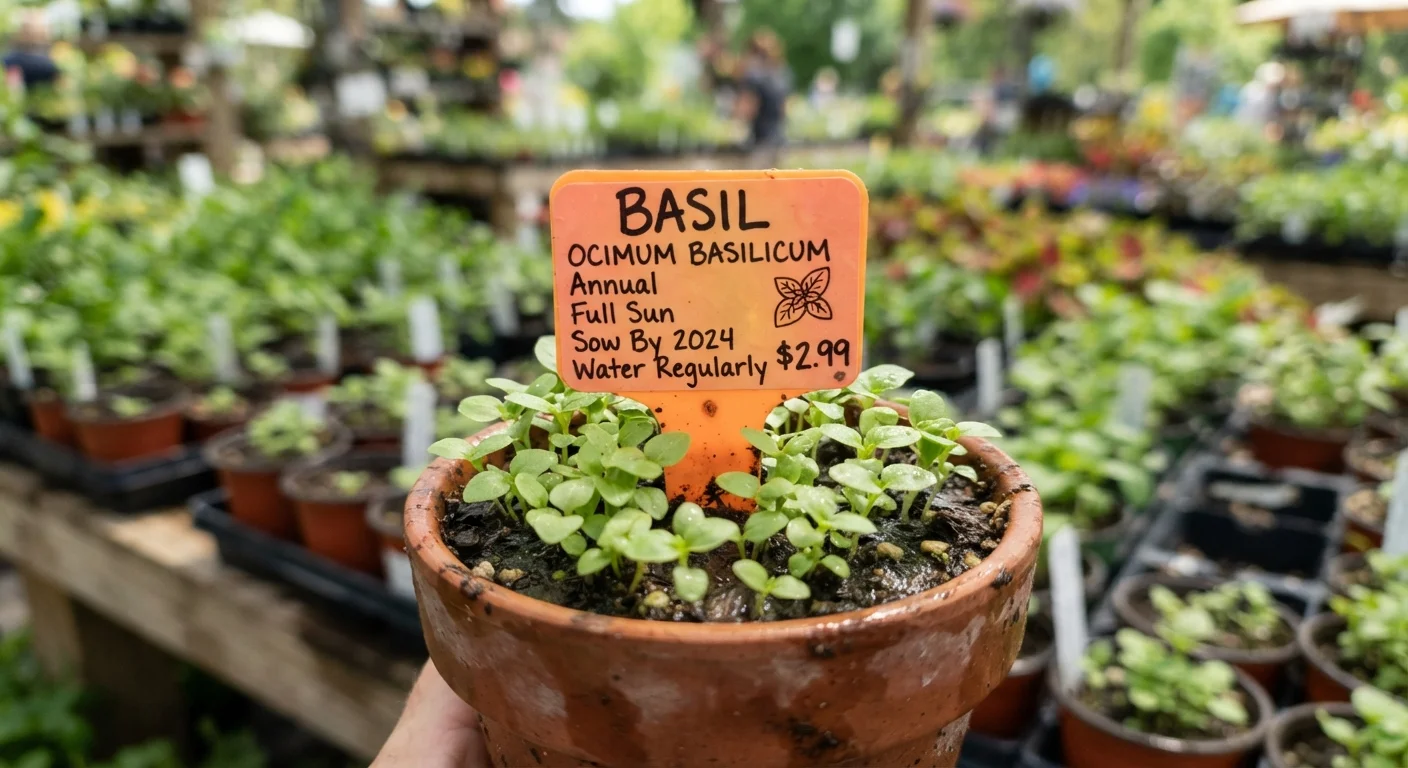
What every plant tag includes
A plant tag is a small but dense document. Most tags printed by commercial nurseries follow a consistent structure, even when the layout differs. Understanding each field lets you evaluate a plant before it ever goes into your cart.
The common name appears in large print at the top. Below it, you will usually find the botanical name in italics, written in Latin (genus followed by species). The botanical name is the reliable one: common names vary by region, and two very different plants can share the same nickname. If you want to look a plant up later, search by its botanical name.
Below the names, most tags list the plant's life cycle: annual, biennial, or perennial. This one field tells you whether you are buying a one-season plant or something that will return year after year. For a deeper look at how light labels connect to plant selection, see our guide to sunlight requirements.
USDA hardiness zone
A numbered map zone assigned by the U.S. Department of Agriculture based on average annual minimum winter temperatures. Plants labeled for a zone are expected to survive winters in that zone without special protection.
Full sun
A light condition requiring at least six hours of direct, unfiltered sunlight per day. Most vegetable crops and many flowering perennials need full sun to produce well.
Part shade
A light condition of two to four hours of direct sun per day, often with filtered or dappled light for the rest of the day. Some tags use 'part sun' interchangeably, though part shade leans toward less intense light.
Mature spread
The expected width of a plant at full size, measured from one outer edge of the canopy or root zone to the other. Spacing plants according to mature spread prevents overcrowding.
Annual
A plant that completes its entire life cycle in one growing season. It germinates, flowers, sets seed, and dies within a single year and must be replanted the following season.
Perennial
A plant that lives for more than two years. It may die back to the ground in winter but regrows from its roots the following spring, given conditions within its hardiness range.
Biennial
A plant that takes two growing seasons to complete its life cycle, typically growing foliage in the first year and flowering in the second before dying.
Soil pH
A measure of how acidic or alkaline soil is, on a scale of 0 to 14. Most garden plants prefer a slightly acidic to neutral pH of 6.0 to 7.0, which affects how well they absorb nutrients.
Hardiness zones, light, and water
The USDA hardiness zone range on a tag (for example, "Zones 4-9") tells you the coldest winters the plant can typically survive. The USDA publishes a free online map where you can look up your zip code to find your zone. If your zone falls within the range on the tag, the plant is likely winter-hardy for your area. If it does not, you can still grow the plant as an annual or bring it indoors before frost.
Light requirements appear as a sun icon, a half-sun icon, or a shaded icon, often paired with text. Full sun means at least six hours of direct sun daily. Part shade or part sun means two to four hours. Full shade means little to no direct sun. These categories matter because placing a full-sun plant in deep shade typically produces weak, leggy growth and fewer flowers.
Water needs are usually shown as a series of droplet icons or written as low, moderate, or high. A plant labeled low-water tolerates dry spells once established; one labeled high needs consistently moist soil. Matching water needs to your available irrigation or rainfall reduces both plant loss and wasted effort.
Spacing, size, and soil notes
Two measurements almost always appear on tags: mature height and mature spread. Height is listed first, spread second, and both are given as ranges (for example, "18-24 in. tall, 12-18 in. wide"). These figures reflect expected sizes under average conditions. Richer soil, more consistent water, and ideal light can push a plant toward the top of its range.
Spacing guidance is derived from mature spread. Planting closer than recommended causes crowding, poor air circulation, and competition for nutrients. For container growing, the spread measurement helps you choose an appropriately sized pot. Container gardening basics covers how to match plant size to container capacity.
Some tags include a soil pH preference or a note about drainage (for example, "well-drained soil" or "tolerates clay"). If your soil has not been tested, a basic soil test kit from a local extension office or garden center can confirm whether your pH matches what the tag recommends. Soil pH affects nutrient availability, so a mismatch can cause deficiencies even when fertilizer is applied.
Putting the tag to use after planting
Many gardeners discard the tag once a plant is in the ground. Keeping it is worth the small effort. Store tags in a labeled envelope or photograph them before planting. When a plant shows unexpected symptoms later, the tag gives you the baseline data you need to diagnose the problem, whether that is wrong light, irregular watering, or a zone mismatch. Signs your plant is struggling walks through common symptoms and their likely causes.
The tag also helps at division or propagation time. Knowing the botanical name lets you find accurate instructions for the specific species rather than relying on general advice that may not apply. A tag kept from a perennial you divided three years ago can tell you the original hardiness zone range and whether the divisions are likely to overwinter in a new location.