

Key Takeaways
- Soil pH controls whether plant roots can absorb the nutrients already present in the soil.
- Most vegetables and flowers thrive in slightly acidic soil, roughly pH 6.0 to 7.0.
- Inexpensive test kits and lab services let you measure pH before planting or troubleshooting problems.
- Sulfur lowers pH; lime raises it. Both work gradually over weeks or months.
- Testing every two to three years helps you catch pH drift before it limits plant growth.
Soil pH
Soil pH is a measure of how acidic or alkaline your soil is, expressed on a scale from 0 to 14. A reading of 7.0 is neutral; values below 7.0 are acidic and values above 7.0 are alkaline (also called basic). Most garden plants grow best in soil that falls somewhere between 6.0 and 7.0, because that range allows roots to absorb nutrients most efficiently.
pH stands for 'potential of hydrogen' and reflects the concentration of hydrogen ions in the soil solution. The scale is logarithmic, meaning a pH of 5.0 is ten times more acidic than a pH of 6.0.
Why pH matters more than most gardeners expect
A plant can be growing in soil loaded with nitrogen, phosphorus, and potassium and still starve. If the pH is far outside the plant's preferred range, its roots cannot pull those nutrients into the plant. The nutrients are chemically locked in forms the plant cannot use.
This is the reason pH is often called the 'master variable' of soil chemistry. Phosphorus becomes largely unavailable above pH 7.5 and below pH 5.5. Iron and manganese become scarce above pH 7.0. Nitrogen-fixing bacteria, which help legumes like beans and peas convert atmospheric nitrogen into a usable form, work best between pH 6.0 and 7.0.
Understanding this connection helps explain why two gardeners can add the same fertilizer to their beds and get very different results. See our guide to organic and synthetic fertilizers for more on how nutrient availability interacts with what you apply.
How to test your soil pH
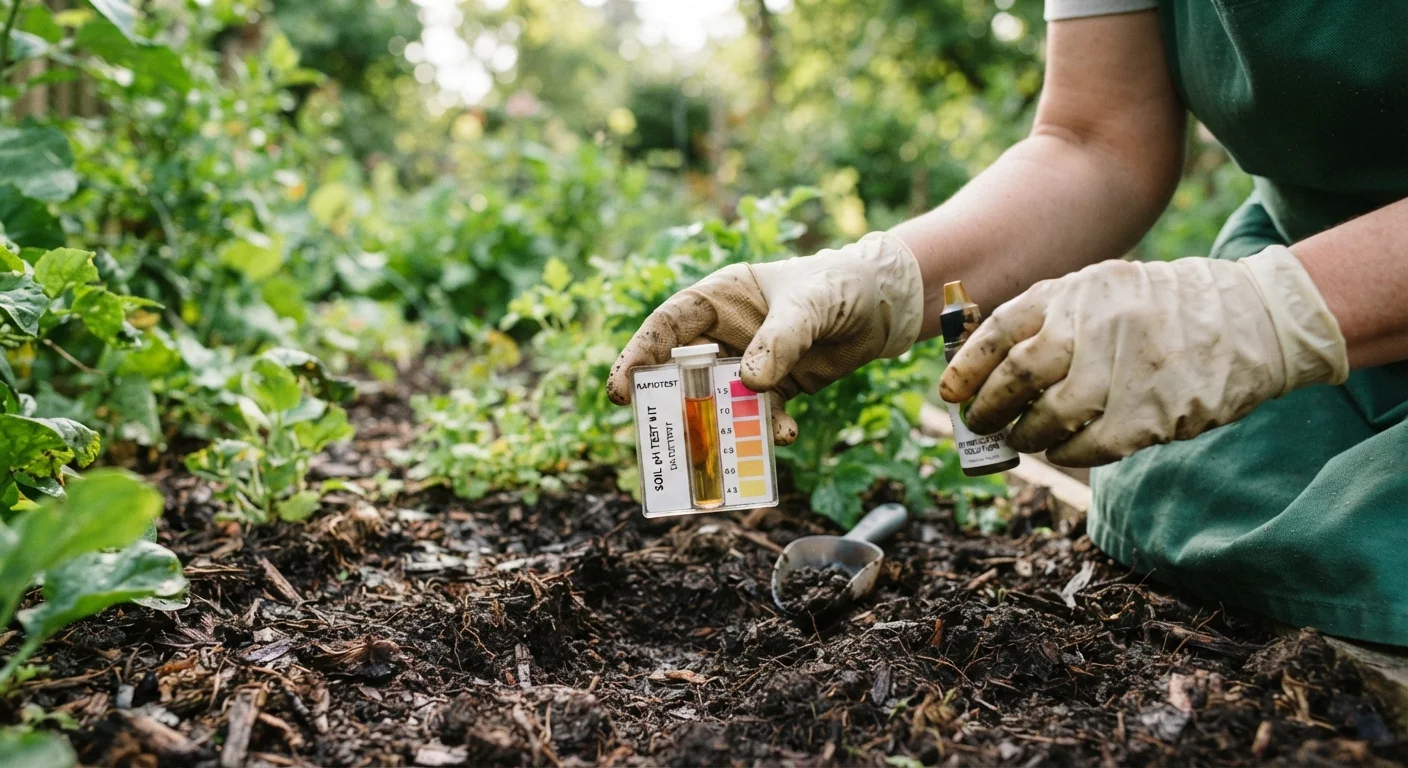
Home test kits are widely available at garden centers and online. Most use either a chemical indicator solution or pH-sensitive paper strips. You mix a small soil sample with water, add the indicator, and compare the resulting color to a chart. These kits are affordable and good enough for general guidance.
For more precise results, a cooperative extension service or private soil lab can analyze a sample and return a detailed report, sometimes including amendment recommendations. The process involves collecting small amounts of soil from several spots in the bed, mixing them together, and sending the combined sample in a labeled bag. Many state cooperative extension programs offer this service at low or no cost.
Collect a representative sample
When testing pH, pull soil from several spots across the bed and combine them into a single sample. This gives you an average reading rather than a result skewed by one unusual patch. Avoid sampling right after heavy rain or fertilizer application.
When using pH as a starting point for a new bed, test soil from the actual planting zone, roughly 4 to 6 inches deep. Surface readings can be skewed by recent rainfall, compost applications, or fertilizer residue.
Adjusting soil pH
Once you have a test result, you can decide whether to act. If your pH is already within the target range for what you plan to grow, no amendment is needed.
To raise pH, ground limestone (calcium carbonate) is the standard material. The amount you need depends on how far off your current pH is and what type of soil you have. Clay soils require more amendment than sandy soils to shift the same number of pH units, because clay has higher buffering capacity.
To lower pH, elemental sulfur is the most common approach. Soil bacteria convert it to sulfuric acid over time. This process is slow, often taking six weeks or more, so plan ahead. Peat moss worked into the soil also lowers pH gradually and adds organic matter, though its long-term extraction has environmental costs worth considering.
Neither adjustment is instant. Apply amendments in fall before spring planting when possible, and test again before adding more. Overcorrecting can create new deficiencies. Our article on building better garden soil over time covers how pH fits into a broader soil improvement strategy.
pH preferences by plant type
Most vegetables and annual flowers perform well in slightly acidic to neutral soil, roughly pH 6.0 to 7.0. A few plants have specific requirements worth noting.
- Blueberries need strongly acidic soil, pH 4.5 to 5.5. They will struggle and eventually decline in soil that is too neutral.
- Azaleas, rhododendrons, and camellias also prefer acidic conditions, generally pH 4.5 to 6.0.
- Brassicas (cabbage, broccoli, kale) tolerate and sometimes benefit from slightly higher pH, around 6.5 to 7.5, which also helps suppress clubroot disease.
- Lavender and many Mediterranean herbs prefer neutral to slightly alkaline soil.
Knowing these preferences before you plant lets you choose the right spot or make targeted amendments rather than adjusting an entire bed. For guidance on matching soil products to plant needs, see our breakdown of garden soil, potting mix, and topsoil.