

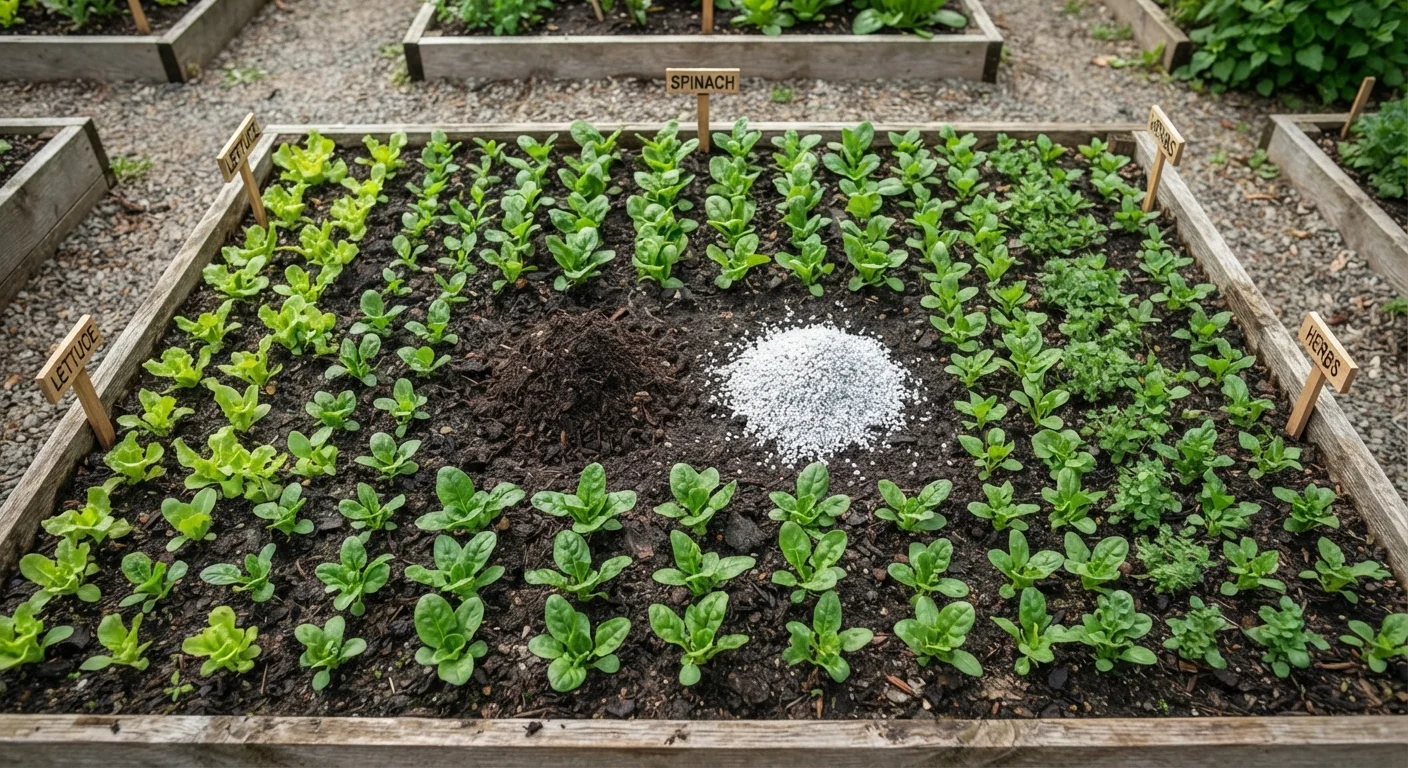
Key Takeaways
- Synthetic fertilizers deliver nutrients quickly; organic types release them slowly as soil organisms break down organic matter.
- Organic fertilizers tend to improve soil structure over time, while synthetics have little effect on soil biology.
- Over-application of synthetic fertilizers can cause nutrient runoff into waterways; organic options carry lower runoff risk when used correctly.
- Soil pH affects how well either type performs, so testing before fertilizing is worthwhile.
- Neither type is universally better; the right choice depends on your plants, soil condition, and gardening goals.
Our Verdict
Synthetic fertilizers suit situations where plants need a fast, precise nutrient boost, such as correcting a deficiency mid-season. Organic fertilizers are better suited to building soil health over multiple seasons. Many gardeners find that using both at different times gives them the advantages of each.
| Best for | Recommended |
|---|---|
| Gardeners who need fast correction of a nutrient deficiency | Synthetic fertilizer |
| Gardeners focused on improving soil biology and long-term fertility | Organic fertilizer |
| New gardeners who want straightforward application and predictable results | Synthetic fertilizer |
| Vegetable gardeners building a sustainable, multi-season growing system | Organic fertilizer |
How each type feeds plants
Plants absorb nutrients in their mineral ion form, regardless of whether those nutrients came from a bag of synthetic granules or a pile of compost. The difference between organic and synthetic fertilizers is not what plants ultimately receive, but how quickly that delivery happens and what the process does to the soil along the way.
Synthetic fertilizers are manufactured to contain specific concentrations of nitrogen, phosphorus, and potassium (the three numbers on any fertilizer label, called the N-P-K ratio). Because they are already in a water-soluble mineral form, plants can absorb them within days of application.
Organic fertilizers come from plant matter, animal byproducts, or mined minerals that have not been chemically processed into concentrated salts. Compost, bone meal, blood meal, and kelp meal are common examples. Soil microbes must first break these materials down into mineral ions before roots can take them up. That process takes weeks to months depending on soil temperature and moisture.
Nutrient release and timing
| Criterion | Organic fertilizer | Synthetic fertilizer | |
|---|---|---|---|
| Nutrient release speed | Organic fertilizer | Slow (weeks to months) | Fast (days) |
| N-P-K precision | Organic fertilizer | Variable | Exact, as labeled |
| Soil biology impact | Organic fertilizer | Feeds microbial community | Little direct effect |
| Runoff risk with correct use | Organic fertilizer | Lower | Higher if over-applied |
| Cost per nutrient unit | Organic fertilizer | Generally higher | Generally lower |
| Best timing | Organic fertilizer | Before planting; all season | Anytime; mid-season correction |
The slow release of organic fertilizers means nutrients become available gradually through the growing season, which reduces the risk of a sudden surge that pushes leafy growth at the expense of fruit or flower production. It also means organic fertilizers are less useful when a plant is already showing signs of a specific deficiency and needs correction quickly.
Synthetic fertilizers can be calibrated precisely. A granular formula labeled 10-10-10 contains 10 percent nitrogen, 10 percent phosphorus, and 10 percent potassium by weight, and those ratios are consistent across the bag. That predictability makes it easier to match application rates to a soil test result.
Effects on soil health
Organic matter feeds soil microbes, earthworms, and fungi, and those organisms improve soil structure: they help bind particles into aggregates that hold air and water and resist compaction. Regular additions of organic fertilizers, especially compost-based ones, contribute to this process over time.
Synthetic fertilizers do not add organic matter. Used alone over many years, they can leave soil more dependent on external inputs because the microbial community that drives natural nutrient cycling gets less support. This does not mean synthetics damage healthy soil immediately, but it does mean they are not a substitute for organic matter.
For more on building soil from the ground up, see building better garden soil over time. Soil pH also affects how well plants access nutrients from either fertilizer type; understanding soil pH before you fertilize gives you a clearer picture of what your garden actually needs.
Test your soil before fertilizing
A basic soil test from your local cooperative extension office or a mail-in lab tells you which nutrients are already present and at what levels. Applying fertilizer without this information can mean adding nutrients the soil does not need, which wastes money and increases runoff risk. Most tests also report pH, which directly affects nutrient availability regardless of fertilizer type.
Environmental and practical considerations
Synthetic fertilizers, particularly those high in nitrogen, can leach through soil into groundwater or run off into nearby waterways if applied in excess or before heavy rain. This is a real concern for anyone gardening near streams, ponds, or storm drains.
Organic fertilizers release nutrients slowly, so the risk of a large nutrient pulse reaching waterways is lower. That said, improperly stored manure or over-application of any organic amendment can still contribute to runoff, so moderation and timing matter with both types.
Cost and availability vary by region and product. Synthetic fertilizers are widely available and inexpensive per unit of nutrient delivered. Organic fertilizers often cost more per pound, though homemade compost reduces that gap considerably if you have the space and materials.
If you are deciding how to invest your gardening time at the start of a season, the choice between seeds and transplants involves similar tradeoff thinking: starting plants from seed vs. buying transplants covers that calculation in detail.