

Key Takeaways
- Annuals complete their life cycle in one season; perennials regrow from established roots year after year.
- Annuals generally produce more continuous color but must be replanted each year.
- Perennials cost more upfront but expand over time through division and natural spreading.
- Most successful gardens mix both types to balance reliable structure with seasonal color.
- Soil health and proper planting depth matter for both types, but are especially critical for perennials.
Option A
Annual plants
High-impact color that completes its entire life cycle in one growing season.
Best for: Gardeners who want bold, season-long blooms and the freedom to change their design each year.
Option B
Perennial plants
Long-lived plants that die back in winter and regrow from the same root system each spring.
Best for: Gardeners building a low-maintenance, cost-effective garden that fills in and matures over several years.
If you want maximum color in your first season with low commitment
Annual plants
Annuals bloom heavily from planting through frost and let you experiment with color schemes before committing to permanent plants.
If you want to reduce replanting work and build a garden over several years
Perennial plants
Perennials return each spring, spread gradually, and require less annual investment once established.
If you want a garden that looks full and polished across every season
A mix of both
Perennials provide structure and reliable return, while annuals fill gaps and extend color into late summer and fall.
What the terms actually mean
An annual plant germinates, grows, flowers, sets seed, and dies all within one growing season. It puts enormous energy into producing flowers and seeds because reproduction is its only path to the next generation. Common examples include marigolds, zinnias, petunias, and basil.
A perennial plant lives for more than two years. It flowers, then dies back to its root system at the end of the season, and regrows the following spring from that same root mass. Coneflowers, daylilies, hostas, and black-eyed Susans are perennials most US gardeners will recognize.
A third category worth knowing is biennials: plants that take two seasons to complete their cycle, flowering in their second year before dying. Foxglove and hollyhock fall here. They behave more like annuals from a replanting standpoint, but they are worth distinguishing from true annuals.
Hardy vs. tender perennials
Not all perennials survive every US winter. A plant labeled perennial may be hardy only in warmer USDA zones and will behave like an annual in colder climates. Always check the hardiness zone on the plant tag against your local zone before assuming a perennial will return the following spring.
How they perform differently in the garden
Annuals bloom for a longer, more continuous stretch because the plant's survival depends on producing as many flowers and seeds as possible. Deadheading (removing spent blooms before they set seed) prolongs this flowering window. If you stop deadheading, many annuals slow down or stop blooming because they have accomplished their reproductive goal.
Perennials typically have a defined bloom window that lasts a few weeks. A well-planned perennial garden staggers species so something is always flowering, but no single perennial plant will provide the all-summer color a zinnia delivers. What perennials offer instead is structural presence: their foliage, growth habit, and increasing size give the garden a sense of permanence that annuals cannot.
| Criterion | Annual plants | Perennial plants |
|---|---|---|
| Life span | One growing season | Three or more years |
| Bloom duration | Continuous through season | Defined window, weeks long |
| Upfront cost | Lower per plant | Higher per plant |
| Replanting required | Every year | No, unless dividing |
| Root depth | Shallow to moderate | Deep once established |
| Design flexibility | Change layout each year | Commitment to placement |
| Expansion over time | Does not spread or return | Spreads, can be divided |
Cost and maintenance over time
The upfront cost of annuals adds up because you buy new plants or seeds every year. Perennials cost more per plant initially, but an established clump can be divided into multiple new plants every few years at no additional cost. See our guide to dividing perennials for how that process works.
Soil preparation matters for both, but it matters more for perennials because they will live in that spot for years. Investing time in improving your garden soil before planting perennials pays off across many seasons. With annuals, you can correct mistakes next year by simply planting somewhere different.
Watering demands vary by species rather than by the annual-versus-perennial distinction, but established perennials generally need less supplemental water than newly planted annuals because their root systems run deeper. Fertilizer needs differ too: annuals often benefit from regular feeding to sustain heavy bloom production, while many perennials thrive with minimal supplemental nutrition. Understanding fertilizer options helps you decide what makes sense for each plant type in your beds.
How to combine them effectively
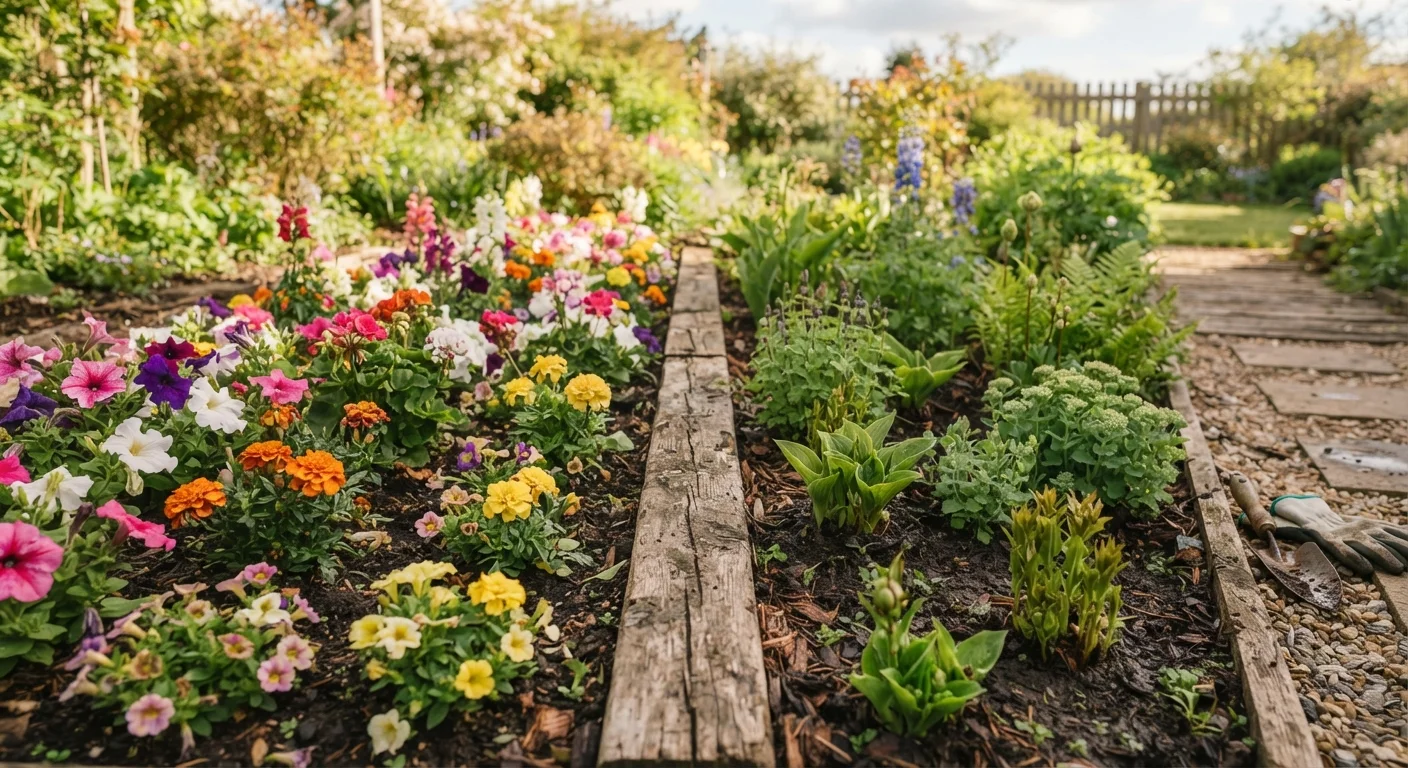
The most practical approach for most new gardeners is to plant a perennial backbone and fill gaps with annuals. Choose perennials for the spots where you want a predictable presence each year: a border edge, a foundation planting, or a focal point. Use annuals to fill the spaces between perennials while the slower-growing perennials expand, and to extend color into times of year when your perennials are not in bloom.
When you start from seed versus buying transplants also affects your timing with both types. Starting plants from seed vs. buying transplants walks through the tradeoffs in detail. Many perennials grown from seed will not flower until their second year, which is worth knowing before you plan a first-season display.
Track what blooms when in your first season. That record makes it easier to identify gaps and choose the right annuals or perennials to fill them the following year.