

Key Takeaways
- A sump pump removes groundwater and runoff that collects beneath a basement or crawl space.
- Float switches trigger the pump automatically when water reaches a set level in the pit.
- Testing your pump takes less than five minutes and should happen at least twice a year.
- A backup power source is worth considering, because storms that cause flooding also knock out electricity.
- Unusual noises, cycling that never stops, or visible rust are early warning signs that a pump needs attention.
Sump pump
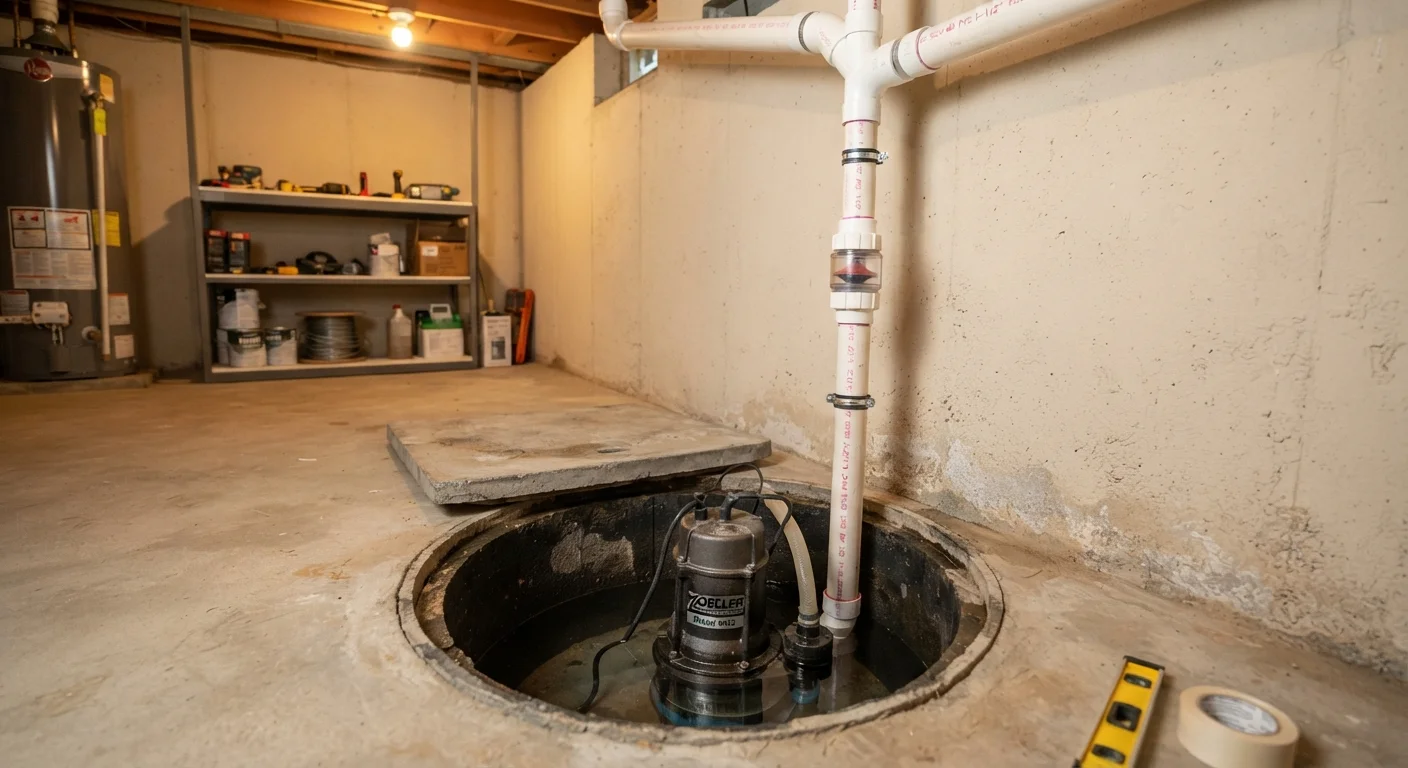
A sump pump is a small electric pump installed in a pit (called a sump basin) at the lowest point of a basement or crawl space. When groundwater or rainwater seeps in and fills the pit, the pump switches on automatically and moves that water through a discharge pipe to a safe drainage point outside the home. Without it, that accumulated water would flood the floor.
Most residential sump pumps are submersible units that sit inside the pit under water, though pedestal models mount the motor above the pit on a pole. Both types use a float switch to detect rising water levels and trigger the pump.
What a sump pump actually does
Water follows gravity. In homes with basements or crawl spaces, that means rainwater, snowmelt, and rising groundwater can migrate through soil and find small gaps in a foundation. A sump pit collects that water before it spreads across the floor. The pump inside the pit pushes it up through a discharge pipe and out of the house.
The float switch is the part that makes the system automatic. As water rises in the pit, it lifts a buoyant float. Once the float reaches the set trigger point, it completes an electrical circuit and the motor starts. When the water level drops, the float descends, the circuit opens, and the pump stops.
Most homes with a basement in a region that gets significant rainfall or has a high water table have at least one sump pump. Homes on a slab foundation generally do not need one, because there is no below-grade space for water to collect.
For broader context on how water-management systems connect to a home's plumbing, see our overview of residential plumbing maintenance.
How to test your pump in five minutes
Testing is straightforward. Fill a 5-gallon bucket with water and pour it slowly into the sump pit. Watch the float: it should rise, the pump should activate within a few seconds, and the water should drain within a minute or so. Once the pit empties, the float drops and the pump shuts off. That cycle tells you the motor, the float switch, and the discharge line are all working.
While the pump is running, listen for grinding, rattling, or a strained hum. Those sounds suggest debris in the impeller (the rotating part that moves water) or a bearing that is wearing out.
After the test, confirm that water is actually leaving through the exterior discharge point. Walk outside to find the pipe end and watch for flow. A discharge line that is blocked by a frozen outlet cap or debris will cause water to back up into the pit even when the pump is running.
Test twice a year, at minimum
Schedule one test in early spring before rainfall increases, and one in late fall before the ground freezes. Mark it on a calendar alongside other seasonal home maintenance tasks so it does not get skipped during a busy period.
Do this test in spring, before the wet season, and again in fall. If your area gets heavy thunderstorms in summer, a mid-season check is reasonable too.
Warning signs worth acting on
A pump that runs every few minutes during a dry week points to a stuck float or a crack in the pit that is drawing in groundwater constantly. Both warrant inspection.
Visible rust on the pump body or pit walls can eventually clog the intake screen. Clear the screen annually by disconnecting the pump and rinsing it with clean water.
If the pump activates but water stays in the pit, the impeller may be jammed or the check valve (a one-way valve on the discharge pipe that prevents water from flowing back down) may have failed. Replacing a check valve is a manageable DIY repair for most homeowners. Replacing the pump motor is usually not, and at that stage a licensed plumber can assess whether a repair or a full replacement makes more sense.
~10 years
Typical submersible sump pump lifespan
General industry guidance from pump manufacturers and plumbing trade organizations.
10+ feet
Minimum recommended discharge distance from foundation
Standard guidance from home inspection and waterproofing professionals to prevent water recirculation.
A pump that is more than 10 years old and showing any of the above symptoms is a reasonable candidate for replacement before the next heavy rain season, rather than after a failure.
Power outages and backup options
A sump pump needs electricity to run. Heavy rainstorms that saturate the ground are the same events most likely to knock out power, which creates a real gap in protection. Two backup approaches are common.
A battery backup system pairs a second pump with a marine-grade deep-cycle battery. When primary power fails, the battery-powered pump takes over. The battery needs periodic recharging and replacement, typically every 3 to 5 years depending on use.
A water-powered backup uses municipal water pressure to create suction that pulls pit water up the discharge line. No electricity is needed, but it does consume tap water while it runs, which matters if your area charges by volume or has water restrictions.
Neither option is maintenance-free. Whatever backup system a homeowner installs, testing it on the same schedule as the primary pump is the only way to confirm it will work when needed.