

Key Takeaways
- Knowing where every shutoff valve is in your home can limit water damage when a pipe or fixture fails.
- Most drain clogs and minor leaks are preventable with simple routine checks.
- Uninsulated pipes in unheated spaces are the most common cause of freeze-related bursts.
- Electrical, gas, and structural work near plumbing always requires a licensed professional.
- Your water meter is a free leak-detection tool you can use any time.
How residential plumbing is organized
A home's plumbing divides into two independent systems. The supply system brings pressurized potable water in from a municipal main or private well and distributes it to every fixture. The drain-waste-vent (DWV) system removes wastewater by gravity and vents sewer gases safely through the roof. Supply pipes are typically copper, CPVC, or cross-linked polyethylene (PEX); drain lines are usually ABS or PVC plastic.
Two separate systems work together
Your home has a supply system, which carries pressurized water in, and a drain-waste-vent (DWV) system, which carries wastewater out and vents sewer gases through the roof. Problems in one do not always affect the other, so identifying which system is involved helps you describe the issue accurately to a plumber.
Water pressure in a residential supply system normally runs between 40 and 80 pounds per square inch (psi). Pressure above 80 psi strains joints and valve seats over time. A pressure-reducing valve, installed where the main enters the house, controls this. A basic gauge from any hardware store lets you check your own pressure in minutes.
Shutoff valves and why you must know them
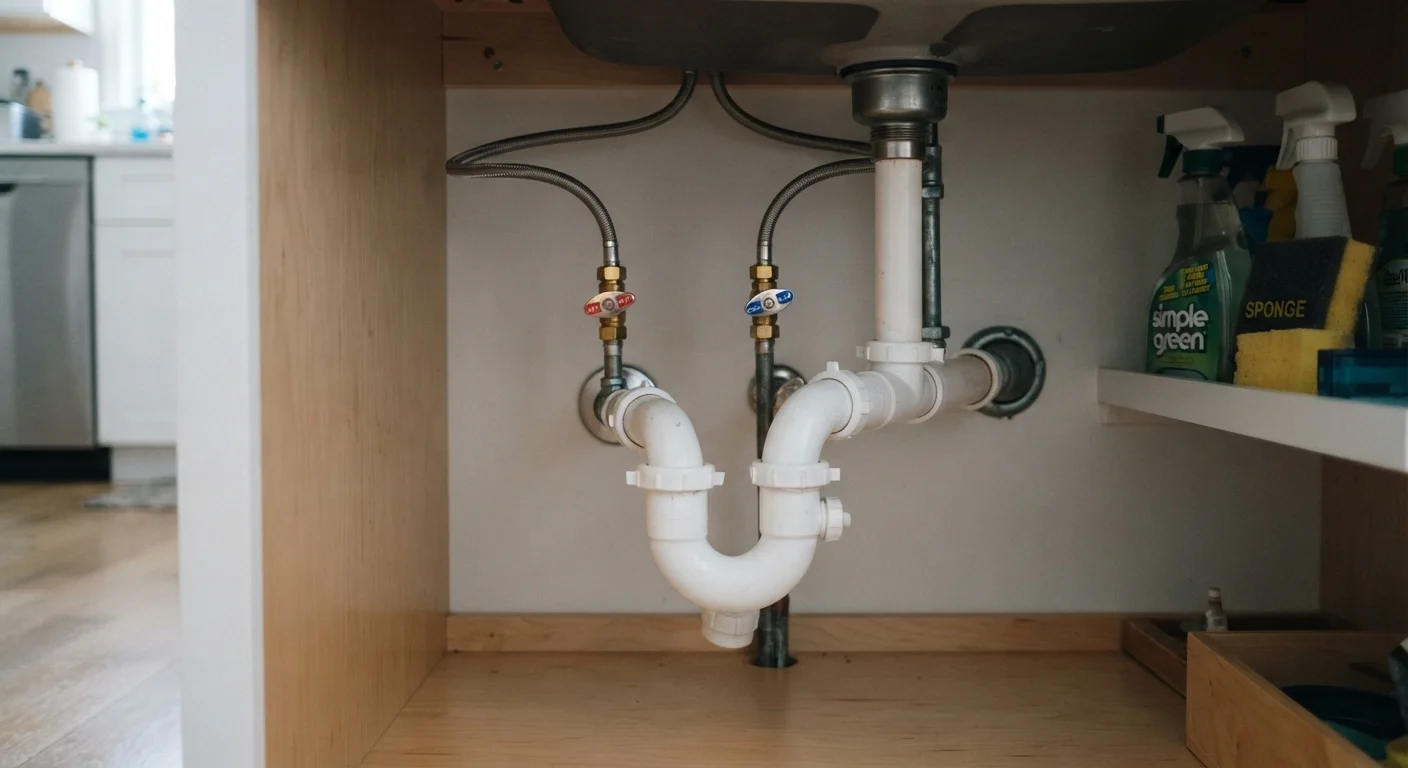
Every fixture has an individual shutoff valve: the small oval-handled valves under sinks and behind toilets. The house also has a main shutoff, usually at the meter or where the supply enters the foundation. A separate exterior shutoff is typically located at the property line.
Walk the house and locate every valve before you ever need one. Test each fixture valve by turning it fully clockwise, then back, once a year. Valves that sit unused for years can seize or crack when forced. If a valve will not turn or leaks around the stem, replace it while conditions are calm rather than during a burst.
Run water in rarely used fixtures, such as a guest bathroom sink, at least once a month. Drain traps dry out when unused, and a dry trap lets sewer gases enter the house.
P-traps rely on a water seal to block gas; that seal evaporates in stagnant fixtures over several weeks.
Tag each shutoff valve with a waterproof label the moment you identify it. A handwritten label takes ten seconds and removes all guesswork during an emergency.
In a leak emergency, every second spent searching for the correct valve adds water damage; clear labeling eliminates that delay entirely.
Routine habits that prevent failures
Most plumbing failures follow neglect, not bad luck. A few regular habits remove the majority of common causes.
- Check exposed supply lines under sinks for corrosion, moisture, or staining every few months. A damp cabinet floor is the first sign of a slow drip.
- Pour a bucket of water down floor drains in utility rooms seasonally to keep the trap seal intact.
- Avoid pouring fats, oils, or starchy food waste down kitchen drains. These solidify in the pipe and accumulate over months.
- Flush water heaters annually to remove sediment, which reduces efficiency and shortens tank life.
Your water bill is also a free diagnostic tool. A sudden increase in usage with no change in habits almost always points to a hidden leak. See our water bill leak detection guide for a step-by-step meter check.
Check your meter for hidden leaks
Turn off every fixture and appliance that uses water, then watch the meter for 15 minutes. If the dial moves, water is escaping somewhere in the system. The water bill and meter guide walks through this process in detail.
Pipe insulation and cold-weather risks
Water expands when it freezes. A frozen pipe does not always burst at the ice blockage; it bursts where pressure builds between the blockage and a closed faucet, often inside a wall. The pipes most at risk are those in unheated spaces: crawl spaces, attached garages, exterior walls with poor insulation, and basements near foundation openings.
Foam pipe insulation sleeves are inexpensive and install without tools. Focus on any pipe within six inches of an exterior surface or in a space that drops below 40 degrees Fahrenheit. Before temperatures fall, disconnect and drain exterior hose bibs (outdoor spigots), and know how to shut off and drain the line to any irrigation system. The home winterization checklist covers this preparation in full.
When to call a licensed plumber
Homeowners can safely handle tasks such as replacing faucet cartridges, swapping toilet flappers, tightening compression fittings, and clearing simple drain clogs with a hand snake. Any work that goes further carries increasing risk.
Call a licensed plumber for: any work inside walls or under slabs, replacement of a water heater (gas connections require both a plumber and often a gas fitter), re-routing of supply or drain lines, low water pressure that persists after valve checks, and any situation involving sewage backup. Sump pump failures are a related concern; the sump pump maintenance guide explains what to watch for before the next storm arrives.
Never skip permits for plumbing work
In most US jurisdictions, any work that alters supply lines, drain lines, or venting requires a permit and inspection. Unpermitted plumbing can void homeowner's insurance claims and complicate a future home sale. Always verify local code requirements before beginning any work beyond simple fixture swaps.
Knowing which problems fall outside DIY territory is as useful as any repair skill. A licensed plumber carries insurance and, in most states, a bond; work done without permits can complicate insurance claims when water damage occurs, as noted in our broader overview of how water damage spreads inside a home's structure.