

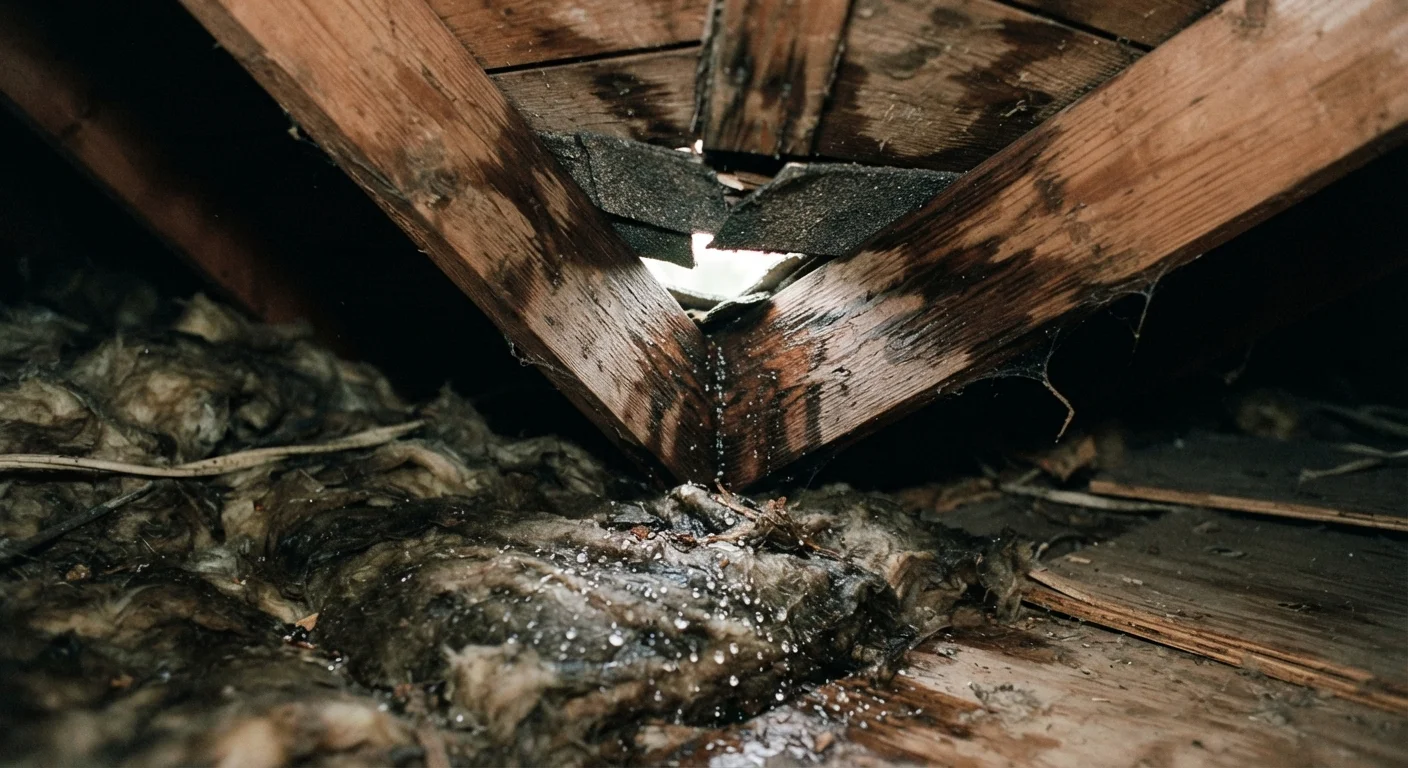
Key Takeaways
- A roof leak can begin rotting wood framing within weeks if moisture stays above the decay threshold.
- Mold can establish in damp building materials within 24 to 48 hours under the right temperature conditions.
- Ceiling stains, sagging drywall, and peeling paint are late-stage signs, not early ones.
- Damaged insulation loses thermal performance and can hold moisture against framing for months.
- Most structural repairs cost significantly more than addressing the original leak promptly.
- A licensed roofing contractor should evaluate any leak that has persisted for more than a few weeks.
Roof leak progression
A roof leak starts when water finds a path through damaged or missing roofing material. Over time, even a small, slow intrusion can saturate insulation, rot wood framing, and weaken the structural components that hold a roof in place. The damage spreads silently because most of it happens inside walls, attics, and ceiling cavities that homeowners rarely inspect.
In building science, the point where moisture content in wood exceeds roughly 19 percent is considered the threshold at which wood-decay fungi can become active, making sustained dampness in framing a long-term structural concern.
Why small leaks rarely stay small
Water that enters a roof cavity does not fall straight down and pool neatly in one spot. It travels along rafters, runs down the top of ceiling drywall, and wicks into insulation. A drip that produces a thumbnail-sized stain on the ceiling may have been saturating a two-foot section of rafter for months before showing itself. That gap between cause and visible symptom is why homeowners consistently underestimate how far damage has spread by the time they notice it.
The path water takes inside a roof assembly also means the entry point on the roof is rarely directly above the interior wet spot. Flashing failures around chimneys, skylights, and pipe boots are common sources. A cracked or missing shingle can funnel water several feet laterally before it finds a gap in the underlayment. This makes tracing leaks genuinely difficult without attic access or professional inspection.
Check the attic after every significant storm
A quick flashlight scan of the attic after heavy rain or wind is the fastest way to catch a new leak before it saturates framing. Look for fresh wet spots, drips, or daylight through the roof deck. Early detection keeps repair costs low and keeps structural framing dry.
The timeline of water damage inside a roof system
In the first days to weeks of a slow leak, moisture accumulates in attic insulation. Fiberglass batts lose thermal performance when wet and can hold water against wood framing indefinitely. Blown-in cellulose compresses and clumps. Neither type dries readily on its own once saturated. During this phase, there may be no visible sign in the living space below.
Between several weeks and a few months of repeated wetting, wood sheathing and rafters begin to stain. Staining alone does not indicate structural failure, but it marks the point where biological activity becomes possible. The attic environment, which is typically warm and poorly ventilated during summer months, provides conditions where mold spores can establish quickly. Attic ventilation affects how fast this happens: an attic that moves air effectively dries out faster between rain events than one that is sealed or poorly vented.
After several months of ongoing moisture, soft spots in sheathing become detectable by pressing on the roof surface or probing from the attic. Rafter ends and ridge board connections, where wood is less exposed to airflow, are often the first structural members to show decay. At this stage, a roofing repair alone will not resolve the problem. Damaged framing and sheathing require a separate scope of work, usually involving a contractor and potentially a building permit depending on the extent of replacement.
24-48 hrs
Time for mold to establish in damp building materials
According to the U.S. Environmental Protection Agency, mold can begin to grow on wet surfaces within 24 to 48 hours under typical indoor temperature conditions.
19%
Wood moisture content threshold for decay risk
Building science guidelines generally place the threshold for wood-decay fungal activity at a moisture content above approximately 19 percent, sustained over time.
40%
Thermal performance loss in wet fiberglass insulation
Research from Oak Ridge National Laboratory has shown that wet fiberglass batt insulation can lose a substantial portion of its rated R-value, reducing its ability to resist heat transfer.
What to look for during an attic check
A basic attic inspection takes about fifteen minutes and can catch a leak before it reaches structural framing. Use a bright flashlight and look along the underside of the roof deck for dark staining, which ranges from gray to near-black on wood. Press gently on any stained areas with a gloved hand: sound sheathing feels firm, while water-damaged material may flex or crumble at the surface.
Check the insulation surface for discoloration, compression, or a musty smell. Look at the tops of exterior walls where they meet the roof framing, as these corners collect water that runs down the inside of the roof deck. Any daylight visible through the roof deck is a confirmed breach and warrants immediate attention.
If the attic shows signs of past or active moisture, document the location with photos before calling a contractor. Knowing where staining is concentrated helps a professional estimate the scope of damage more accurately.
When to call a professional
A homeowner who finds a single dark stain on a rafter with no soft spots and no mold has caught the problem early. Resealing a flashing seam or replacing a few shingles may be the only repair needed, and some of those tasks are manageable as DIY work depending on the homeowner's comfort with roof access and the pitch of the roof.
A licensed roofing contractor should evaluate the situation when: staining covers a large area, sheathing or rafters feel soft or crumble, mold is visible in multiple locations, the leak source is not obvious, or the roof has experienced repeated leaks in the same area. Structural repairs to rafters, ridge boards, or roof decking typically require a permit in most jurisdictions. A contractor familiar with local code requirements can confirm what permits apply and arrange inspections, which protects the homeowner if the work is ever scrutinized during a sale or insurance claim.
Water damage from roofs can also intersect with interior plumbing failures in ways that are not always obvious at first glance. A basic understanding of how residential plumbing routes through walls and ceilings helps homeowners distinguish a roof source from a pipe source when ceiling stains appear near bathrooms or kitchens.