

Key Takeaways
- Buying storage containers before decluttering wastes money and locks in clutter.
- Ignoring how you actually move through the kitchen leads to systems you won't maintain.
- Vertical space and cabinet doors are consistently underused in most kitchens.
- Organizing shared kitchens without input from everyone who uses them rarely holds.
- A system that looks good but slows you down will not last.
Why kitchen organization attempts often fail
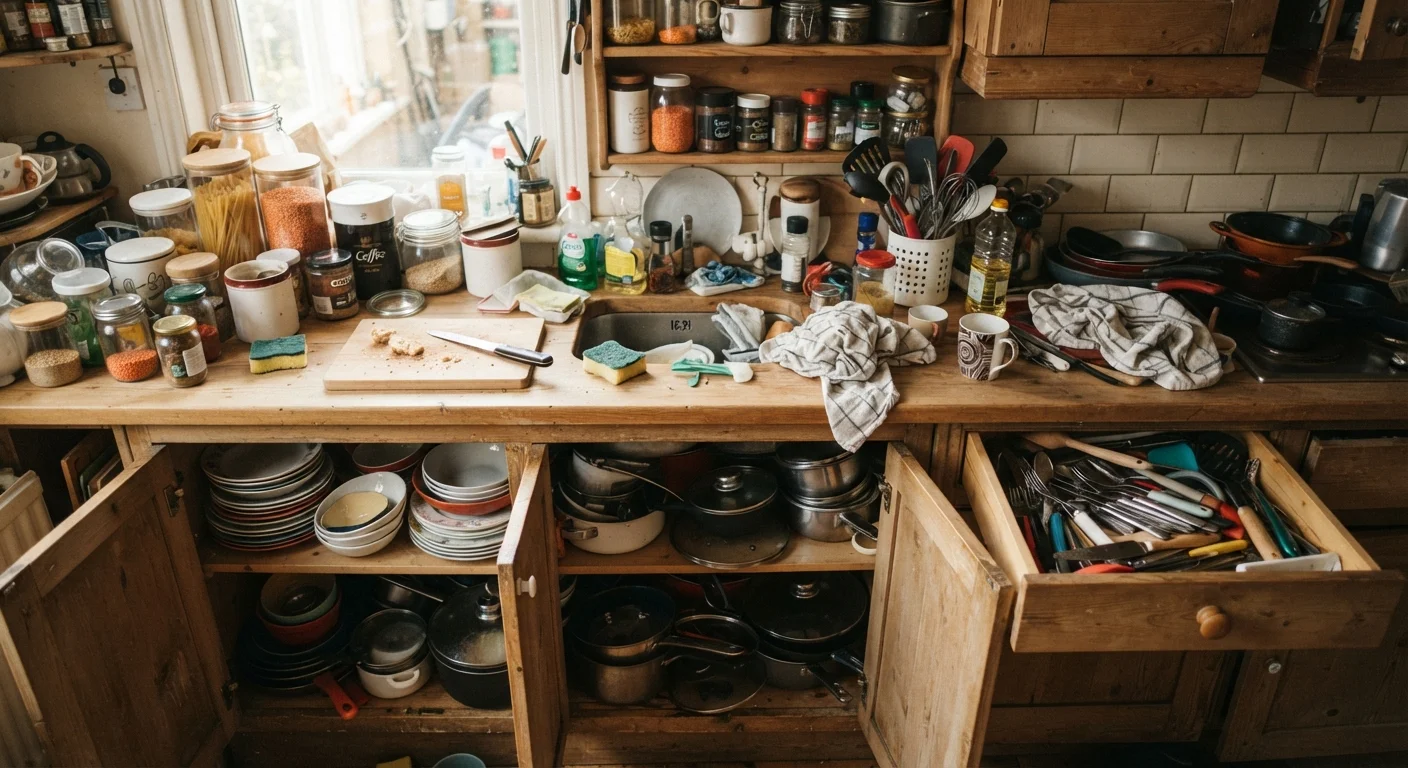
A kitchen reorganization can feel productive for a few days and then quietly unravel. Dishes pile back up in the wrong spots. Containers multiply. The drawer that was finally clear fills again. This pattern usually traces back to a handful of predictable mistakes, most of which happen before a single item is moved.
If you are starting from scratch or trying again after a previous attempt stalled, this introduction to home organization covers the core principles that apply here too. For the kitchen specifically, the mistakes below are where most efforts break down.
The most common kitchen organization mistakes
Buying containers and bins before deciding what to keep.
Why it happens: Storage products look like a solution, so many people shop first and sort later. The result is a set of containers sized and shaped for items you may not actually need.
Organizing around an ideal workflow rather than your actual one.
Why it happens: It is easy to plan a kitchen layout based on how cooking "should" work, placing items where they seem logical rather than where you naturally reach for them.
Ignoring vertical space inside cabinets and on walls.
Why it happens: Most people think in terms of horizontal shelf space and miss the full height available inside cabinets, on the backs of cabinet doors, or on walls between counters and upper cabinets.
Keeping rarely used items in prime storage spots.
Why it happens: People tend to store things where there is available space when they first put them away, rather than thinking about frequency of use.
Creating a system that looks organized but slows down cooking.
Why it happens: Visually tidy storage, such as decanted dry goods in uniform jars or tools sorted by category, can actually add steps to routine tasks if it means opening multiple containers or searching through grouped items to find one thing.
Once you have a working system in place, the challenge shifts to keeping it. These long-term habits can help prevent clutter from returning after the initial effort fades.
A note on shared kitchens
If more than one person cooks or stores food in your kitchen, any system you design alone is likely to face friction. Different habits around where things "belong" can undo a carefully planned layout within weeks. Organizing a home with multiple adults goes into practical ways to build systems that work for everyone who uses the space, not just whoever set it up.
Families with children face an additional layer. Kids interact with kitchen storage differently, and what works for adults often fails when small hands are involved. Realistic strategies for organizing with kids addresses that gap directly.
Do not organize around what you think you should keep
A common trap is holding onto kitchen items out of guilt or optimism, equipment you might use someday, gifts you never reach for, duplicates kept "just in case." Storage systems built around items like these are harder to maintain and harder to use. Be honest about what your household actually cooks and how often. If a tool has not been touched in a year, it is a candidate for removal, not a better storage spot.