

Key Takeaways
- Spreading funds across multiple cards and accounts protects you if one is blocked or stolen.
- Notifying your bank before departure prevents automatic fraud flags from cutting off your access.
- Withdrawing local currency from in-network ATMs typically costs less than exchanging cash at airports.
- A digital backup of account numbers and emergency contacts lets you act fast if a card is lost.
- Using a card with no foreign transaction fees can save a meaningful amount on a longer trip.
The case for a layered approach
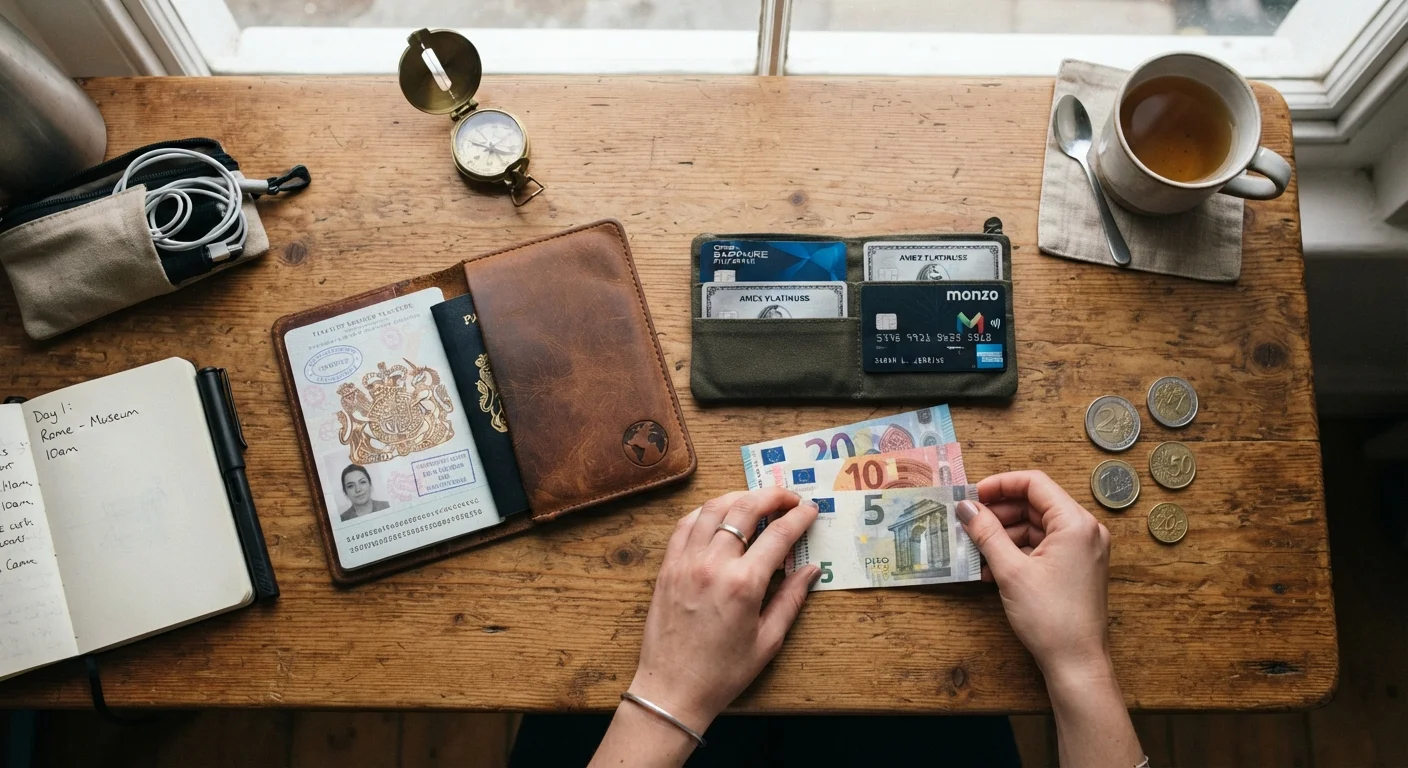
A money belt is a starting point, not a strategy. Pickpockets aside, the more common financial problems travelers face are frozen accounts, declined cards, and no backup when a wallet goes missing. A layered approach means distributing your financial access across formats and locations so that losing one piece does not strand you.
Before you leave, read our guide to organizing travel documents and cards for a system that covers passports, insurance, and payment details together.
Set a travel notice on every card you plan to use before departure
Banks use location data and spending patterns to detect fraud. A charge from an unexpected country triggers automatic holds that can block your card mid-trip. Notifying your bank prevents this without requiring you to call from abroad.
Carry at least two cards from different card networks
Not all merchants accept every network. If one network has an outage or your card is compromised, a second card on a different network keeps you operational. Keeping them in separate physical locations reduces the chance of losing both at once.
Store emergency contacts and account numbers in a secure digital location
If your wallet is stolen, your physical cards and any paper records go with it. A digital record stored in a password manager or sent to a trusted person at home means you can report and freeze accounts without delay.
Use ATMs inside banks or established locations rather than standalone machines
Standalone ATMs in high-traffic tourist areas carry a higher risk of skimming devices. ATMs inside bank branches or large supermarkets are more regularly monitored and maintained.
Keep a small cash reserve in a separate location from your main wallet
A reserve of local currency, enough for a meal and a taxi, covers you if your wallet is lost or a card is frozen while a replacement is arranged. It does not need to be large to be useful.
Cards, accounts, and how banks see foreign transactions
Many banks flag international charges automatically. A card that works fine at home can be declined at a restaurant abroad the first time you use it, especially if you have not told your bank you are traveling. Most banks now let you set a travel notice through their app; do this for every card you plan to carry, including a backup.
Foreign transaction fees, typically 1 to 3 percent per purchase, add up over a two-week trip. Some checking accounts and travel-oriented cards waive these fees entirely. Choosing at least one card that skips those fees is worth checking before you pack. For broader trip financial planning, see why travel budgets fall apart.
1-3%
Typical foreign transaction fee per purchase
Foreign transaction fees charged by card issuers generally range from 1 to 3 percent of each transaction amount.
~$5-$10
Common ATM fee range for out-of-network withdrawals abroad
Out-of-network ATM fees vary by institution and destination; some banks reimburse these fees monthly for account holders.
Cash, ATMs, and currency exchange
Cash still matters in many destinations, whether for small vendors, rural areas, or places where card readers are unreliable. Airport currency exchange counters tend to offer poor rates. Withdrawing local currency from an ATM affiliated with your bank's network generally costs less, though ATM fees vary by institution and location.
Carrying two denominations helps: smaller bills for markets and taxis, larger ones kept separately. Avoid exchanging large amounts at once until you have a sense of your daily spending. The Packing and Prep hub has additional guidance on what to carry and what to leave behind.
What to do when something goes wrong
If a card is lost or stolen, the clock matters. Knowing your bank's international collect number before you travel means you are not searching while stressed. Store that number, along with your account numbers and card issuer contacts, in a secure note in a password manager or encrypted email draft, somewhere accessible without the physical card.
Carrying a small emergency cash reserve, separate from your main wallet, buys time while a replacement card is arranged. Some banks can issue emergency cash advances through partner ATMs abroad; ask your bank about this option before departure.
Traveling with a companion means you each carry different primary cards, so if one account is compromised, the other still works. Solo travelers should keep one card entirely separate from their main wallet, ideally in luggage at the accommodation. For related preparation habits, what experienced travelers do differently covers backup planning in detail.