

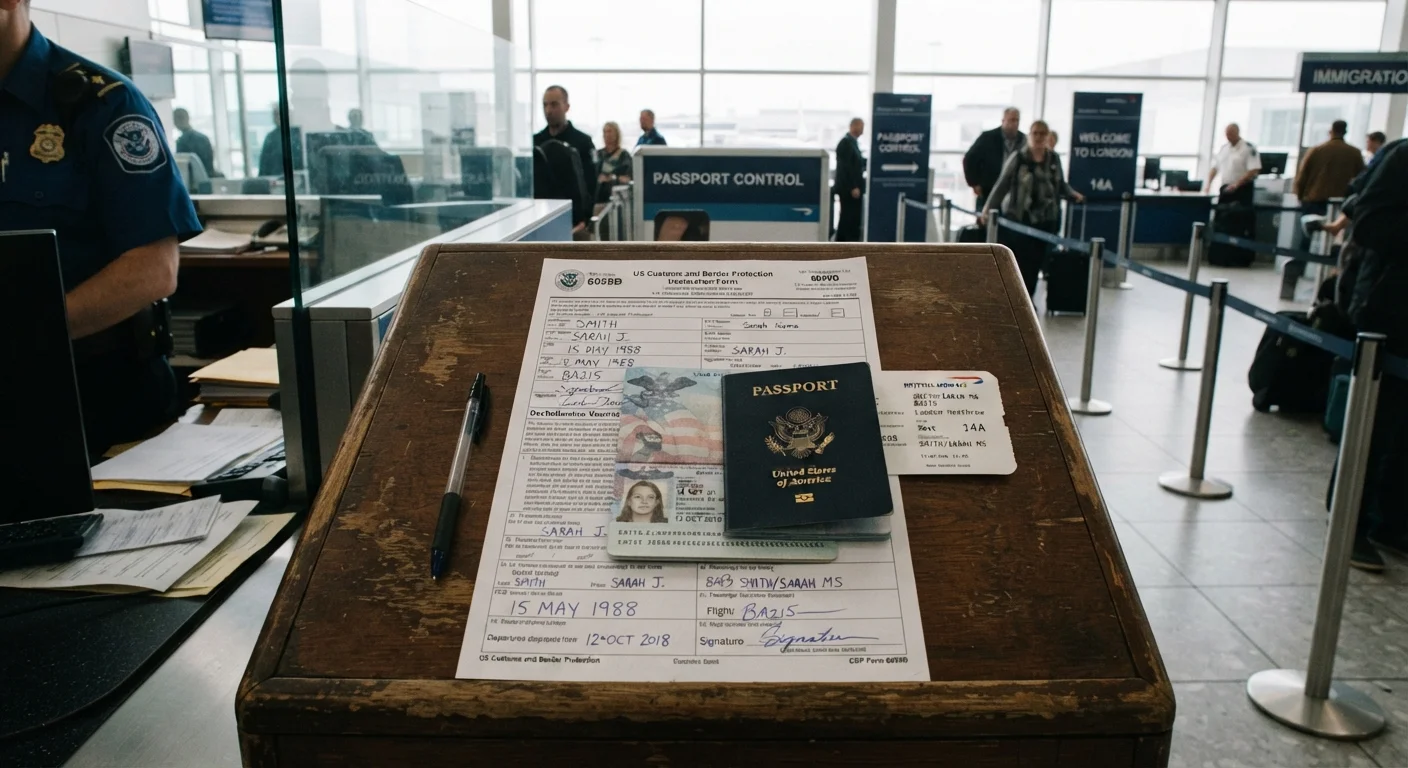
Key Takeaways
- Incomplete or incorrect customs declarations are one of the most common reasons travelers face secondary screening.
- Expired or wrong-category visas can result in denial of entry, regardless of how far you traveled.
- Undeclared food, plant, or animal products can carry fines even when brought in unintentionally.
- Carrying a mix of currencies and undeclared amounts above thresholds creates legal exposure.
- Officers ask questions to verify your story, not to catch you out; calm, direct answers move the line faster.
Why border crossings catch travelers off guard
Border crossings operate under rules that change by country, change by traveler nationality, and sometimes change with little public notice. Most travelers who run into trouble are not doing anything deliberately wrong. They simply did not know what was required, assumed rules matched those of the last country they visited, or skipped a verification step because things had always gone smoothly before.
The mistakes below are documented by customs and border agencies across multiple countries and appear in traveler accounts repeatedly. Understanding them before you arrive is the most practical preparation you can do. For a broader look at how preparation habits reduce travel friction, see what experienced travelers do differently when planning.
Common mistakes and how to avoid them
The following errors show up across land, sea, and air entry points. Some carry fines; others can result in denied entry or confiscated goods.
Filing a customs declaration form incorrectly or leaving fields blank.
Why it happens: Travelers treat the form as a formality and rush through it, or misread what a category includes.
Arriving with the wrong visa category or an expired visa.
Why it happens: Travelers assume a tourist visa covers all short stays, or they do not check the expiration date against the actual travel dates.
Bringing undeclared food, plants, seeds, or animal products across an international border.
Why it happens: Travelers do not realize that common packaged foods or snacks can be restricted, and biosecurity rules vary widely.
Carrying undeclared cash or monetary instruments above the reportable threshold.
Why it happens: Most travelers do not know that cash reporting requirements apply to the traveler carrying the money, not just to the transaction itself. Thresholds differ by country.
Giving inconsistent or vague answers to officer questions.
Why it happens: Nervousness causes travelers to over-explain, contradict themselves, or hedge answers, which flags the interaction for further review.
Assuming rules are the same as on a previous trip or as described by another traveler.
Why it happens: Border rules change with little fanfare, and other travelers' experiences reflect their own nationality and travel history, which may not apply to you.
If you plan to drive across a border, the requirements expand beyond personal documents. Driving abroad involves licenses, insurance proof, and road rules that vary significantly by country.
How to prepare before you reach the crossing
$10,000
U.S. cash declaration threshold for travelers
U.S. Customs and Border Protection requires travelers to declare currency and monetary instruments totaling $10,000 or more when entering or leaving the country.
Over 400 million
Travelers processed by U.S. CBP annually (pre-pandemic baseline)
U.S. Customs and Border Protection reported processing more than 400 million travelers per year at ports of entry, making documentation accuracy a high-volume operational priority.
A few steps taken before departure remove most of the risk. Check the entry requirements for your destination using that country's official immigration authority website, and also check your own government's travel advisory pages. Requirements for visas, vaccinations, and permitted goods are not static, so verify them close to your departure date, not weeks in advance.
Keep physical and digital copies of every document you may need: passport, visa approval, return ticket, accommodation confirmation, and any proof of funds if required. Officers cannot access your email; a screenshot saved offline is faster to show than a live search.
Declare everything you are unsure about. The declaration form asks about categories of items, not just items you know are restricted. If you carried fruit from a hotel breakfast into your bag and forgot it, declaring it and surrendering it is far less costly than having it found during inspection. Travelers who prepare with practical awareness rather than anxiety tend to move through official checkpoints more smoothly because they are not scrambling to remember what they packed.
This article is for general informational purposes only. Entry requirements, customs rules, and visa regulations vary by country and change frequently. Always verify current requirements with official government sources and your destination country's immigration authority before traveling.