

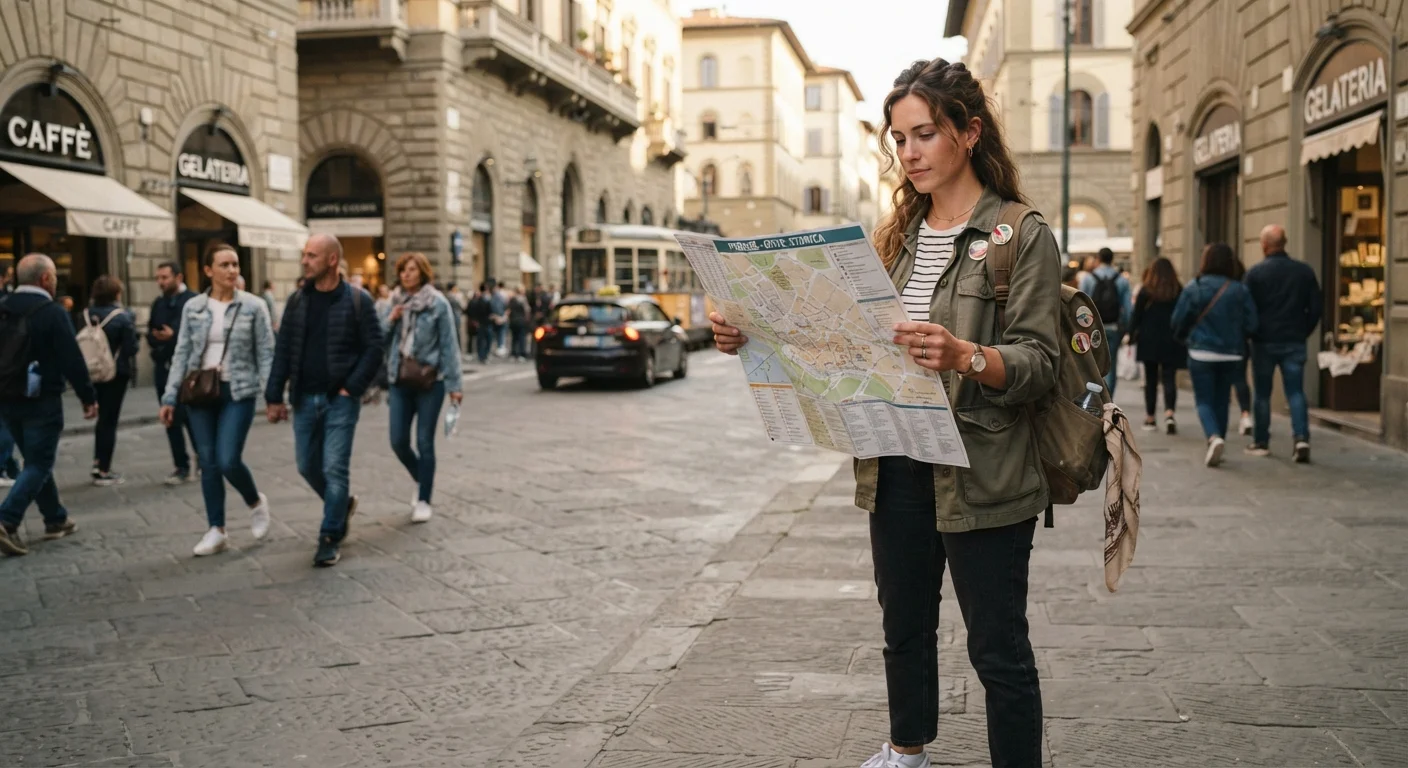
Key Takeaways
- Most travel safety comes down to preparation before you leave, not hypervigilance on the ground.
- Knowing your emergency contacts, offline maps, and accommodation address takes minutes and prevents real problems.
- Public Wi-Fi on travel devices carries risks that a VPN or mobile data connection can reduce significantly.
- Blending in with your surroundings starts with modest, context-appropriate choices about what you carry and wear.
- Always verify entry rules, health requirements, and travel advisories through official government sources before departure.
Why safety on the road is mostly a planning problem
Most travel incidents happen because something caught a person off guard. A phone dies with no offline map saved. A wallet holds every card at once. An accommodation address is locked inside an email that won't load without Wi-Fi. None of these situations require fear to prevent; they require a short checklist before you leave home.
Experienced travelers do not avoid risk by staying alert every minute. They reduce exposure by making deliberate choices during the planning stage, so fewer things can go sideways on the ground.
This article covers the practical habits that make a real difference, without asking you to treat every stranger as a threat.
Before you arrive: the preparation that matters most
Check the U.S. Department of State travel advisory for your destination before booking and again a few days before departure. Advisories change, and official guidance is the only reliable baseline. For health requirements, the Centers for Disease Control and Prevention (CDC) traveler health page lists destination-specific vaccination recommendations and current alerts. Verify visa and entry rules through the destination country's official embassy or consulate site. See entry requirements explained for a fuller breakdown of what documentation to prepare.
Write down (on paper, not only on your phone) the address of your accommodation, the local emergency number, and your country's embassy contact for that destination. These three items cover the majority of urgent situations a traveler might face.
Save an offline map of your destination city before you board. Both Google Maps and Apple Maps allow offline downloads. Navigating a new city without data is straightforward when the map is already on your device.
On the ground: practical habits without paranoia
Carry only what you need each day. Split your cards across two locations: one card in your wallet, a backup in your bag or hotel safe. Keep a small amount of local cash separate from your main wallet. Smart financial habits for travel go deeper than where you store cash, covering cards, currency exchange, and account access across different countries.
Use your accommodation's safe for your passport when local law permits a copy to substitute (check this before traveling). Walking with an original passport in a busy market is a meaningful, avoidable risk.
Public Wi-Fi at airports, cafes, and hotels is convenient but carries real exposure. Sensitive tasks like banking or accessing health insurance accounts are better done on mobile data or through a VPN. Public Wi-Fi safety covers what makes those networks different and what precautions reduce risk.
When moving through unfamiliar neighborhoods, look up your route before stepping out rather than staring at your phone while walking. Awareness of your surroundings is easier when you are not navigating in real time.
Recommended practices for safer travel
Save emergency contacts and your accommodation address in printed form before you travel
A dead battery or lost signal can make a phone useless at the worst moment. Paper backups remove that dependency entirely and take under five minutes to prepare.
Download offline maps of every city on your itinerary before departure
International data roaming is expensive and unreliable in many areas. An offline map works without any connection and prevents the disorientation that often precedes poor decisions.
Split payment cards and cash across two separate locations each day
If one item is lost or taken, you retain access to funds without needing to make an emergency international call to your bank. Full financial access from two locations is a simple redundancy.
Use mobile data or a VPN for any sensitive account access while traveling
Open public Wi-Fi networks can expose login credentials and session data to other users on the same network. Sensitive tasks carried out over a personal hotspot or encrypted connection carry substantially less risk.
Research neighborhood-level context before visiting unfamiliar areas
City-level safety ratings obscure wide variation within a destination. Knowing which transit stops, markets, or streets are typically busy and well-lit lets you plan routes that reduce unnecessary exposure.
When something goes wrong
If you lose your passport, contact the nearest U.S. embassy or consulate immediately. Emergency passports can be issued, but the process takes time, so the sooner you start it the better. Keep a photo of your passport's data page stored in a secure cloud folder or emailed to yourself.
For medical emergencies, go to the nearest hospital or call the local emergency number you wrote down before leaving. Travel insurance that includes medical evacuation coverage is worth reviewing before departure. The terms, coverage limits, and exclusions vary widely by policy, so read the actual documents rather than relying on a summary. A licensed insurance agent can help you interpret what a given policy covers for your specific trip.
Researching a destination thoroughly before you commit includes reading about local emergency services, common scams, and neighborhood-level context. That groundwork is the most time-efficient safety investment a traveler can make.