

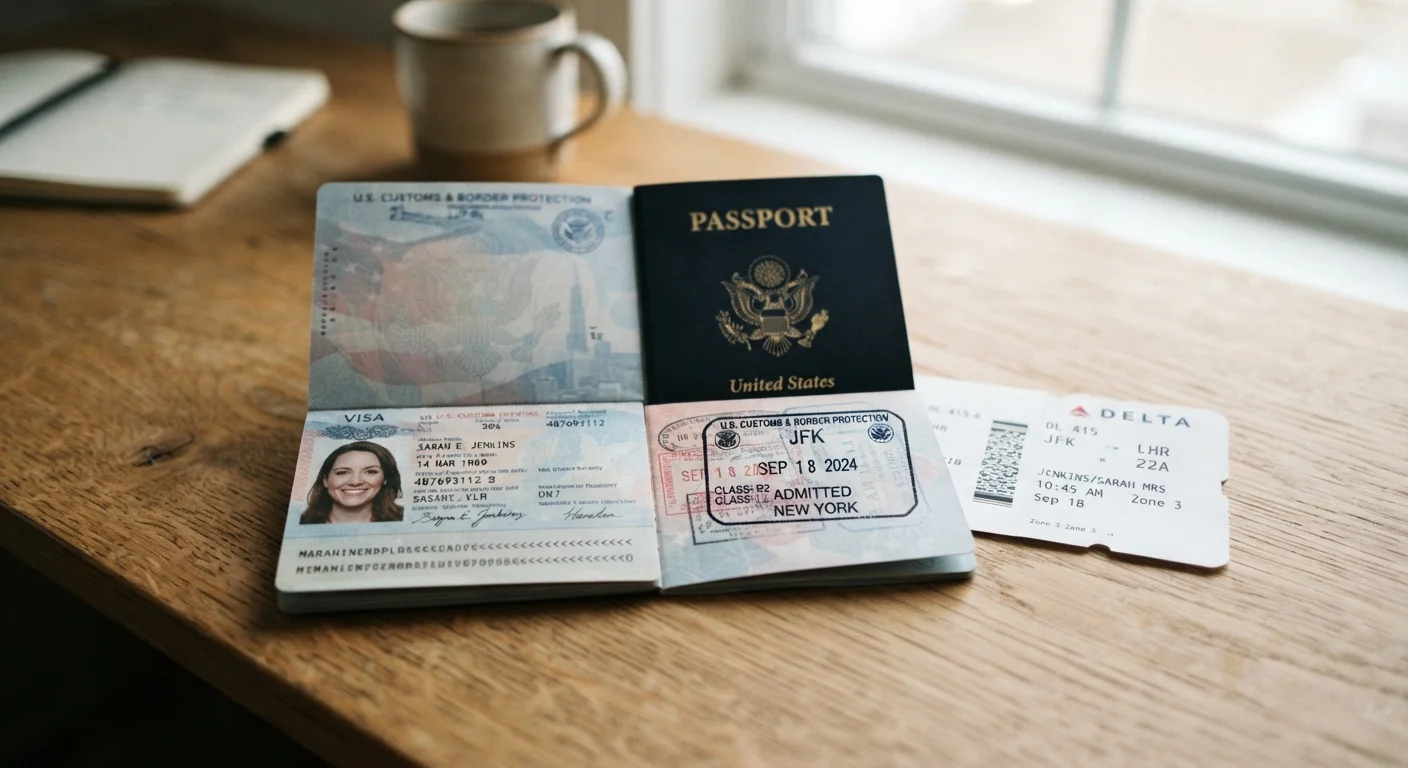
Key Takeaways
- A passport proves your citizenship and identity; most international travel requires one with at least six months of validity remaining.
- A visa is a separate permission, issued by your destination country, that allows you to enter for a specific purpose and length of time.
- Many countries let US passport holders enter without a pre-arranged visa through bilateral agreements or visa-waiver programs.
- Some destinations require an electronic travel authorization (ETA) that is not a visa but still must be obtained before departure.
- Entry rules change; the only reliable source is the destination country's official immigration authority or the US Department of State.
Entry requirements
Entry requirements are the documents and permissions a foreign government needs from you before it will let you cross its border. For US travelers, those requirements typically fall into three categories: a valid passport, a visa obtained in advance, or a visa-waiver authorization that lets you skip the visa application. The specific combination depends on your destination, the purpose of your trip, and how long you plan to stay.
Requirements can change on short notice due to diplomatic shifts or public-health rules. Always verify current rules through the US Department of State travel site and the destination country's official immigration authority before you travel.
What a passport actually does
A passport is a government-issued document that serves two purposes at once: it proves your identity and certifies your nationality. When a border officer reviews it, they are confirming that your home country vouches for you as a citizen. Without it, most foreign governments have no reliable way to verify who you are or where you are from.
For US travelers, a standard adult passport is valid for ten years. The six-month validity rule that many countries apply means that if your passport expires sooner than six months after your scheduled return date, you may be turned away at check-in or at the border. Renewing early is the straightforward fix; the US State Department processes standard renewals, though timelines vary by season and demand.
A passport card is a wallet-sized alternative, but it works only for land and sea crossings between the US, Canada, Mexico, the Caribbean, and Bermuda. It does not substitute for a passport book on international flights.
Visas: what they are and when you need one
A visa is a separate authorization, issued by your destination country, that grants permission to enter for a defined purpose and time period. Common categories include tourist visas, business visas, and student visas. The category matters because entering on a tourist visa and then doing paid work, for example, violates the terms of entry and can carry serious consequences.
Visa applications typically require a valid passport, a completed application form, passport-sized photos, a fee, and sometimes supporting documents such as bank statements, a letter of invitation, or proof of onward travel. Processing times range from a few days to several weeks depending on the country and the type of visa. Apply well before your travel date.
Some countries require you to apply at a consulate or embassy in person. Others accept online applications. A few issue visas on arrival at the airport, though relying on that option without confirming it in advance is a risk worth avoiding. Common border crossing mistakes often trace back to assumptions about on-arrival procedures that turned out to be wrong.
Visa waivers and electronic travel authorizations
The US has bilateral agreements with many countries that allow US passport holders to enter without applying for a full visa. These agreements are sometimes called visa-waiver programs. Under them, you can typically stay for up to 90 days for tourism or short business trips without obtaining advance permission beyond your passport.
A growing number of countries add one more step: an electronic travel authorization (ETA). An ETA is not a visa, but it is not simply showing up with your passport either. It is a pre-travel approval you apply for online, usually days before departure, and it is linked electronically to your passport. Canada, Australia, and Sri Lanka are among countries that have used this model. The EU's ETIAS program is expected to apply a similar requirement to Schengen Area entry for travelers from visa-exempt countries.
Check requirements close to your travel date
Entry rules can change after you book. Governments update visa requirements, add ETA programs, or alter bilateral agreements with limited public notice. Checking official sources within a few weeks of your departure date is the most reliable way to catch any changes before they catch you.
Because ETA requirements are added or modified without much public notice, check both the US Department of State country page and the destination government's immigration site within a few weeks of booking.
How to verify requirements before you book
The US Department of State's website (travel.state.gov) is a solid starting point. Each country page lists visa requirements, entry rules, and any active travel advisories. For the most current rules, cross-reference that page with the destination country's official embassy or immigration website, which is the authoritative source for what their border officers will actually enforce.
Your airline's website or check-in system may flag document issues, but airlines are not immigration authorities. A gate agent's reassurance does not override the rules at the border. If you are denied entry after arrival, you bear the cost of the return flight and any related penalties.
For travelers who want a structured approach to document preparation, organizing your travel documents before departure reduces the chance of arriving without something you need. The habits of experienced travelers also include checking entry requirements as one of the first steps after choosing a destination, not a last-minute box to tick.
This article provides general travel information only. Entry requirements change, and the details here may not reflect current rules. Always verify visa and passport requirements with the US Department of State and the official immigration authority of your destination before you travel.