

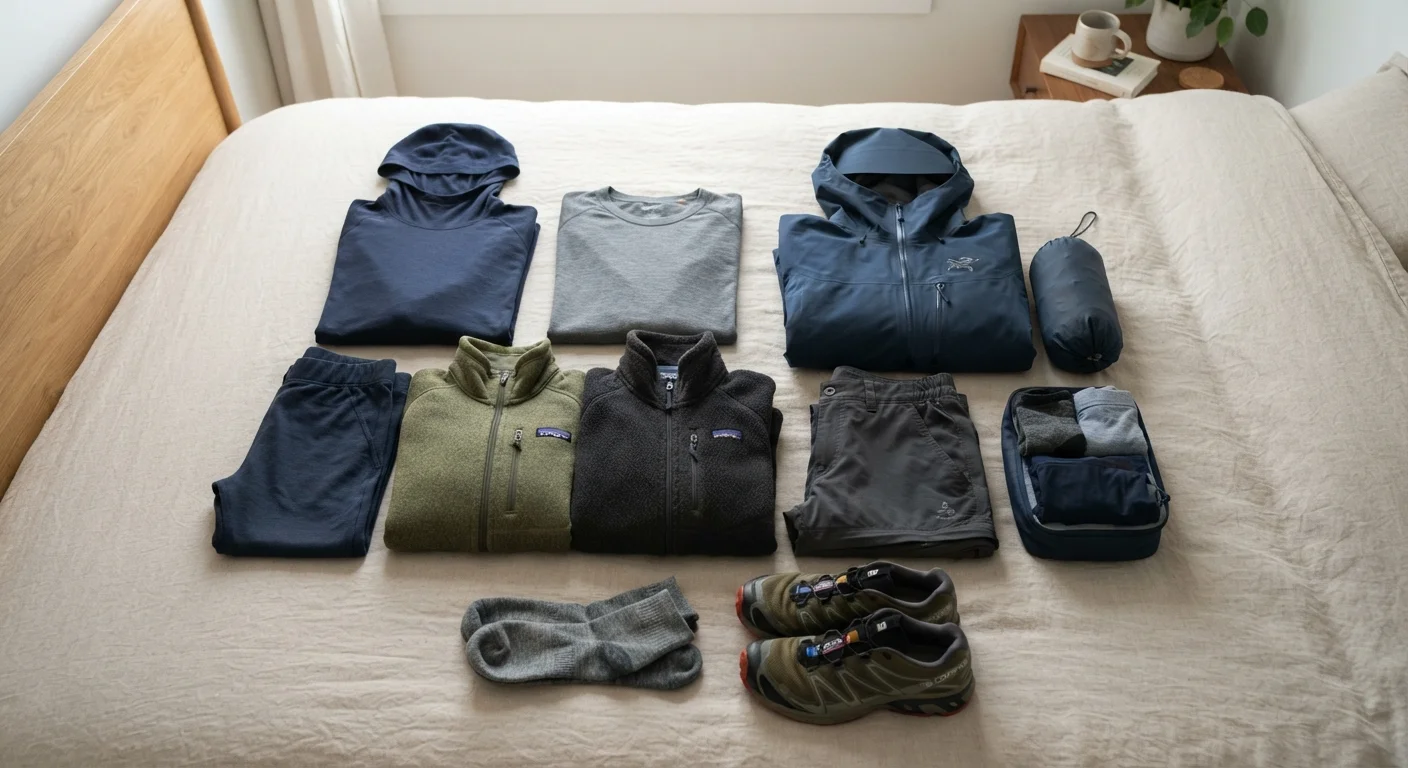
Key Takeaways
- A three-layer system (base, mid, shell) handles most weather conditions in fewer garments.
- Choosing fabrics that dry quickly and resist odor extends the wear of each piece.
- Packing light relies on mixing pieces that layer together and work across multiple outfits.
- Checking forecasts for temperature ranges, not just averages, guides smarter clothing choices.
- Bulky items like fleeces belong on your body during transit, not compressed inside your bag.
Why variable weather breaks most packing plans
Most travelers pack for the weather they expect, then get caught by the weather they actually find. Mountain towns swing 30 degrees between morning and afternoon. Coastal destinations that look mild on a forecast can turn windy and cold by evening. Tropical destinations often throw in a daily downpour that soaks everything within minutes.
The problem with packing for averages is that averages hide the range. A destination with a forecast high of 72F and low of 52F needs a very different suitcase than one where temps stay between 64F and 68F all day, even if the numbers look similar at first glance. Experienced travelers address this by checking the daily temperature range rather than just the high, then building their clothing choices around that spread.
Layering is how you carry one bag's worth of clothes and still stay comfortable across a wide range of conditions. The goal is not more items; it is items that work together.
The three-layer framework
The layering system used by hikers and outdoor travelers translates directly to everyday trip packing. Each layer has a distinct job, and when you choose pieces that do their job well, you can mix and match across the trip without carrying redundant clothing.
Base layer: moisture management
The base layer sits against your skin. Its job is to move sweat away from your body so you do not feel clammy when active or chilled when you stop. Merino wool and synthetic blends both work well. Merino handles odor better over multiple days of wear, which matters on longer trips where laundry access is limited. A lightweight long-sleeve base layer doubles as a pajama top, a sleep layer on overnight transport, and a thin extra layer under a shirt on cold mornings.
Mid layer: insulation
The mid layer traps warm air close to your body. A packable fleece or a lightweight down or synthetic insulated jacket fills this role. Look for pieces that compress small enough to stuff into their own pocket or a packing cube. The mid layer is what you add when temperatures drop or when you step into aggressively air-conditioned restaurants and museums, which is common in warm-weather destinations. A capsule wardrobe approach pairs this layer with tops and bottoms that already work at multiple temperatures, so the mid layer gets used frequently rather than sitting unused at the bottom of your bag.
Shell layer: wind and rain protection
The outer shell blocks wind and rain without adding insulation. A packable rain jacket or a wind shell that folds into a pouch takes up minimal space and handles the most disruptive weather events. When choosing a shell, check that it fits over your mid layer; some slim-cut shells do not leave room for a fleece underneath.
Check the daily temperature range, not just the high, when planning your clothing list
A wide daily range requires pieces that can be added or removed throughout the day. Packing only for the high leaves you unprepared for mornings and evenings, which are often the most active parts of a travel day.
Choose fabrics that dry quickly and resist odor so each piece works for multiple days
Clothes that dry overnight let you wash and rewear on longer trips, which directly reduces how much you need to pack. Odor-resistant fabrics, particularly merino wool, extend the gap between washes without discomfort.
Confirm that your shell layer fits over your mid layer before you travel
A rain jacket that cannot fit over a fleece forces you to choose between warmth and rain protection on cold, wet days. Trying the full layered combination at home catches sizing issues before they become a problem in the field.
Limit yourself to one bottom-half option per climate zone
Pants and jeans are heavy, slow to dry, and do not layer effectively, so carrying extras creates bulk without adding flexibility. One versatile pair per distinct climate segment of your trip is usually sufficient.
Wear your heaviest and bulkiest layer during transit rather than packing it
Boots, fleeces, and thick jackets take up disproportionate space in a bag relative to their weight. Wearing them on travel days recovers that space for items that cannot be worn.
Putting it into practice before you pack
Before you place a single item in your bag, lay out every piece of clothing you are considering and ask whether it works with at least two other items in the pile. Pieces that only pair with one specific combination are the ones that make bags heavy and choices limited. Overpacking almost always starts with clothing that lacks flexibility.
Wear your bulkiest piece during travel days. A fleece or down jacket takes up a third of a carry-on bag when packed but costs nothing when worn through the airport. The same logic applies to heavier footwear.
Temperature forecasts change. Build in a small buffer by packing one extra base-layer top rather than a second pair of pants or an additional sweater. Tops layer, regulate temperature, and dry overnight in a hotel bathroom. Pants do not offer the same flexibility. Building flexibility into your itinerary extends to your suitcase: a bag with some empty space adapts to unexpected conditions far better than one packed to the zipper.