

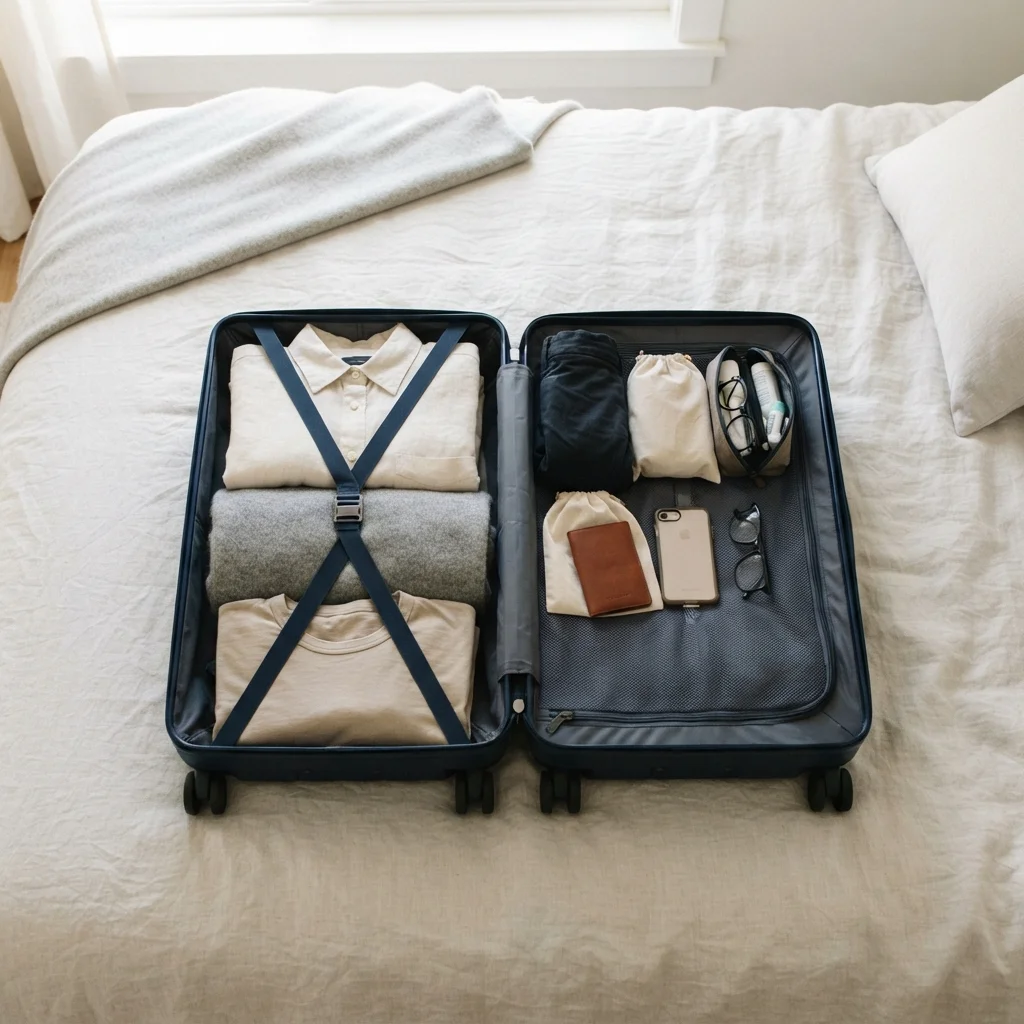
Key Takeaways
- A capsule travel wardrobe uses a small set of mix-and-match pieces rather than one outfit per day.
- Neutral or tonal color palettes are what make interchangeability work across bottoms, tops, and layers.
- Fabric choice affects both outfit flexibility and how well clothes hold up through multiple wears.
- The method works best when you plan your itinerary before you open your bag.
- A smaller clothing load reduces bag weight and removes the friction of checking luggage.
Travel capsule wardrobe
A travel capsule wardrobe is a small, deliberate collection of clothing items chosen because each one works with several others. Instead of packing an outfit for every day, you pack pieces that combine in multiple ways to cover the same number of days with far fewer items. The goal is maximum outfit variety from minimum bag space.
The concept borrows from the fashion principle coined by Susie Faux in the 1970s, which describes a core wardrobe of timeless, interchangeable pieces. Applied to travel, it prioritizes fabric weight, color cohesion, and versatility over novelty.
Why the capsule approach changes how you pack
Most people pack by mentally walking through each day of a trip and assigning an outfit. That method feels safe, but it produces a bag where each item has one job. A capsule wardrobe reverses the logic: you select pieces first based on how many combinations they create, then verify that those combinations cover the occasions on your trip.
The math shifts quickly. Three bottoms and five tops create fifteen possible pairings before you add a layer or accessories. That same outfit count, packed the traditional way, would require fifteen separate pieces. If you want to understand how the choice of bag size interacts with this, this comparison of carry-on and checked luggage covers the trade-offs in full.
The capsule method does require one thing the day-by-day method does not: you need to think about your trip before you think about your clothes. Knowing whether you need one dinner-ready outfit, access to a gym, or three days of hiking changes which pieces earn a spot in the bag.
How to build a travel capsule wardrobe
Start with your color palette. Pick two neutral anchor colors and one accent, and buy or choose only pieces that fall within that range. Black pants, white and navy tops, and an olive layer all work together. A red top added as an afterthought creates a coordination problem and usually stays unworn.
Next, audit each piece for versatility. Before packing any item, ask how many other things in the bag it pairs with. If the answer is one or two, the item is a candidate to leave behind. If the answer is four or five, it earns its place.
Test your combinations before you zip up
Lay all your packed items on a bed and mentally walk through three to four days of your actual itinerary using only those pieces. If you reach for something that is not there, add it. If an item goes untouched in the exercise, leave it behind. This takes ten minutes and prevents most regrets.
Choose at least one piece that shifts register with accessories: a plain dress that works at a museum in sandals and at dinner with a different pair of shoes, or trousers that read casual with a t-shirt and more polished with a tucked blouse. Accessories are light and compress easily, so they do the work that extra garments would otherwise do.
Fabric matters as much as color. Pieces that wrinkle badly or hold odor after one wear limit how many times you can use them. Layering strategies for variable weather go into more detail on fabric weight and how to stay comfortable across changing conditions without adding bulk.
A working capsule for a seven-day trip typically includes: 2 bottoms (one casual, one that can dress up), 4 tops at varied weights, 1 layer that works as both warmth and a polished outer piece, 1 pair of shoes beyond travel shoes, and underwear and socks for the trip length. That totals roughly 9 to 11 pieces. A full week-long packing walkthrough shows exactly how those pieces fit into a single carry-on.
Common mistakes that undercut the system
Packing a capsule that exists in theory but not in practice is the most frequent problem. If you lay out your clothes and cannot actually picture wearing combination seven or combination twelve, those pairings will not happen on the trip. Test the combinations at home before you pack.
Bringing backup items for low-probability scenarios is the second way the system breaks down. A formal gown for a dinner that might happen, or a heavy jacket for cold weather that is unlikely, adds weight without reliable use. If an occasion is genuinely possible, plan for it specifically; if it is a vague worry, leave the item behind.
Letting one non-neutral item pull you into packing more non-neutral items to justify it is a third pattern worth watching. One statement piece can anchor a look, but it often creates a chain: the bright skirt needs a specific top, which needs a specific shoe, and suddenly three extra items are in the bag. Understanding why overpacking happens explains the psychology behind these decisions and how to interrupt them before they start.
If you are new to packing efficiently and want a broader foundation before applying the capsule method, a beginner's complete packing guide covers bag selection, item categories, and decision frameworks from the start.