

Key Takeaways
- Choosing the right bag size is the first decision that shapes every packing choice after it.
- A mix-and-match clothing system lets you cover seven days with five or fewer tops.
- Packing cubes compress clothing and keep your bag organized throughout the trip.
- Toiletries and liquids are often the biggest space wasters and can usually be cut significantly.
- Laying everything out before packing reveals what you actually need versus what feels safe to bring.
What you will need
Why one bag changes how you travel
Traveling with a single carry-on removes several friction points from a trip. You skip bag-drop lines on departure, avoid waiting at baggage claim on arrival, and move through connections without worrying about whether your luggage made the flight. Weighing carry-on travel against checking bags comes down to trip length, type of activities, and how much you're willing to do laundry. For a week-long trip, one bag is achievable for most travelers with a deliberate approach.
The method here works because it treats packing as a system rather than a list. You decide on a bag, build a clothing formula, handle toiletries efficiently, and organize everything so it's accessible. A full end-to-end packing resource can help if your trip has more complex gear requirements.
What you will need
What you need before you start
Gather your tools before packing begins. The right bag is the starting point; everything else fits around it.
Carry-on bag
The main container for all your gear; size should comply with your airline's carry-on policy.
Packing cubes
Compress and organize clothing into separate compartments within your bag.
Travel-size toiletry bottles
Hold liquids within the TSA 3-1-1 rule (3.4 oz per container, one quart-size bag).
Quart-size clear zip bag
Required by TSA for carrying liquids through airport security in a carry-on.
Packable day bag or tote
Folds flat inside your carry-on and expands into a personal item for day use at your destination.
Once you have your bag and organizers ready, work through the steps below in order. Skipping the early layout step is the most common reason people end up with an overpacked bag.
Verify your bag dimensions against your airline's policy
Airline carry-on size limits vary. Before packing anything, check the specific policy for every carrier on your itinerary, not just the largest one. A bag that fits one airline's overhead bin may be gate-checked on a regional connection. Most US carriers allow a carry-on up to 22 x 14 x 9 inches, but always confirm directly with your airline before travel.
Lay out everything you think you need
Before a single item goes into the bag, place your full proposed packing list on a flat surface. This makes the total volume visible at once. Most people immediately spot duplicate items, rarely-used gear, and clothing that doesn't work with anything else in the pile. Cut the pile by at least 20 percent before moving to step 3.
Build a mix-and-match clothing set
Seven days of clothing does not require seven outfits. A workable formula for most trips is:
- 3 to 4 tops that pair with any bottom you're bringing
- 2 bottoms (pants, shorts, or skirts depending on climate)
- 1 dress or versatile layer that works as both casual and slightly dressed-up
- 5 to 7 days of underwear and socks
- 1 pair of shoes worn while traveling, 1 pair packed (maximum)
The capsule wardrobe approach covers this method in detail and helps you select pieces that cover every occasion without overlap.
Pack clothing using the roll-and-cube method
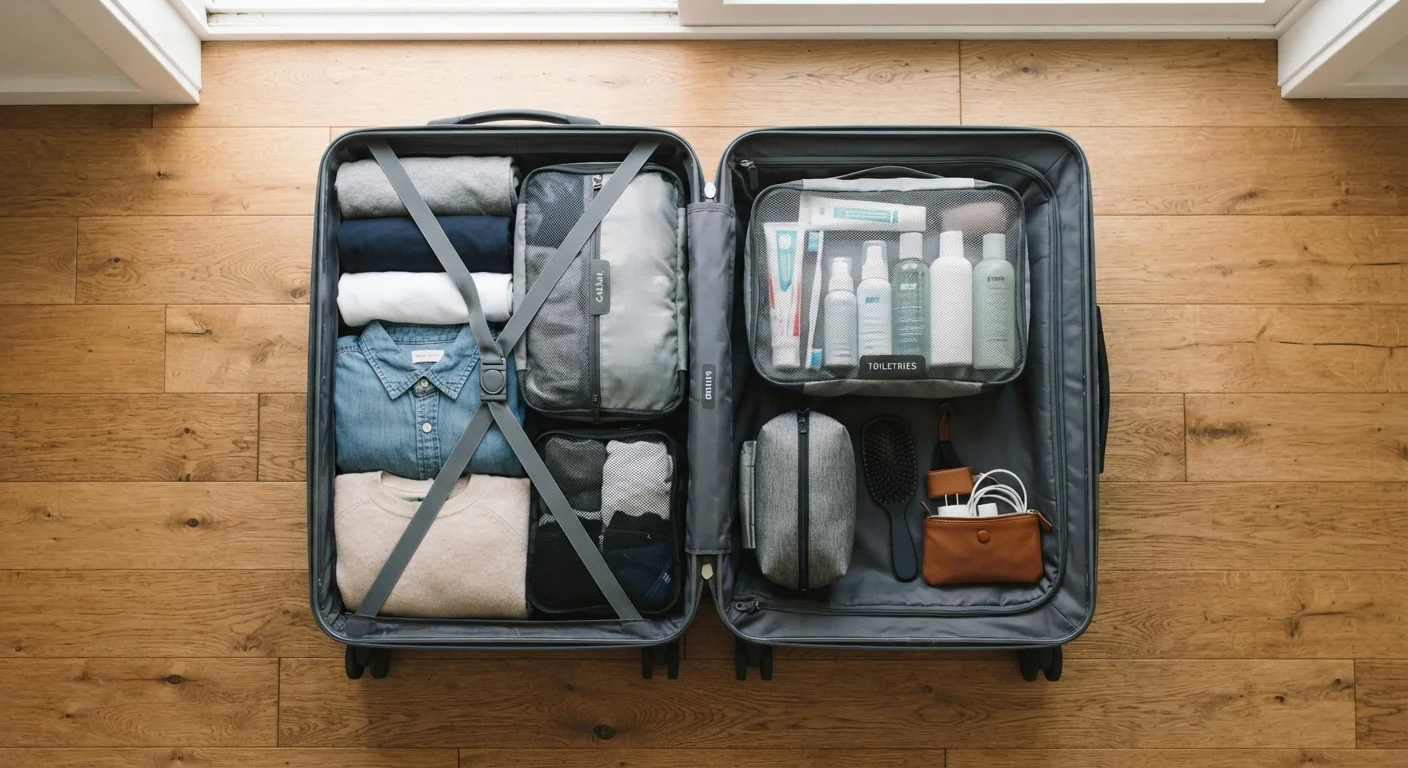
Roll each garment tightly before placing it into a packing cube. Rolled clothes resist wrinkles better than folded ones and occupy less volume. Use separate cubes for tops, bottoms, and underwear so you can find items without unpacking everything. Compress each cube before zipping it closed.
Reduce your toiletries to the essentials
Toiletries are frequently the heaviest and most space-consuming category. Transfer only what you'll actually use into travel-size containers. Solid versions of shampoo, conditioner, and soap eliminate liquid weight entirely and don't count against your quart-bag allowance. If your destination has a pharmacy or convenience store, items like shaving cream, extra sunscreen, and body wash can be purchased on arrival rather than packed.
All liquids, gels, and aerosols in carry-on bags must follow TSA's 3-1-1 rule: each container must be 3.4 ounces (100 ml) or less, and all containers must fit into one quart-size clear zip bag. One bag per traveler is allowed through the checkpoint.
Organize tech and documents in a top compartment
Keep your passport, boarding passes, phone charger, earbuds, and any medications in a top-access pocket or the front section of your bag. These are items you'll need during the flight or at security, and having them buried under clothing costs time. Wrap cords around a cable organizer or use a small pouch to prevent tangling.
Do a final weight and size check
Weigh your packed bag. Many airlines set a carry-on weight limit (commonly 15 to 22 lbs depending on the carrier), and exceeding it can result in fees or forced checking. Close the bag fully and check that it doesn't bulge at the seams. If it won't close cleanly, something needs to come out rather than being forced in.
Planning laundry into your trip
A one-bag week works most smoothly when you plan at least one laundry session mid-trip. Most hotels offer laundry service or have a guest laundry room. Many destinations have laundromats within walking distance of central accommodation. Even a single hand-wash of underwear and a thin top overnight can free up space and reduce the number of items you need to pack.
Shifting your packing mindset means accepting that re-wearing clothing is normal and planned, not a last resort. Quick-dry fabrics make this easier because they dry overnight after a hand-wash.
Quick-dry fabrics save space and time
Merino wool and synthetic quick-dry materials wash easily in a sink and dry within a few hours. Packing even two or three pieces in these fabrics reduces the total clothing count you need. They also tend to resist odors better than cotton over multiple wears, which matters on a long travel day.
For broader trip planning considerations, including itinerary and logistics, and for what to do once you're on the road, those resources cover the steps before and after your bag is zipped.