

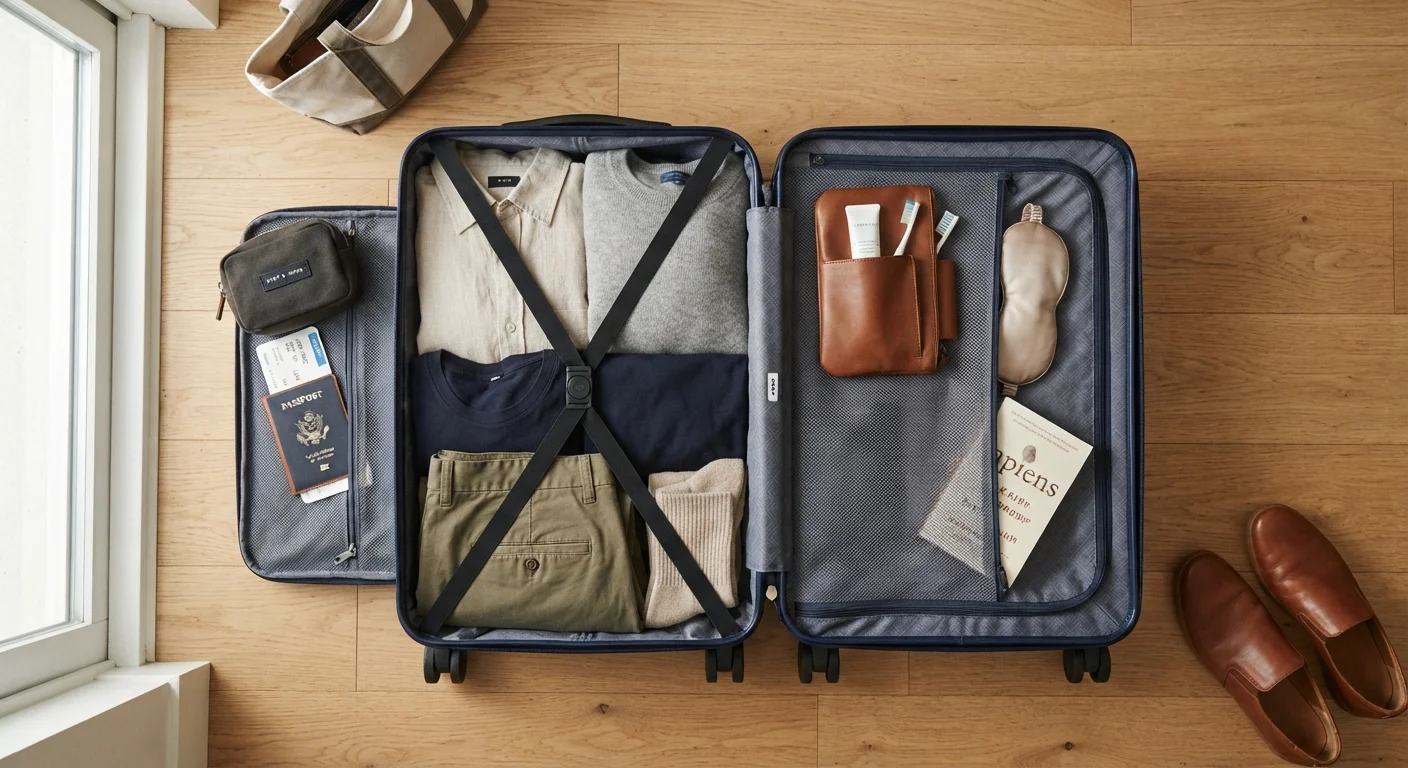
Key Takeaways
- The carry-on only approach is a planning decision, not just a packing trick.
- Choosing versatile, mix-and-match clothing is the single biggest factor in making it work.
- Liquids rules and bag size limits vary by airline and country, so verify before you fly.
- Access to laundry on longer trips makes carry-on packing practical beyond a few days.
- The trade-offs are real: some trips genuinely require checked baggage.
Carry-on only mindset
The carry-on only mindset is a deliberate approach to packing in which a traveler fits everything needed for a trip into a single personal or cabin bag, skipping checked luggage entirely. It requires deciding in advance what you truly need rather than packing for every possibility. The result is faster airport transit, no baggage fees, and full control of your belongings from departure to arrival.
Most airline carry-on size limits fall between 21 and 22 inches in length, though allowances vary by carrier and cabin class. Always verify the specific dimensions and weight limits with your airline before travel.
What the mindset actually means
Carry-on only travel is not about squeezing the same amount of stuff into a smaller space. It is about changing what you decide to bring in the first place. The shift is upstream: it happens when you choose your clothing, toiletries, and gear before you touch your bag, not while you are filling it.
Most overpackers are actually over-planners. They pack for unlikely scenarios: a formal dinner that may not happen, rain gear for a forecast that reads sunny, a fourth pair of shoes as a hedge against undecided outfits. The carry-on mindset replaces scenario-hedging with a simpler question: what will I actually use on most days of this trip?
That question forces useful constraints. It also makes packing faster. Once you stop treating the bag as an insurance policy for every possible situation, the decisions become easier and the bag stays lighter.
Building a clothing strategy that fits
Clothing takes up more space than anything else in a bag, so this is where the carry-on approach succeeds or fails. The practical solution is to choose items that work together rather than items that each require their own outfit.
A neutral color palette (navy, grey, white, black, khaki) means almost any combination works. A single pair of versatile pants worn three times is lighter than three pairs of specialized pants worn once. Tops that layer are worth two that do not. This is sometimes called a capsule wardrobe approach, and it applies directly to travel: the capsule wardrobe concept for travel packing explains how to build one that covers the full range of a trip.
For trips longer than four or five days, access to laundry becomes part of the plan. Hotel laundry services, laundromats, or even a sink and a fast-drying travel towel can extend a small clothing selection across two weeks. If you are unsure what that looks like in practice, the step-by-step guide to packing a week in one bag covers the specifics.
Test your bag before departure day
Pack your bag completely two days before your trip and carry it around for 30 minutes. You will quickly find out whether it is too heavy for overhead storage or whether you packed items you never reach for. Removing two or three things at that stage is far less stressful than at the airport gate.
Managing toiletries, documents, and tech
Toiletries are the second major space consumer, and they come with additional rules for carry-on travel. TSA regulations in the US limit liquids to containers of 3.4 ounces or less, all fitting in a single quart-sized clear bag. Solid versions of common products (shampoo bars, solid conditioner, balm-style moisturizers) work within any liquid rule and often pack smaller.
For anything you cannot bring in carry-on form, consider buying at your destination. Sunscreen, shampoo, and most toiletries are available in pharmacies and grocery stores worldwide. The cost is usually modest compared to checked bag fees.
Documents and cards deserve their own organized system, separate from clothing and toiletries. A dedicated travel wallet or document pouch keeps your passport, boarding passes, and insurance details accessible without digging through the main bag. The guide to organizing travel documents and digital backups covers how to keep this information secure and retrievable.
Tech gear (chargers, adapters, earbuds, a laptop or tablet) adds weight quickly. Pack only what you will use every day, not what you might use. A phone, one universal adapter, and a small portable charger cover most travelers' genuine needs. For keeping your money safe while traveling, digital tools and card access matter more than carrying physical backup items.
When carry-on only does not work
The carry-on approach has real limits, and it is worth being honest about them. Trips that include formal events, outdoor expeditions with technical gear, or extended travel to multiple climate zones often cannot fit into a single cabin bag without leaving out something genuinely needed.
Traveling with children adds equipment (car seats, strollers, specific medications, formula) that has no carry-on alternative. Business travelers who need pressed suits or multiple professional looks face real constraints. Cold-weather destinations require bulkier clothing that compresses less efficiently.
In those situations, checking a bag is the practical choice. The comparison between checked and carry-on luggage can help you weigh which approach fits a specific trip rather than assuming carry-on always wins. Knowing when to check is part of the same mindset as knowing when not to.
For a full reference on what to bring regardless of bag strategy, the pre-trip packing checklist is an adaptable starting point that covers clothing, documents, toiletries, and tech in one place.