

Key Takeaways
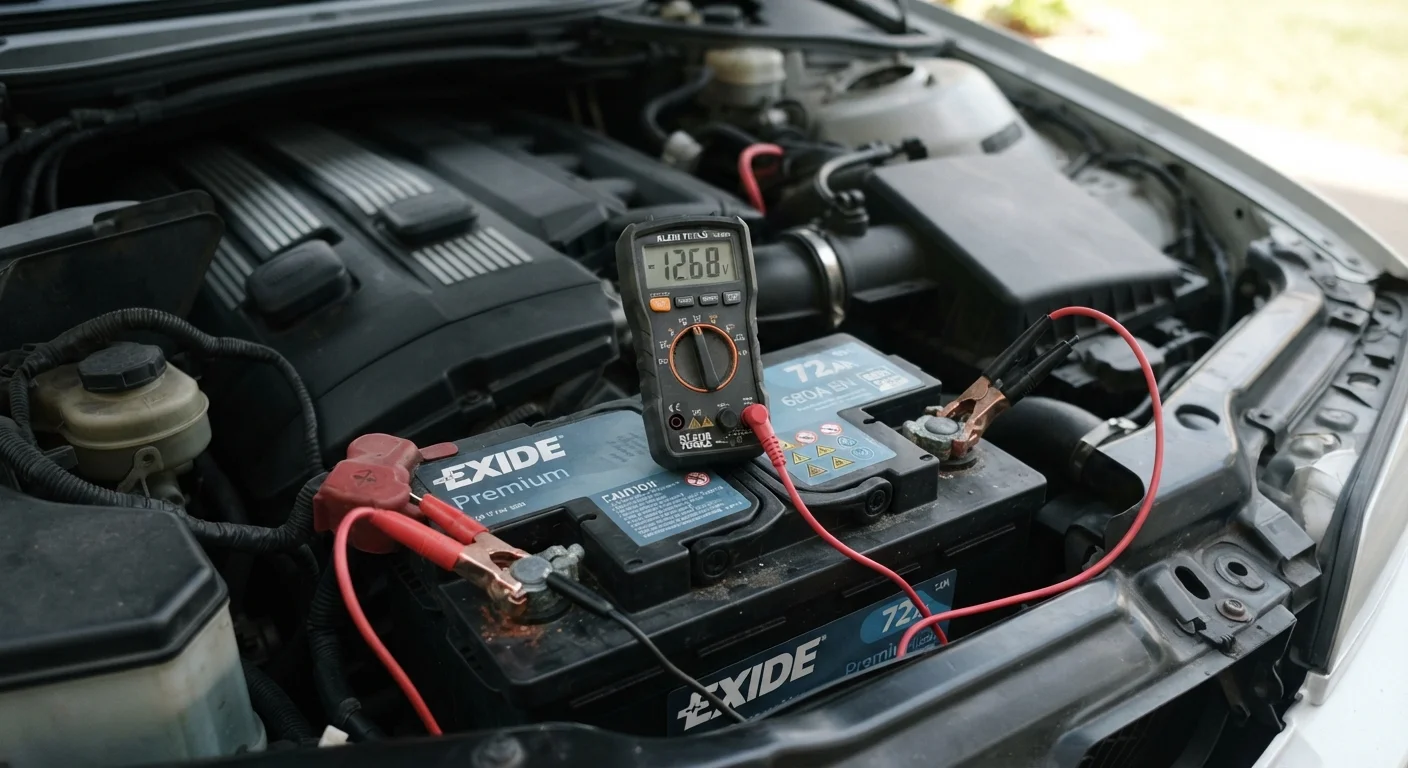
- A fully charged 12-volt battery at rest should read between 12.6 and 12.8 volts.
- Voltage alone does not tell the whole story; a load test reveals how the battery performs under real starting conditions.
- Most car batteries last three to five years, with climate and driving habits affecting where in that range yours lands.
- Cold weather reduces a battery's output while increasing the power demand from your engine, making winter the most common time for failures.
- A battery showing repeated slow cranking, swollen casing, or needing frequent jump-starts is signaling that it needs professional inspection.
Car battery health
Car battery health refers to how well your vehicle's 12-volt lead-acid battery can hold a charge and deliver power on demand. A healthy battery maintains proper voltage at rest and can sustain that voltage under the electrical load of starting the engine. As batteries age, their internal plates degrade and their ability to deliver reliable power drops.
Most modern passenger vehicles use a lead-acid battery rated in cold cranking amps (CCA), which measures the current the battery can deliver at 0 degrees Fahrenheit for 30 seconds while staying above a minimum voltage threshold.
What voltage numbers actually tell you
The fastest way to get a snapshot of battery condition is a simple voltage reading with a digital multimeter. With the engine off and the car resting for at least two hours, a healthy fully charged battery reads between 12.6 and 12.8 volts. A reading around 12.4 volts means the battery is roughly 75 percent charged. Below 12.0 volts, the battery is in a depleted state and may not reliably start the engine.
When the engine is running, the alternator takes over charging duties and voltage at the battery terminals should climb to between 13.7 and 14.7 volts. A reading outside that window points to a charging system issue, not a battery problem, so the distinction matters before assuming the battery needs replacement.
Voltage readings are a starting point, not a final verdict. A battery that reads 12.6 volts at rest can still fail to deliver enough power under the stress of starting. That is where a load test becomes necessary.
Check terminals before assuming battery failure
Corroded or loose battery terminals can mimic the symptoms of a dead battery, including slow cranking and electrical gremlins. Clean the terminals with a wire brush and baking soda solution, then recheck voltage before concluding the battery itself has failed. This is one of the simplest checks covered in a 15-minute DIY inspection.
Understanding load tests
A load test measures how well a battery sustains voltage when a significant current demand is applied, typically half the battery's rated cold cranking amps (CCA) for 15 seconds. A battery that holds above 9.6 volts throughout that test is generally considered healthy. One that drops well below that threshold is struggling, even if its resting voltage looked fine.
This test is important because battery degradation often affects delivery capacity before it affects stored charge. The internal lead plates develop sulfation and corrosion over time, which raises internal resistance. The battery accepts and holds a charge but cannot push enough current when the starter motor demands it.
Most auto parts stores perform load tests at no charge, and many mechanics include one in a standard multi-point inspection. For quick checks you can do at home, a multimeter covers the voltage side, but a proper load test requires dedicated equipment.
What shortens battery lifespan
Heat is the primary cause of early battery failure. High under-hood temperatures accelerate the evaporation of electrolyte fluid inside the battery and speed up internal plate corrosion. Vehicles driven frequently in hot climates tend to see battery life fall toward the three-year end of the typical range.
Short trips are another common factor. When a car is driven only a few miles at a time, the alternator does not have enough time to fully recharge the battery after starting. Over months, this leaves the battery in a chronic partial state of charge, which promotes sulfation, a hardening of lead sulfate crystals on the plates that reduces capacity.
For high-mileage vehicles, the charging system itself, the alternator and voltage regulator, can wear and begin undercharging or overcharging the battery, shortening its life from a different direction. A battery that fails earlier than expected is sometimes a symptom of a charging system problem rather than a battery defect.
Cold weather does not shorten battery life as directly as heat does, but it is when weak batteries reveal themselves. Preparing your car for winter should include a battery inspection if it is more than three years old.
Signs that a battery is declining
The engine cranking more slowly than normal is the most common early warning. If the starter motor sounds labored or sluggish, especially on a cold morning, the battery may not be delivering its rated CCA. Dimming headlights during startup, frequent need for jump-starts, or a battery warning light on the dashboard are all worth taking seriously.
Physical inspection matters too. A swollen or bulging battery case, white or bluish corrosion buildup on the terminals, or a sulfur smell near the battery are signs that something has gone wrong internally. A swollen casing in particular warrants immediate professional attention, as it can indicate dangerous internal pressure.
If your battery is between three and five years old and showing any of these symptoms, a load test from a mechanic or auto parts store will give a clearer picture than voltage alone. Replacing a battery on the edge of failure before it leaves you stranded is generally less disruptive than waiting for a no-start situation. For context on how battery degradation compares to other consumer electronics, lithium-ion battery health in smartphones follows different chemistry and different failure patterns than the lead-acid batteries in most vehicles.