

Key Takeaways
- Oil takes several seconds to fully circulate after a cold start, leaving metal surfaces briefly unprotected.
- Cold oil is thicker and flows more slowly, which is why modern oils are rated with a winter viscosity grade.
- Fuel trims run richer during warm-up, which can wash a thin oil film off cylinder walls if the engine is worked hard too early.
- Letting the engine idle for 30 seconds before driving is generally enough for modern fuel-injected vehicles.
- Short trips that never let the engine reach operating temperature accelerate wear over time.
Cold start
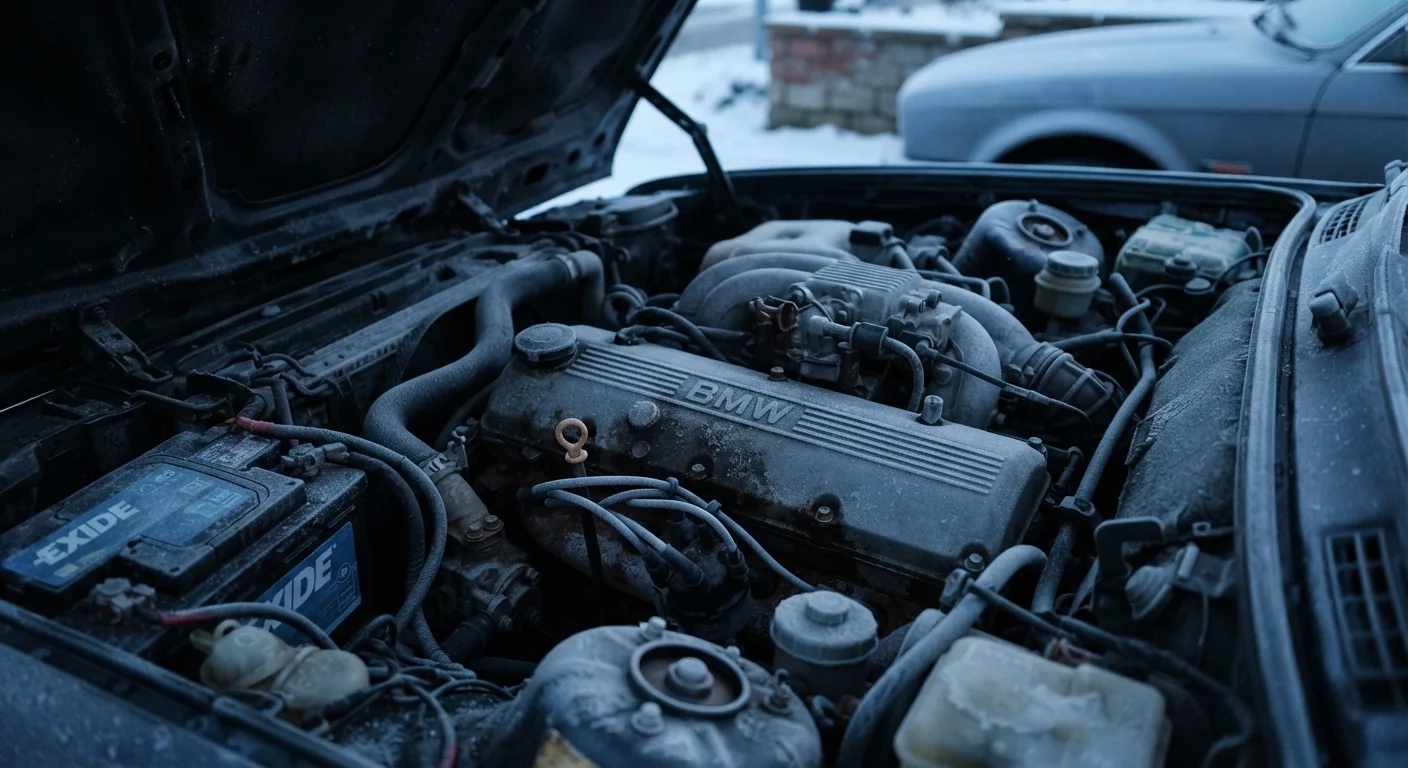
A cold start happens when you start an engine that has been sitting long enough to cool down to ambient temperature. At that point, engine oil has settled and thickened, metal components have contracted, and the fuel system has to compensate for lower temperatures. The engine is more vulnerable to wear during the first seconds and minutes of operation than at almost any other time.
Engineers define a fully cold start as one where coolant temperature equals ambient temperature, typically after the vehicle has sat for several hours. Partial warm restarts behave differently because residual heat keeps oil viscosity closer to operating range.
The first seconds: oil starvation risk
When an engine sits overnight, gravity pulls oil down into the pan. The oil passages, bearings, and upper valve train components are left with only a thin residual film. The moment you crank the starter, those surfaces have no fresh lubrication until the oil pump builds pressure and pushes oil through the entire system.
That process takes anywhere from two to five seconds in a healthy engine with fresh oil. During those seconds, metal parts move against each other with minimal protection. Bearing surfaces in the crankshaft, camshaft, and connecting rods are the most exposed. Over the life of a vehicle, this brief daily window accounts for a meaningful share of total engine wear.
Using the correct oil viscosity reduces this window. Multi-grade oils such as 5W-30 are formulated to flow quickly when cold (the '5W' rating reflects winter performance) while still protecting at operating temperature. If you are unsure what viscosity your engine requires, the owner's manual is the definitive source. See our winter car preparation guide for a broader look at how cold weather affects fluids and other components.
How fuel delivery changes in the cold
Gasoline does not vaporize as readily at low temperatures. To compensate, the engine control unit (ECU) runs a richer air-fuel mixture during warm-up, meaning more fuel relative to air. This extra fuel helps the engine fire reliably, but it comes with a side effect.
Unvaporized fuel can pass the piston rings and mix with oil in the crankcase, a process called fuel dilution. It temporarily lowers the oil's viscosity and reduces its ability to protect bearing surfaces. Working the engine hard before it reaches operating temperature makes this worse, because cylinder pressures increase before the rings have fully seated against warmed, expanded cylinder walls.
Let the engine idle briefly, then drive gently
Start the engine and wait about 30 seconds before pulling away. Keep your speed and engine rpm low for the first few minutes of driving. This approach circulates oil faster than prolonged idling and puts less strain on cold components than immediate hard acceleration.
Fuel trim data is logged by the ECU and can be read with an OBD-II scanner. If your engine consistently shows a very rich condition beyond the normal warm-up period, that can point to a coolant temperature sensor fault worth investigating.
Metal expansion and clearance tolerances
Engine components are machined to very tight tolerances, but those tolerances assume the metal is at or near operating temperature. Aluminum (used in many modern cylinder heads and engine blocks) expands more than steel when heated. At cold temperatures, piston-to-wall clearances are slightly larger than the design target, which allows more blow-by: combustion gases slipping past the rings into the crankcase.
Piston rings themselves need a few minutes of cycling through heat and pressure before they seal as efficiently as designed. This is one reason that exhaust emissions are higher in the first minutes of operation and why catalytic converters take time to light off (reach the temperature at which they actively reduce harmful gases).
Spark plug condition matters more during cold starts than at any other time. A worn plug with a wider gap or a fouled electrode fires less reliably when fuel mixture and compression conditions are already less than ideal.
How to treat a cold engine
For a fuel-injected engine in moderate weather, start it and let it idle for about 30 seconds. That gives the oil pump time to build pressure and circulate oil to the upper engine. Then drive away gently, keeping engine speed below 2,500 rpm until the coolant temperature gauge moves off its lowest position. The engine warms faster under light load than at idle.
Avoid hard acceleration, highway speeds, or towing until the coolant gauge is in the normal operating range. For most vehicles, that takes three to five minutes of light driving in mild weather and longer when temperatures are well below freezing.
Frequent cold starts with very short trips are worth monitoring. If your typical commute is under two miles, the engine may never fully warm up, and moisture can accumulate in the oil. Shortening your oil change interval in that situation is reasonable, though a mechanic can give you guidance based on your specific driving pattern.