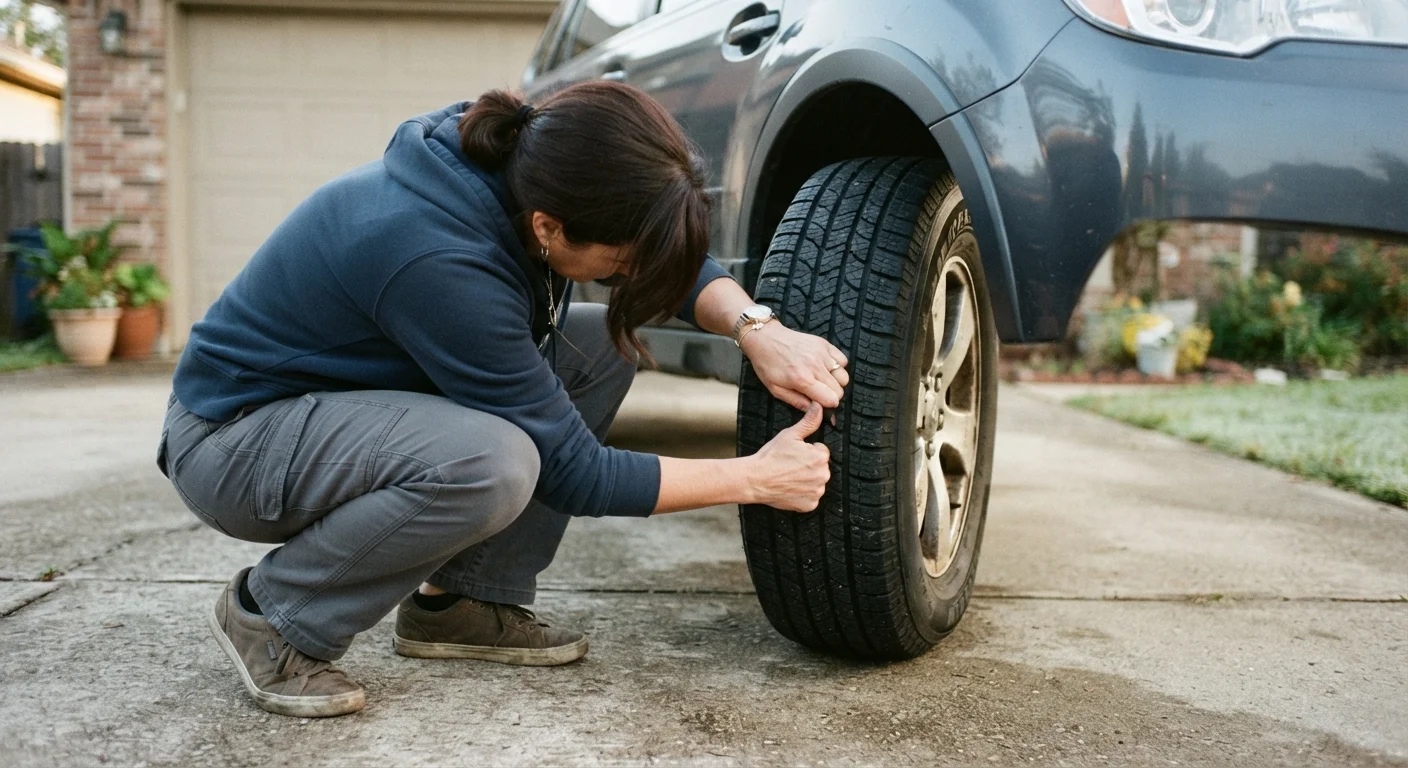
Check tire pressure and tread before every long trip, not just when a warning light appears.
Fluid levels, including oil, coolant, and washer fluid, should be verified cold and on level ground.
All exterior lights need a quick function test, including brake lights, which you cannot see alone.
Wiper blades that streak or skip in rain should be replaced before departure, not after.
If a dashboard warning light is on when you start the car, have it diagnosed before driving far.
10–20 min
Summary
18 items · 10 to 20 minutes
Why a walkaround matters
A vehicle breakdown rarely happens without warning. Worn tires, low coolant, or a burned-out brake light are visible problems that a 15-minute check can catch before they become roadside emergencies. The inspection below is organized by area so you can move around the car efficiently without doubling back.
Check tire pressure on all four tires and the spare using a gauge, comparing readings to the placard inside the driver's door jamb, not the maximum stamped on the tire sidewall.Must
Inspect each tire for visible cuts, bulges, or objects embedded in the tread.Must
Test tread depth by placing a quarter into a tread groove with Washington's head pointing down; if you can see the top of his head, the tire is worn and should be replaced before a long trip.Must
Check that the spare is inflated and that the jack and lug wrench are present and accessible.Should
Fluids
Check engine oil level with the dipstick when the engine is cold; the oil should read between the two marks and appear amber to dark brown, not milky or gritty.Must
Inspect the coolant reservoir level; it should sit between the MIN and MAX lines. Do not open the radiator cap on a warm engine.Must
Verify brake fluid is at the correct level in the translucent reservoir under the hood; a low level can indicate worn brake pads or a leak.Must
Top off windshield washer fluid; it runs out faster than expected on highway drives.Should
Check power steering fluid and transmission fluid if your vehicle's owner manual specifies a dipstick check for those systems.Nice to have
Lights
Turn on headlights and walk to the front of the vehicle to confirm both low beams work; then switch to high beams and verify those as well.Must
Test turn signals on both sides at the front and rear.Must
Check brake lights by pressing the pedal while a second person watches from behind, or by reversing close to a reflective surface such as a garage door.Must
Confirm reverse lights illuminate when you shift into reverse.Should
Wipers and visibility
Run the wipers with washer fluid and watch for streaking, skipping, or squeaking, which indicate blades that need replacement.Must
Clean the inside of all windows, including the rear windshield; interior haze from off-gassing significantly reduces visibility at night.Should
Confirm the rear defroster works if the weather calls for it.Should
Dashboard and controls
Start the engine and watch for any warning lights that stay on after the startup self-test; common ones to act on before travel are the check engine, oil pressure, battery, and tire pressure lights.Must
Test the horn.Should
Verify that mirrors are adjusted and that the seat position and steering column are locked if they were moved.Must
What to do if something fails the check
Some problems can wait a few days; others should stop a trip entirely. A dashboard warning light that stays on after startup, a tire with visible damage or very low pressure, brake pedal feel that has changed, or fluid levels that drop significantly between checks all need a qualified mechanic before you leave. Driving on a known fault generally makes the repair more expensive and the risk higher.
For specifics on brake symptoms, our article on brake warning signs explains what squealing, grinding, or pulling typically means. Once you clear any issues, assembling a roadside emergency kit is a smart final step before departure.
Some warning lights require immediate attention
An illuminated oil pressure light or temperature warning while the engine is running means stop driving as soon as it is safe to do so. Continuing to drive with either of those lights active can cause severe engine damage within minutes. Have the vehicle inspected by a qualified mechanic before resuming the trip.
First-time road trippers will find vehicle prep covered in context within the road trip planning guide for beginners. For driving in other countries, separate rules apply; the article on driving abroad covers licensing and road law differences.
Cars Editorial Team is the collective byline for our editorial team and contributor network. Articles published under this byline or an editorial pen name are researched, written, and reviewed according to our editorial standards for clarity, consistency, and independence before publication.
Disclaimer: The content on this site is for informational purposes only and is not a substitute for professional advice. Always consult a qualified professional for guidance specific to your situation.