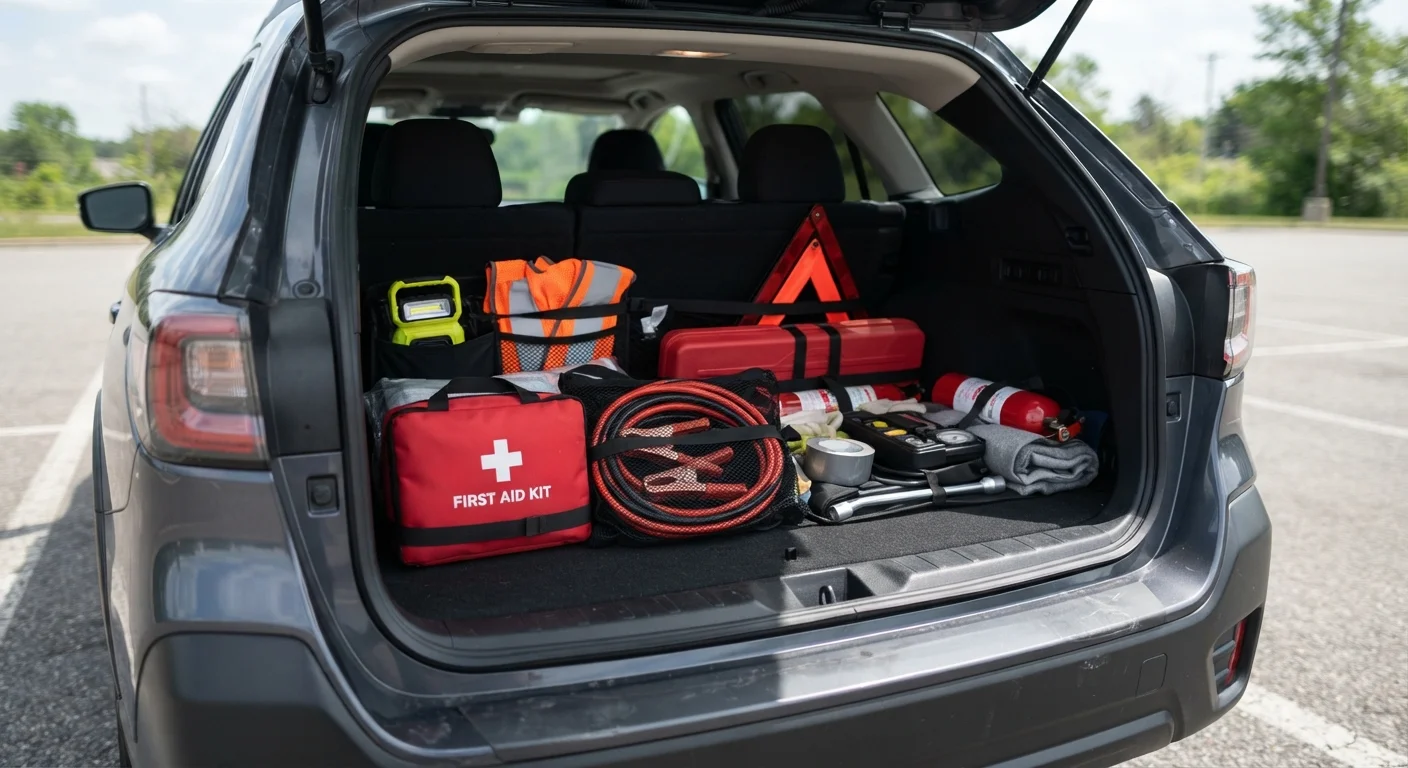
A basic kit covers safety visibility, battery failure, and minor first aid needs.
Jumper cables or a jump starter pack are among the most used emergency items.
Reflective triangles and a high-visibility vest protect you from passing traffic.
Store the kit in your trunk so it travels with the car, not the driver.
Check expiration dates on first aid supplies and replace them on a set schedule.
20–40 min
Summary
18 items · 20 to 40 minutes
Why a kit matters before you need it
Most drivers think about emergency gear after a breakdown, not before one. A flat tire on a highway at night or a dead battery in a parking lot puts you in a position where preparation either helps or it does not. The items below are grouped by function so you can build or audit your kit systematically.
Pack at least three reflective warning triangles or collapsible flares and place them behind your vehicle to warn approaching drivers.Must
Keep a high-visibility safety vest in the kit so you are visible when standing outside the car in low light or heavy traffic.Must
Store a bright LED flashlight with spare batteries for night breakdowns, tire changes, or checking under the hood.Must
Battery and starting failures
Carry jumper cables with a gauge of 4 to 6 and clamps that grip securely; cheap thin-gauge cables can overheat on larger engines.Must
Consider a portable lithium jump starter pack as an alternative to jumper cables so you can start the car without a second vehicle.Should
Include a basic multimeter or battery tester if you want to diagnose whether the issue is the battery or the alternator before calling for help.Nice to have
Tire and wheel issues
Confirm your spare tire is inflated to the correct pressure, and keep a lug wrench and car jack in the trunk.Must
Carry a portable tire inflator or a can of tire sealant for slow leaks that do not require a full spare swap.Should
Keep a pair of work gloves in the kit to protect your hands when handling a flat tire or touching hot components.Should
Basic first aid
Store a compact first aid kit that includes adhesive bandages, gauze pads, antiseptic wipes, and medical tape for minor injuries at the roadside.Must
Add any personal medications you take regularly, particularly if you drive long distances or in remote areas.Should
Include a emergency contact card with your insurance information, roadside assistance number, and a personal emergency contact.Must
Basic tools and supplies
Pack a multi-tool or a small set of screwdrivers and pliers for minor repairs or removing trim to access components.Should
Carry a few zip ties and a roll of duct tape for temporary fixes that can get you to a repair shop safely.Should
Keep a small fire extinguisher rated for vehicle fires (Class B and C) mounted or stored in an accessible spot in the car.Should
Comfort and communication
Store a bottle of water and a few non-perishable snacks in case you wait a long time for roadside assistance.Nice to have
Keep a phone charging cable or a portable power bank in the kit so your phone stays usable when the car battery is dead.Should
Include a physical map of your regular driving region as a backup if cell service is unavailable and navigation apps go offline.Nice to have
How to store and maintain your kit
Keep everything in a single bag or bin in the trunk. A soft-sided duffel works well because it compresses around other cargo. Avoid leaving flares or first aid supplies loose in the trunk where they can shift, get wet, or go unnoticed when they expire.
Do not rely on expired or untested gear
A flashlight with dead batteries and a jump starter pack that has not been charged in two years offer little help in an emergency. Test each item when you first assemble the kit, then check it on a regular schedule. Replace anything that does not work before you need it.
Set a reminder once a year to check the kit. Inspect jumper cable clamps for corrosion, confirm the flashlight batteries still hold a charge, and replace any first aid items past their use-by date. If you carry a portable jump starter pack, charge it every three to six months so it is ready when the battery is not.
Cold weather puts extra strain on batteries and tires, so before winter arrives it is worth reviewing the winter car preparation checklist alongside your emergency supplies. For first-time road trippers, the road trip planning guide covers vehicle prep alongside packing and route considerations.
Cars Editorial Team is the collective byline for our editorial team and contributor network. Articles published under this byline or an editorial pen name are researched, written, and reviewed according to our editorial standards for clarity, consistency, and independence before publication.
Disclaimer: The content on this site is for informational purposes only and is not a substitute for professional advice. Always consult a qualified professional for guidance specific to your situation.