

Key Takeaways
- A balanced monthly budget can still cause overdrafts if bills cluster before a paycheck arrives.
- Mapping your pay dates against your bill due dates is the first step to spotting timing gaps.
- Many billers will shift your due date on request, often with a single phone call.
- A small cash buffer covering roughly two weeks of fixed expenses absorbs most timing mismatches.
- Bi-weekly pay cycles create a predictable two-paycheck month and a three-paycheck month each year, which affects how you plan.
Cash flow timing
Cash flow timing refers to the relationship between when money comes in and when it goes out. A budget can show that your income covers your expenses, but if your bills cluster at the wrong point in the month, you can run short even when your total numbers add up. Managing timing means arranging or anticipating those gaps so your account never dips below what you need.
In personal finance, this concept parallels the liquidity management concerns businesses face: solvency on paper does not prevent a cash shortfall if inflows and outflows are misaligned.
The problem a balanced budget can hide
Imagine your monthly income is $3,800 and your total bills are $3,200. On paper, you have $600 to spare. But if your rent, car payment, and two credit card minimums all fall due between the 1st and the 5th, and your paycheck does not arrive until the 7th, you face a shortfall for several days. The math still adds up over the full month. Your bank account does not know that.
This is the timing gap: the window between when an obligation is due and when the money to cover it actually lands. Timing gaps are one of the most common reasons people overdraft or carry an unplanned credit card balance, even when they are living within their means. The structural reasons budgets stall often trace back to this kind of friction rather than overspending.
How to map your cash flow timeline
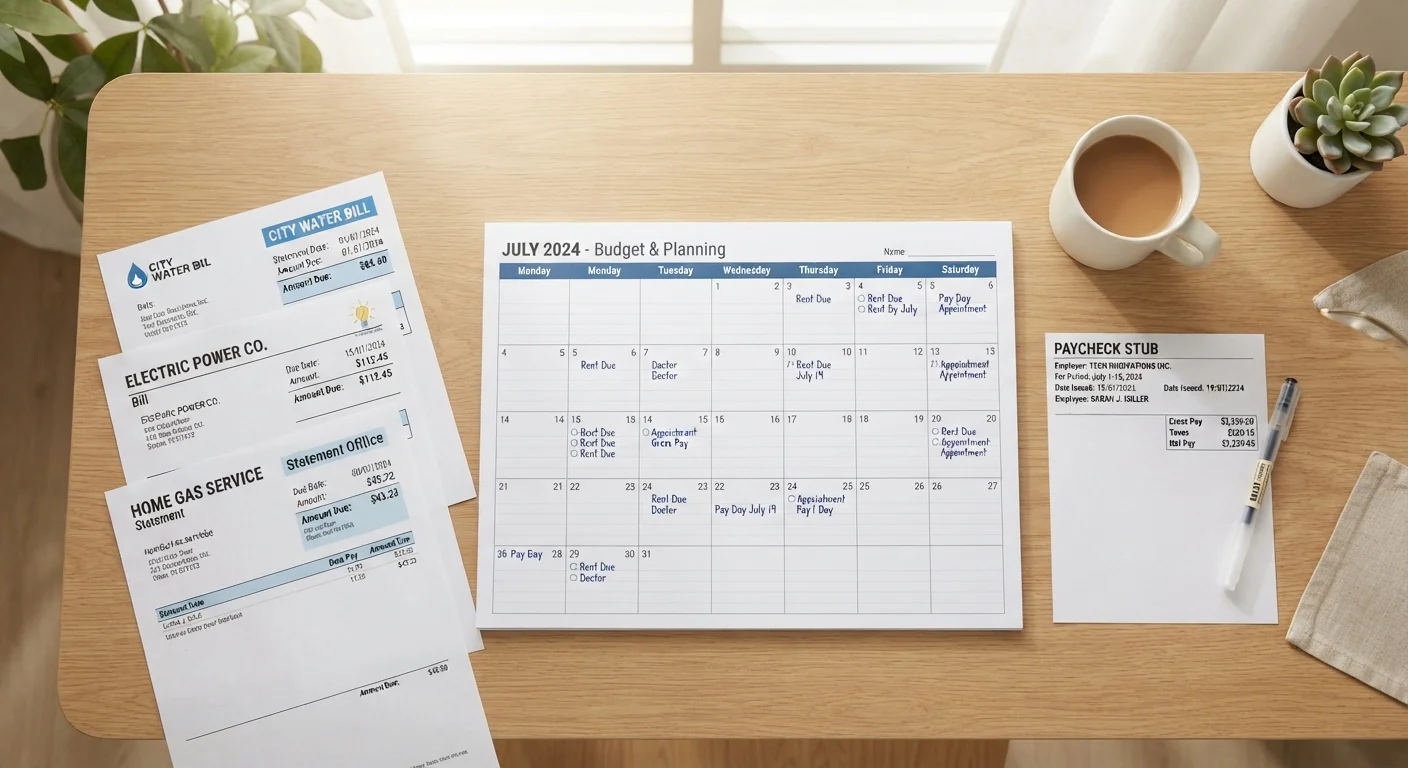
Start with a simple list. On one side, write every pay date you expect this month and the amount. On the other side, write each bill due date and its amount. Place both lists on a calendar or a plain spreadsheet organized by day of the month.
Look for clusters. If several large bills land within a few days of each other, check whether any income arrives before that cluster. If not, that window is your gap. You now have a concrete picture of the problem rather than a vague sense that money "runs out" before the month ends.
Repeat this exercise for at least two months, because bill cycles can shift slightly and some expenses are not monthly. A monthly budget review routine gives you a regular structure for keeping this map current.
~17%
U.S. adults who overdrafted in the past year
Federal Deposit Insurance Corporation survey data has consistently found that a significant share of U.S. households incur overdraft fees annually, often due to timing mismatches rather than overspending.
26
Paychecks per year on a bi-weekly schedule
A bi-weekly pay cycle produces 26 pay periods annually, creating two months each year with three paychecks that can be used to pre-fund the following month's obligations.
Three ways to close a timing gap
Request a due date change. Many credit card issuers, utilities, and subscription services will move your due date if you ask. A call to customer service is usually enough. Shifting a $200 credit card payment from the 3rd to the 15th can eliminate a gap entirely if your paycheck arrives on the 10th.
Build a two-week buffer. A small, dedicated balance in your checking account equal to roughly two weeks of fixed expenses absorbs most timing mismatches. This is not an emergency fund; it is a timing cushion. You spend and replenish it monthly without treating it as available cash for discretionary purchases.
Automate with awareness. Autopay prevents late fees, but scheduling every payment on the same date regardless of your pay cycle can concentrate outflows at the worst moment. Set autopay dates to fall one to two days after your confirmed pay date, not on a generic calendar date.
If you use a spending allocation method, the envelope method naturally separates funds by purpose and makes timing gaps visible before they become overdrafts.
The bi-weekly pay wrinkle
Workers paid every two weeks receive 26 paychecks per year, not 24. That means ten months have two paychecks and two months have three. Many people treat those three-paycheck months as windfalls, but a more disciplined approach is to use the third paycheck to pre-fund the following month's fixed bills, which effectively eliminates timing gaps for that period.
The pay-yourself-first approach pairs well here: directing a portion of each paycheck to savings or debt before bills are due makes the sequence of money movement intentional rather than reactive.
This article is for general informational purposes only and does not constitute personalized financial advice. For guidance specific to your situation, consult a qualified financial professional.