

Key Takeaways
- Saving before spending removes the need to find leftover money at month's end.
- Automation is the most reliable way to make a pay-yourself-first system stick.
- The method works alongside other budgeting frameworks, not instead of them.
- People with irregular income can still use this approach by saving a percentage rather than a fixed dollar amount.
- Starting with a small, sustainable amount is more effective than starting with an ambitious target you abandon.
Pay-yourself-first budgeting
Pay-yourself-first budgeting is a method where you set aside a fixed amount for saving or investing at the moment income arrives, before paying any bills or spending on daily expenses. Whatever remains after that transfer is what you have available to spend. The logic is simple: savings stop competing with spending because they are removed from the equation first.
This method is sometimes called 'reverse budgeting' because it prioritizes saving as a fixed expense rather than treating it as a residual after all other costs are covered.
The sequence problem with traditional budgeting
Most people approach a budget in this order: pay the rent, cover utilities and groceries, handle subscriptions, and then save whatever is left. The problem is that 'whatever is left' tends to shrink as the month progresses. Discretionary spending absorbs the gap, and saving gets deferred.
Pay-yourself-first budgeting changes that sequence. Saving moves to the front of the line. Income arrives, a transfer goes out immediately to a savings or investment account, and the remaining balance becomes the spending budget. Expenses adjust to what is available rather than savings adjusting to what expenses leave behind.
This is not a new idea. Personal finance educators have described some version of it for decades. Its durability comes from the fact that it works with human behavior rather than against it: money that is moved before you see it in a checking account is money you are less likely to spend.
How the mechanics work
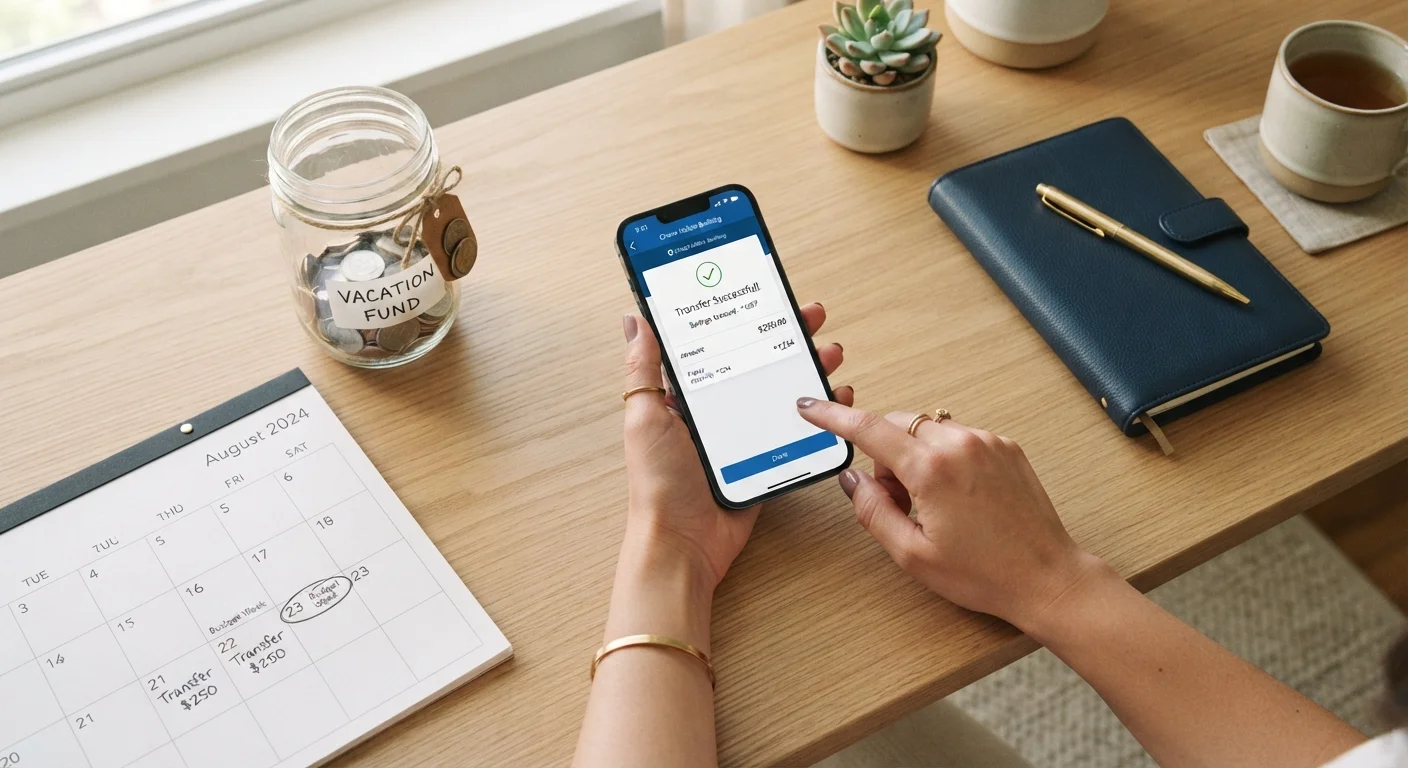
The method has two moving parts: a transfer amount and a trigger. The transfer amount is the sum you commit to moving on each payday. The trigger is automation, ideally a scheduled bank transfer or payroll deduction that fires the moment income lands.
Automation matters because it removes a daily decision. A manual transfer requires willpower on a regular schedule. An automated one happens whether you remember it or not. For many people, that reliability is the difference between saving consistently and saving sporadically.
Start smaller than you think you need to
A transfer of $50 per paycheck that you never touch beats a $300 transfer you reverse every other month. Once the habit is established and your cash flow is comfortable, increase the amount gradually. Consistency over time builds more savings than an ambitious target that keeps getting paused.
Once the automated transfer is in place, you treat the remaining balance as your full budget. Bills, groceries, entertainment, and everything else come from that figure. If the remaining balance is not covering your fixed expenses, the savings amount needs to be recalibrated rather than skipped. Skipping regularly signals that the initial target was too high.
Pay-yourself-first works alongside other budgeting structures. You could apply a proportional framework like 50/30/20 to the money that remains after the transfer, or use the envelope method to allocate spending categories. The pay-yourself-first step simply happens before any of that allocation begins.
Where the saved money should go
The method does not specify a destination, so the answer depends on your situation. The most common starting point is an emergency fund: a liquid, accessible reserve for unplanned costs. Without one, an unexpected expense often lands on a credit card, which can undo savings progress quickly. Our article on what an emergency fund is and where it fits covers how to size and place that buffer.
Once a basic emergency reserve is in place, many people direct pay-yourself-first transfers toward retirement accounts, specific savings goals, or both. Savings buckets (separate accounts or sub-accounts labeled by purpose) can make it easier to track progress without mixing funds.
If you carry high-interest debt, the calculus is less straightforward. Interest accruing on a credit card balance may outpace anything your savings earn. Our piece on paying down debt while building savings walks through how to weigh these competing priorities. A licensed financial adviser can help you work out the right balance for your circumstances.
Adapting the method to variable income
Freelancers, tipped workers, and anyone with income that changes month to month face a genuine challenge with any fixed-dollar commitment. The adjustment is to work in percentages instead. Deciding to save 15 percent of every payment received means the transfer scales with income: a smaller payment produces a smaller transfer, a larger one produces a larger transfer.
This percentage approach also works when income is predictable but low. A small, consistent percentage is more sustainable than an ambitious fixed amount that requires skipping transfers in tight months. Budgeting around inconsistent income covers additional structures for irregular pay cycles.
For households managing shared finances, pay-yourself-first can be applied to joint income, individual income, or both. Shared finances with separate goals explores how couples can structure savings commitments without merging every financial priority.
This article is for general informational and educational purposes only. It does not constitute personalized financial, investment, tax, or legal advice. Consult a qualified financial professional before making decisions about your own financial situation.