

Key Takeaways
- The standard RDA of 0.8 g/kg/day is a minimum for sedentary adults, not a target for everyone.
- Active adults, older adults, and those recovering from illness generally need more protein than the baseline RDA.
- Spreading protein across meals may support muscle protein synthesis better than concentrating it in one sitting.
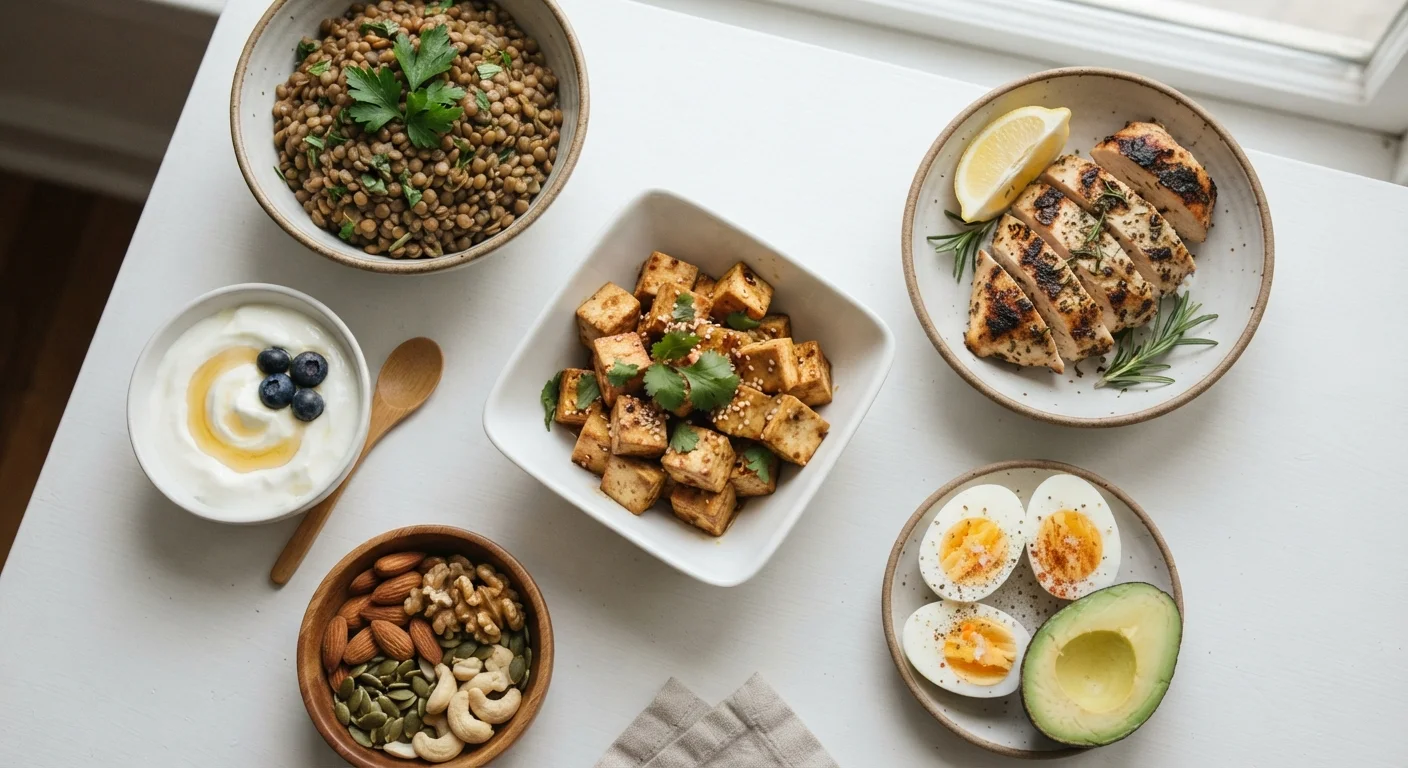
- Whole food sources, both animal and plant-based, can meet daily protein needs when eaten in sufficient variety.
- Protein supplements are not required for most people who eat a reasonably balanced diet.
- Always consult a healthcare provider or registered dietitian for guidance tailored to your health situation.
Dietary protein requirement
A dietary protein requirement is the minimum amount of protein a person needs each day to maintain body functions, preserve muscle mass, and support repair of tissues. It is measured in grams and varies based on body weight, age, activity level, and health status. The number most people encounter, the Recommended Dietary Allowance (RDA), reflects a floor for avoiding deficiency, not necessarily an optimal intake for active adults.
The RDA for protein is set at 0.8 grams per kilogram of body weight per day for healthy sedentary adults, established by the National Academies of Medicine. Higher intakes, generally 1.2 to 2.0 g/kg/day, are supported by research for physically active individuals.
Why the standard recommendation can mislead
The 0.8 grams per kilogram figure comes from the National Academies of Medicine and represents the amount estimated to prevent deficiency in the general sedentary population. It is a statistical floor, not a personalized prescription. For a large portion of US adults who exercise, are over 60, or are managing a health condition, that number undershoots what the body actually uses.
Nutrition fundamentals often get flattened into single numbers that feel universal. Protein needs are more variable than that. Body composition, physical activity, age, and whether someone is pregnant, recovering from surgery, or managing illness all shift the math. Treating the RDA as a ceiling rather than a floor can leave active or older adults short.
A practical way to check your intake
Add up the protein grams in a typical day using food labels and standard reference values, then divide by your weight in kilograms. If the result sits well below 0.8 g/kg and you are active or over 60, that is a useful conversation to have with a registered dietitian. You do not need a precise daily target to make meaningful progress; consistent, protein-containing meals across the day are the practical starting point.
What the research actually supports
For adults who engage in regular resistance or endurance exercise, a consistent body of research points to intakes of 1.2 to 2.0 grams per kilogram of body weight per day as supporting muscle repair and adaptation. The higher end of that range is more relevant during periods of intense training or caloric restriction. For older adults specifically, intakes of at least 1.0 to 1.2 g/kg/day are associated with slower loss of muscle mass over time.
Timing also matters, though not in the rigid way fitness culture sometimes suggests. Distributing protein across meals, rather than concentrating it at dinner, gives the body more consistent raw material for muscle protein synthesis throughout the day. A breakfast with eggs or Greek yogurt, a lunch that includes legumes or poultry, and a protein-containing dinner covers the basics practically.
0.8 g/kg
RDA protein floor for sedentary adults
Set by the National Academies of Medicine as the minimum to prevent deficiency in healthy, inactive adults.
1.2 to 2.0 g/kg
Supported range for active adults
A consistent range across exercise nutrition research for adults engaging in regular resistance or endurance training.
30%
Estimated muscle mass loss by age 80
Gradual sarcopenia is well documented in aging research; higher protein intake combined with resistance exercise is associated with slower decline.
Food sources that reliably deliver
Animal foods like eggs, poultry, fish, dairy, and lean meats contain all nine essential amino acids in proportions the body uses efficiently. Plant sources can also meet protein needs, but they require more attention to variety. Legumes, tofu, tempeh, edamame, quinoa, and combinations like rice and beans across a day provide complete amino acid coverage without animal products. For a more detailed comparison, plant protein vs. animal protein covers amino acid profiles and digestibility.
Protein content per 100-calorie serving varies widely. Chicken breast and canned tuna are dense sources. Greek yogurt and cottage cheese are high relative to their calorie counts. Nuts and seeds contribute protein but also substantial fat, so their protein density is lower. Reading food labels helps here, and decoding nutrition label claims explains what "high-protein" actually means legally on packaging.
Protein in context of overall diet quality
Protein intake does not exist in isolation. A diet that meets protein targets by eliminating fiber-rich carbohydrates or healthy fats may trade one gap for another. The goal is a diet that is adequate across macronutrients, not one that optimizes a single number. Understanding how all macronutrients work together gives a broader foundation for thinking about overall dietary patterns.
Certain population groups warrant extra attention. Older adults dealing with appetite changes, people following restrictive diets, and those with absorption issues may have protein gaps that are less visible day to day. Common nutrient shortfalls in US adults covers how these patterns show up in dietary data and practical food-based ways to address them.
Pairing adequate protein with regular physical activity, particularly resistance training, produces better outcomes for muscle health than protein alone. The Fitness and Movement hub has practical information on building consistent exercise habits that complement sound nutrition.
This article is for general informational and educational purposes only and is not a substitute for professional medical or dietary advice. Speak with a registered dietitian or healthcare provider before making significant changes to your diet, especially if you have an existing health condition.