

Key Takeaways
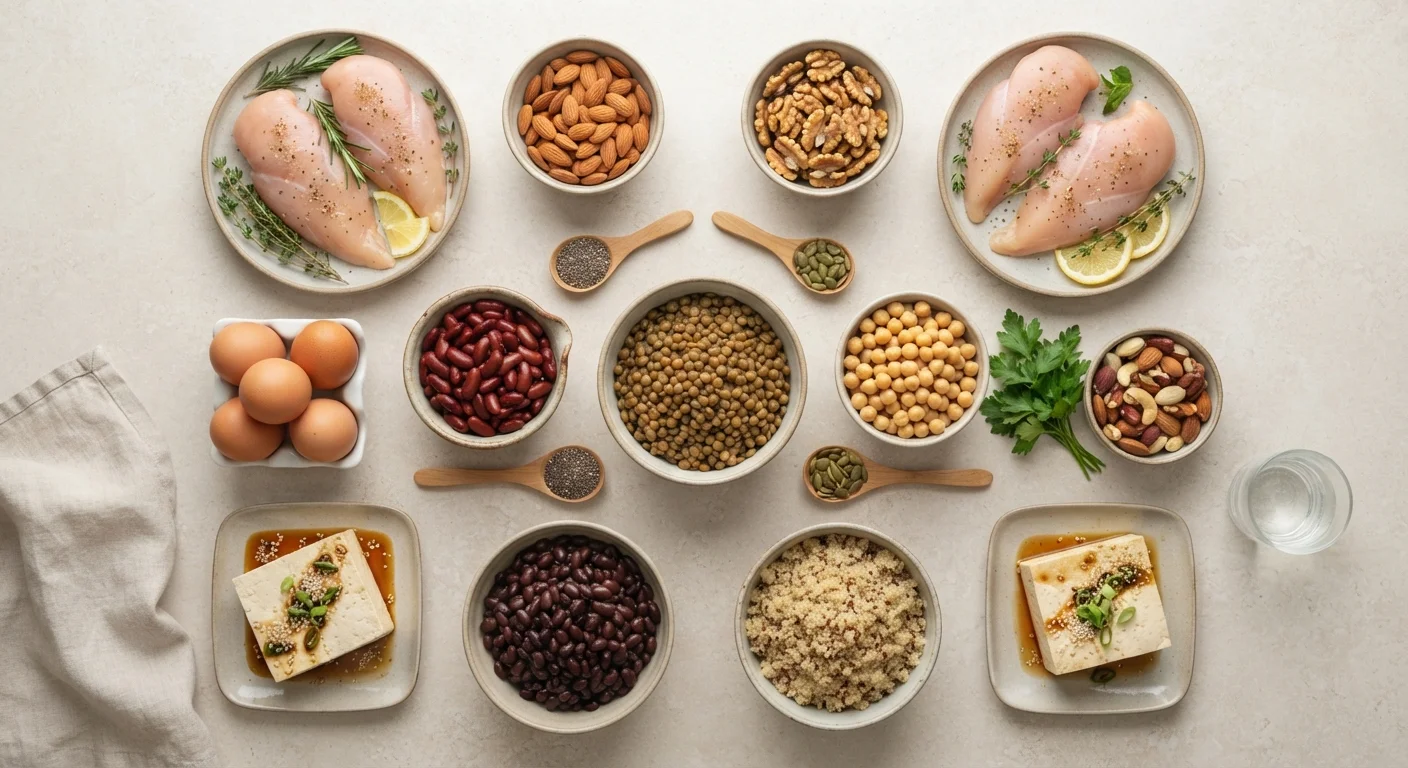
- Animal proteins are complete proteins, containing all nine essential amino acids in proportions the body uses efficiently.
- Most plant proteins are low in one or more essential amino acids, but combining different plant sources across the day addresses this.
- Digestibility differs: animal proteins are generally absorbed at a higher rate than many plant proteins.
- Neither source is universally superior. Overall dietary pattern and individual health context matter more than any single food choice.
- People with specific health conditions or dietary restrictions should consult a registered dietitian before making major protein changes.
Our Verdict
Both protein sources can meet human nutritional needs when the diet is planned thoughtfully. Animal proteins offer complete amino acid profiles and high digestibility with less planning required. Plant proteins, when varied, can match amino acid needs while also delivering fiber and phytonutrients absent from most animal foods.
| Best for | Recommended |
|---|---|
| Those who want straightforward complete protein with minimal planning | Animal protein |
| Those prioritizing fiber intake and phytonutrient diversity alongside protein | Plant protein |
| Those managing certain cardiovascular risk factors under medical guidance | Plant protein |
| Athletes with high leucine needs for muscle protein synthesis | Animal protein (or a combination including leucine-rich plant sources such as soy) |
Amino acid profiles: where the difference starts
Proteins are built from 20 amino acids, nine of which the body cannot synthesize and must obtain from food. A protein source that contains all nine in adequate amounts is called a complete protein.
All common animal proteins (meat, poultry, fish, eggs, dairy) are complete. Most plant proteins are not. Legumes tend to be low in methionine; grains tend to be low in lysine. Soy is a notable exception: it is a complete plant protein with an amino acid profile that research consistently places close to that of animal sources.
The practical implication is that people relying solely on plant proteins benefit from eating varied sources across the day. Rice and beans, hummus and whole-grain pita, or lentils with a grain all cover each other's gaps. The body does not require both sources at the same meal; the amino acid pool is replenished over the course of a day. How much total protein you need daily is a separate question from whether plant or animal sources supply it.
Digestibility and bioavailability
Digestibility describes how much of the protein in a food the body actually absorbs. A widely used measure is the Digestible Indispensable Amino Acid Score (DIAAS), which accounts for both amino acid content and how well the gut absorbs each one.
Animal proteins typically score higher on DIAAS than most plant proteins. Whole plant foods contain fiber and compounds such as phytates and tannins that can reduce protein absorption. Processing (cooking, soaking, fermenting) lowers those inhibitors and improves digestibility, which is why prepared lentils or fermented soy products absorb better than raw equivalents.
The gap narrows when plant proteins are eaten in sufficient quantity. Someone eating 30 grams of plant protein from a mixed source may absorb a slightly lower fraction than someone eating 30 grams from eggs, but eating somewhat more plant protein compensates for the difference in most healthy adults.
| Criterion | Animal protein | Plant protein | |
|---|---|---|---|
| Amino acid completeness | Complete in all sources | Incomplete in most; soy is complete | |
| Digestibility (DIAAS) | Generally higher | Generally lower; improves with cooking/soaking | |
| Leucine content (muscle synthesis) | High in most sources | Variable; highest in soy and legumes | |
| Fiber content | None | Present in whole food sources | |
| Saturated fat | Higher in red meat and full-fat dairy | Low in most sources | |
| Planning required | Minimal for complete profile | More variety needed to cover all amino acids | |
| Associated cardiovascular data | Mixed; processed/red meat shows elevated risk | Generally neutral to favorable | |
| Environmental footprint | Higher on average | Lower on average |
Health outcomes: what the research shows
Large observational studies, including data from cohorts tracked over decades, associate higher consumption of red and processed meat with modestly elevated risk of cardiovascular disease and colorectal cancer. These associations are independent of total protein intake and appear linked to factors including saturated fat content, heme iron, and compounds formed during high-heat cooking.
Plant protein sources such as legumes, nuts, and soy are associated in the same literature with neutral or favorable cardiovascular markers. However, observational data cannot establish that protein source alone drives these outcomes. People who eat more legumes also tend to differ in other dietary and lifestyle habits.
Emerging research on the gut microbiome suggests that fiber accompanying plant proteins may support microbial diversity. What the evidence actually supports on gut health and diet offers a grounded look at those claims.
For muscle building and retention, animal proteins, particularly those high in the amino acid leucine (whey, eggs, beef), have shown consistent benefits in clinical trials. Soy protein performs comparably in several studies. Other plant proteins may require larger servings to achieve the same muscle protein synthesis response, particularly in older adults.
Practical trade-offs worth knowing
Combining plant proteins across the day
You do not need to engineer a complete amino acid profile at every meal. Eating a variety of legumes, whole grains, nuts, and seeds across the day gives your body the full range of essential amino acids it needs. Focus on overall dietary variety rather than precise meal-by-meal pairing.
Animal proteins are calorically dense relative to their protein content in some forms (fatty cuts, full-fat dairy) and leaner in others (white fish, egg whites, low-fat Greek yogurt). Plant proteins nearly always come packaged with fiber, which supports satiety and digestive health, and with phytonutrients absent from animal foods.
Highly processed versions of either category complicate the picture. A heavily processed plant-based burger patty may have a sodium and additive profile that differs substantially from cooked lentils. How processing level affects nutritional value is relevant here: the source of the protein matters, but so does what surrounds it in the food matrix.
Reading food labels carefully helps. What high-protein and other label claims legally mean gives context for front-of-package language that can otherwise mislead.
This article is for general informational purposes only and is not a substitute for advice from a registered dietitian or other qualified healthcare professional. Individual nutritional needs vary. Consult a professional before making significant changes to your diet, particularly if you have a chronic health condition.