

Key Takeaways
- Cortisol follows a daily rhythm, peaking in the morning and declining toward bedtime; stress disrupts that decline.
- Elevated evening cortisol delays melatonin release and reduces deep, restorative sleep stages.
- Chronic stress can create a self-reinforcing cycle where poor sleep raises cortisol the next day.
- Behavioral strategies studied for lowering pre-sleep arousal include controlled breathing, consistent sleep timing, and limiting stimulating screen content.
- This article is general health information; consult a qualified healthcare professional about personal symptoms or sleep disorders.
Cortisol and sleep disruption
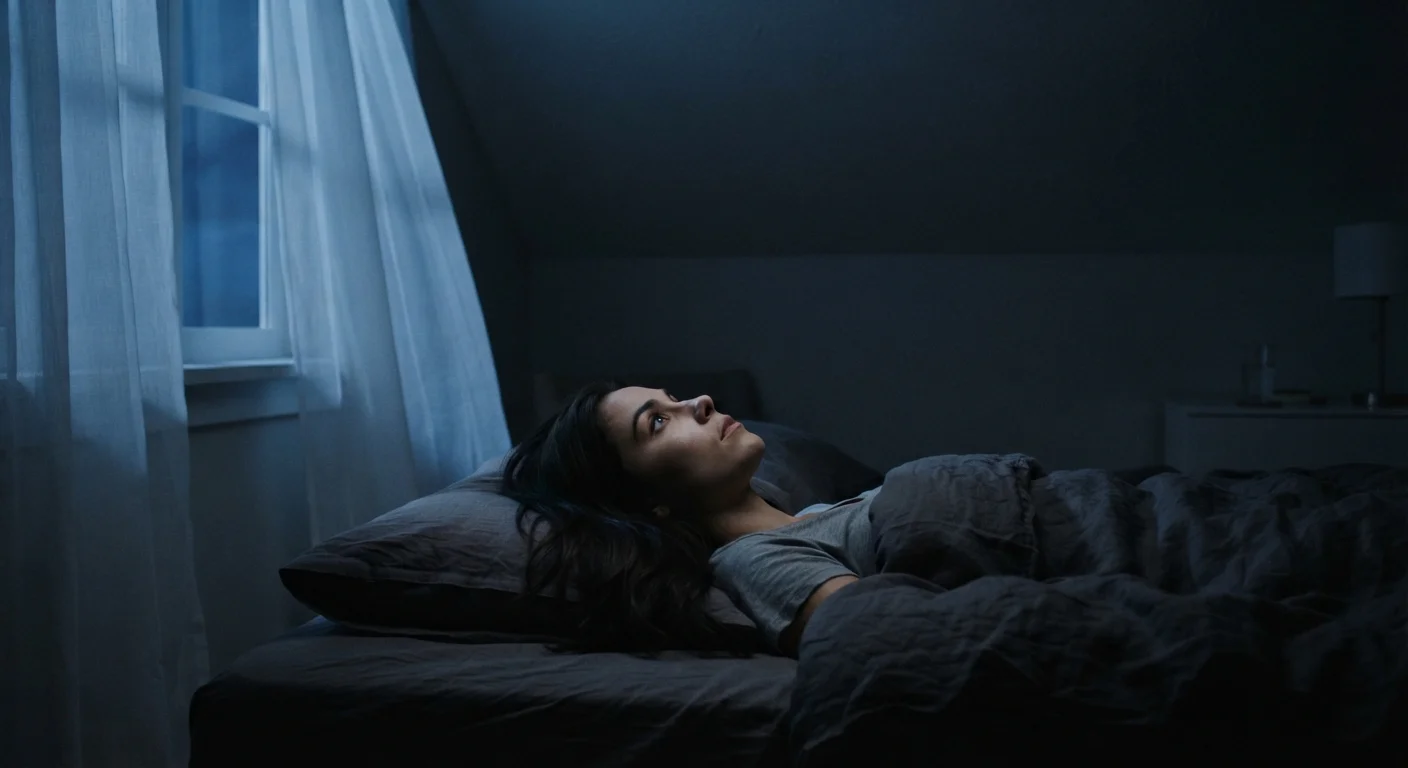
Cortisol is a hormone produced by the adrenal glands that rises in response to stress and naturally peaks in the early morning to promote wakefulness. When psychological stress keeps cortisol elevated into the evening, it competes with the sleep-promoting hormone melatonin, making it harder to fall and stay asleep. This is a physiological process, not a willpower problem.
Cortisol and melatonin operate on roughly opposing rhythms governed by the hypothalamic-pituitary-adrenal (HPA) axis and the circadian system; chronic activation of the HPA axis can blunt melatonin secretion and fragment sleep architecture.
How cortisol is supposed to work
Cortisol is not inherently a harmful hormone. Under normal conditions, it follows a predictable 24-hour pattern: levels are highest within the first hour after waking, then fall steadily through the afternoon and reach their lowest point in the late evening. This rhythm, coordinated by the body's circadian system, prepares the brain for sleep by allowing melatonin to rise without hormonal interference.
The problem begins when psychological stress activates the hypothalamic-pituitary-adrenal (HPA) axis outside of its natural morning window. The brain does not cleanly distinguish between a physical threat and a looming work deadline; in both cases, the adrenal glands release cortisol to mobilize energy and sharpen focus. That response is useful in short bursts. Extended across an entire evening, it directly opposes the hormonal conditions sleep requires.
Your circadian rhythm coordinates cortisol timing alongside body temperature, hunger signals, and dozens of other physiological processes. When stress repeatedly overrides that rhythm at night, the system gradually loses its normal calibration.
What elevated evening cortisol does to sleep
Cortisol promotes arousal by increasing heart rate, raising blood pressure, and heightening neural activity. These are the opposite conditions from those needed for sleep onset. Studies using polysomnography (a lab-based sleep recording method) have found that higher nighttime cortisol correlates with longer time to fall asleep, more frequent awakenings, and less time spent in slow-wave sleep, the deepest restorative stage.
Slow-wave sleep is when the body does much of its physical repair: growth hormone secretion peaks, immune function consolidates, and the brain clears metabolic byproducts. Losing it is not simply a matter of feeling groggy. Over time, chronically fragmented sleep impairs attention, emotional regulation, and metabolic function.
10-40%
Reduction in slow-wave sleep linked to elevated cortisol
Research published in peer-reviewed sleep journals has documented significant slow-wave sleep suppression associated with nighttime cortisol elevation in adult subjects.
~37%
US adults who regularly get less than 7 hours of sleep
According to the CDC's behavioral risk factor data, more than a third of American adults report sleeping fewer than the recommended seven hours on a regular basis.
60-90 min
Typical cortisol recovery window after an acute stressor
Psychophysiological research on the HPA axis stress response indicates this approximate recovery window in healthy adults under laboratory conditions.
The cycle compounds itself. Sleep deprivation is itself a physiological stressor that raises cortisol output the following day, making the next night harder. This feedback loop is well-documented in sleep research and helps explain why stressed individuals often feel they cannot break the pattern through willpower alone.
Behavioral strategies studied for reducing pre-sleep cortisol
No behavioral intervention eliminates stress, but several approaches have been studied for their effect on the HPA axis response and sleep quality. The evidence varies in strength; the strategies below reflect mainstream clinical and research consensus rather than fringe or unproven claims.
Controlled breathing
Slow, deliberate breathing techniques, particularly those that extend the exhale relative to the inhale, activate the parasympathetic nervous system and have been shown in controlled studies to lower cortisol and heart rate. A common approach studied is a 4-count inhale followed by a 6 to 8-count exhale, repeated for several minutes before bed. Breathing exercises carry essentially no risk for healthy adults and can be incorporated immediately.
Consistent sleep and wake timing
Irregular sleep schedules disrupt the cortisol rhythm directly, because the HPA axis partly sets its daily pattern from light exposure and wake time. Waking at the same time each day, including weekends, helps anchor the hormonal cycle even when night-to-night sleep quality varies.
Limiting stimulating content before bed
News, conflict-heavy social media, and work email all function as cognitive stressors that trigger low-level HPA activation. Reducing exposure in the hour before bed is not about screen light alone; the content itself raises psychological arousal. Evidence-based sleep habits cover the broader behavioral environment in more detail.
Stress management during the day
Cortisol dysregulation at night often traces back to inadequate recovery during waking hours. Daytime stress management approaches studied in occupational and clinical settings include structured breaks, brief mindfulness practice, and setting boundaries around work communication outside business hours. These interventions target cortisol output earlier in the day, reducing the total load carried into the evening.
This article is for general informational and educational purposes only. It is not a substitute for professional medical advice, diagnosis, or treatment. Consult a qualified healthcare provider about personal sleep concerns, symptoms of a sleep disorder, or any changes to your health management.