

Key Takeaways
- Organizing items you don't need just relocates clutter rather than removing it.
- Buying storage containers before decluttering often wastes money and space.
- Decluttering first reduces the volume of items, making organization far simpler.
- Emotional attachment and sunk-cost thinking cause most people to organize instead of letting go.
- A room-by-room declutter pass before any sorting produces more durable results.
The organizing trap most people fall into
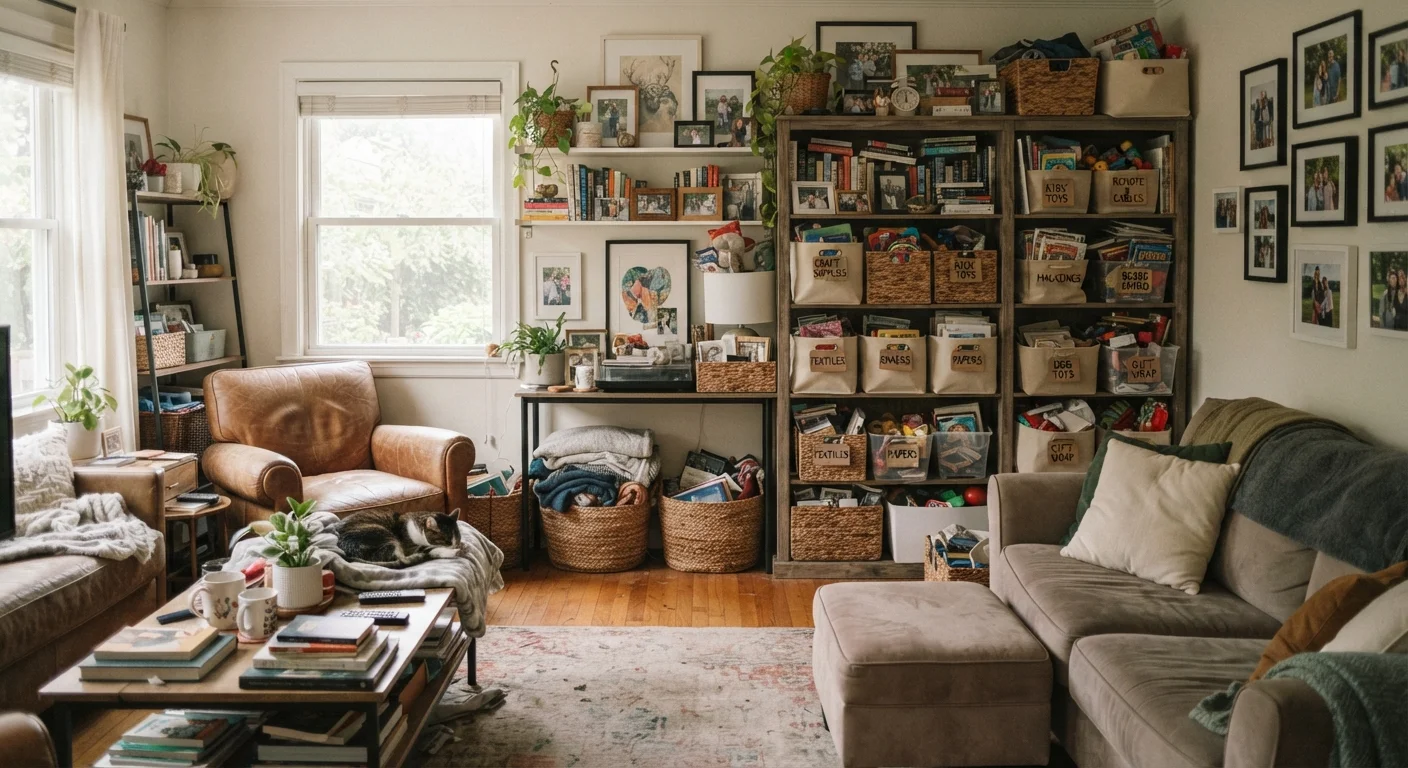
The impulse makes sense on the surface: buy some bins, fold things neatly, label the shelves. It feels productive, and the room looks better for a few days. But if you haven't decided what actually belongs in your home, you've only given your clutter a more organized address.
This is the core problem with organizing before decluttering. You spend time and often money arranging items that should have left the house. A few weeks later, the bins overflow, the shelves are chaotic again, and the effort feels wasted. If you're newer to this process, the introduction to home organization covers why sequence matters from the start.
Buying storage containers before deciding what to keep.
Why it happens: Containers look like a solution, and shopping feels like taking action. People buy bins based on a rough mental estimate of what they own, which is almost always an overcount.
Sorting items into categories without making keep-or-discard decisions.
Why it happens: Sorting feels like progress and avoids the harder emotional work of letting things go. It is easier to move items from one pile to another than to commit to removing them.
Tidying visible surfaces while leaving storage areas untouched.
Why it happens: Visible clutter creates more immediate discomfort, so people address what they can see. Drawers, closets, and cabinets stay packed because the mess is hidden.
Letting sunk-cost thinking block removal decisions.
Why it happens: When something cost money, discarding it feels like losing that money again. This causes people to keep and store items they no longer use rather than accepting the original purchase as past.
Organizing the entire home at once instead of completing one area fully.
Why it happens: Whole-home projects feel more satisfying to start, but they quickly become unmanageable. Items from multiple rooms get mixed, decisions pile up, and the project stalls partway through.
Why order matters: declutter first, then organize
Decluttering is the act of deciding what stays and what goes. Organizing is the act of arranging what stays. Doing them in reverse means you're designing a system around an unknown quantity. You might buy a 12-slot shoe rack only to discover, after decluttering, that you own six pairs of shoes worth keeping.
When you reduce volume first, the organizing step becomes much easier and cheaper. You see what you actually have, which tells you what kind of storage you genuinely need. You avoid buying containers that don't fit the final load. The room-by-room decluttering approach gives a practical structure for working through each space before touching a single storage bin.
25%
Of US homes with a self-storage unit
According to the Self Storage Association, roughly one in four American households rents a storage unit, often to house items that were organized but never evaluated for removal.
80%
Of stored items never retrieved
Professional organizers commonly report that the large majority of items placed into long-term storage are never used again, suggesting many could have been removed at the outset.
What to do once you've decluttered
After a declutter pass, assess what remains before buying anything. Group similar items together on a cleared surface so you can see the actual volume. Only then measure your space and look for storage solutions that fit what you have, not what you imagine you might keep someday.
Responsibly handling discarded items is part of the process. The guide to sorting discarded items explains how to route things toward donation, recycling, or proper disposal rather than letting them pile up in a corner. Once items are out of the house, maintaining the system you build is its own challenge. The long-term organization habits article covers the routines that prevent clutter from quietly returning.